New Delhi
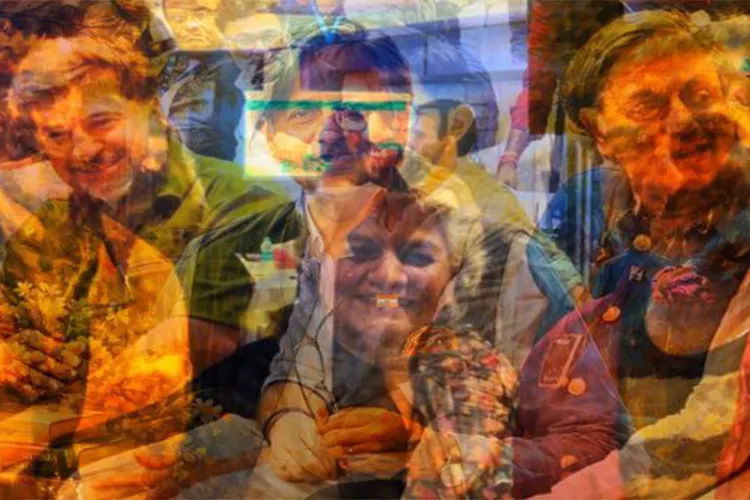
Seventy years ago, on the ninth day of March, a boy was born who would grow into a man carrying entire libraries in his mind and an uncommon gentleness in his heart. Today, as Dr. Shashi Tharoor turns seventy, the world celebrates a life lived in public brilliance and private grace -- a life that has enlarged the imagination of India and reminded many of us that intellect and kindness need never be adversaries.
Shashi's life has unfolded across continents and callings. Diplomat, parliamentarian, scholar, author, teacher, public voice -- each title fits, but none fully captures the man. What truly distinguishes him is not merely the sweep of his career but the spirit with which he inhabits it: restless curiosity, disarming warmth, and an abiding belief that ideas matter because people matter.
The world first encountered that mind in the corridors of the United Nations, where Shashi rose to become one of its youngest Under-Secretaries-General. Long before he entered the rough-and-tumble of Indian politics, he had already become a voice for India in rooms where history quietly rearranges itself. Yet for all the global prestige of those years, he chose the harder path -- to return home and participate in the imperfect, noisy, glorious democracy that is India.
Since then, the country has watched him perform an extraordinary balancing act: a relentless parliamentary schedule, the responsibilities of representing Thiruvananthapuram, a writing life that has produced some of the most compelling books on India's past and future, and a public presence that seems to operate around the clock.
And yet somehow he remains astonishingly accessible.
To walk with Shashi through an airport lounge, a college campus, or even a quiet Delhi street is to witness a small civic phenomenon. People gather, not tentatively but with unmistakable affection. Students clutch dog-eared copies of The Great Indian Novel or Inglorious Empire. Young professionals quote passages from Pax Indica. Readers speak of how Why I Am a Hindu helped them rediscover faith without fear. Cameras appear, laughter follows, and inevitably the conversation turns to ideas. Shashi listens. He responds. He engages. And he does so with the patience of someone who genuinely believes every human interaction deserves attention.
But the public figure, dazzling though he is, tells only half the story.
I have known Shashi for almost a quarter of a century. We first met when his twin sons, Ishan and Kanishk, were turning sixteen. They came to my home for a birthday dinner -- a vegetarian meal, warm with conversation and laughter. It felt, almost instantly, as though we had known each other for years. Some friendships arrive like that: fully formed, quietly certain.
Over the years our families grew intertwined. My brother Samir and Shashi developed a friendship built not on flattery but on challenge and trust -- the kind of friendship where ideas are sharpened rather than softened. Samir's work with the Observer Research Foundation has often drawn upon Shashi's intellectual leadership and counsel. That trust runs deep.
And then there are the moments that never appear in newspapers.
When my father passed away, long after the condolences had faded and the cameras were gone, Shashi arrived at our home in the early hours of the morning. From one until nearly four, he sat quietly with my mother, with Samir, with Seema and with me. He spoke gently with our staff, mourning with them, honoring their grief as much as ours. There were no speeches, no performance -- only the quiet dignity of a friend who understood that presence is sometimes the purest form of compassion.
That is Shashi Tharoor.
He is a man of prodigious intellect, yes, but also of irrepressible playfulness. He sings at birthdays. He dances when the mood demands celebration. His wit flashes like summer lightning -- quick, bright, irresistible. He speaks many languages, but more importantly he speaks to people in the language of respect.
Words, for Shashi, are not merely tools. They are a responsibility.
Books like The Great Indian Novel, Pax Indica, Why I Am a Hindu, and Inglorious Empire reveal a mind steeped in history yet alive to the urgencies of the present. He has made India larger in our collective imagination. He has reminded us that patriotism need not be narrow, that faith need not be fearful, and that politics -- even in the roughest of arenas -- can still carry dignity.
There is, I suspect, something deeply Vedantic about the way Shashi moves through the world. Not in ritual or dogma -- those never interested him much -- but in spirit. The old Vedantic insight that all life is interconnected seems to animate his worldview. He does not impose belief; he respects the plurality of paths. What matters to him is the essential principle: that all life is sacred and deserving of dignity.
In a century that increasingly divides itself into tribes -- left and right, woke and reactionary, nationalist and globalist -- Shashi insists on a broader, older humanism. For him, humanity is not a battlefield but a continuum.
Perhaps that is why people everywhere respond to him so instinctively. They hear something in his voice that echoes their better selves.
Even his lifestyle reflects that inward abundance. Shashi lives with remarkably few possessions. But his imagination is vast, his memory encyclopedic, his empathy seemingly limitless. He carries more in his mind and heart than most people could ever accumulate in rooms full of objects.
He sleeps little. He travels endlessly. He writes, debates, lectures, and listens. Yet he remains available -- to strangers, to readers, to friends in need.
During a period in my own life when I was struggling deeply, when illness had left me legally blind and uncertain of my place in the world, Shashi did something that changed my life. He did not simply encourage me to return to writing. He made me realize I could write. He helped me see that words were still mine to wield.
It was Shashi who gave me my column, Slice of Life. He told me to believe in myself -- to believe that my writing could inspire, heal, and give voice to those who felt unseen. More importantly, he urged me to tell my story honestly and publicly, without fear.
He understood that somewhere in the world there was a young person -- perhaps a gay child growing up without a role model -- who might need to hear that story. That the struggles of the LGBTQ community, so often misunderstood or silenced, deserved articulation, dignity, and visibility.
He stood by me as I began sharing those truths. He believed that vulnerability could become strength, that revealing our struggles allows others to heal. That kind of faith in another person is rare. And transformative.
That, too, is Shashi.
The public intellectual who fills auditoriums.
The parliamentarian who argues fiercely yet fairly.
The friend who quietly alters the trajectory of another person's life.
But perhaps what defines him most deeply is family.
His mother, Lily, remains at the center of his emotional universe. The tenderness between them is unmistakable. Watching Shashi with her reminds me of my own father's devotion to my grandmother -- how he would rush home from work just to embrace her, to give and receive that daily kiss that affirmed love's constancy.
Shashi carries that same reverence for family.
His sisters, Shobha and Smita, mean the world to him. Their children, his own children, and now his grandchildren form a constellation around which his life quietly orbits.
I saw this vividly during a visit to the Bay Area for the SALA Literature Festival. We gathered at Shobha's home for what became an unforgettable evening. Her son -- Shashi's nephew -- was making pizzas for all of us. My aunt Aruna, who sadly passed away last year, and I watched with delight as Shashi stood there beaming with pride and affection, observing every gesture of his nephew and his nephew's girlfriend with the kind of loving attention that only family inspires.
For a man whose days are consumed by Parliament, public events, interviews, writing deadlines, and the relentless demands of public life, Shashi still makes time -- real time -- for those he loves.
And that, perhaps, is the truest measure of the man.
As he turns seventy today, the world celebrates a life that proves something rare: that brilliance need not eclipse kindness, that ambition need not diminish empathy, and that integrity is not the enemy of joy.
In an era fraying at the edges -- where societies seem increasingly willing to turn upon themselves -- voices like Shashi Tharoor's remind us of our shared humanity. He shows us that words can still illuminate, that ideas can still unite, and that dignity remains one of the most powerful forces in public life.
He made India larger in our imagination.
He taught us that intellect can be kind.
He proved that politics can still have dignity.
And he showed that living with integrity does not mean living small.
READ MORE: Shama Mohammad: Battling patriarchy and breaking barriers
May the decades ahead continue to carry his wit, wisdom, and warmth across the world.
And may we all be a little wiser -- and a little kinder -- for having walked beside him in this remarkable life.














.webp)