Mumbai
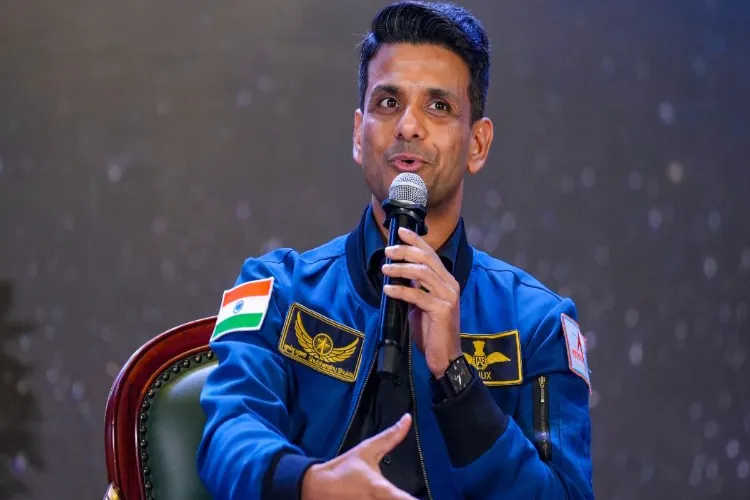
Dental health is a crucial consideration for astronauts, Shubhanshu Shukla, the first Indian to reach the International Space Station (ISS), said on Wednesday, recalling that he had two of his wisdom teeth extracted during preparations for his space mission.
Shukla said that while astronauts are trained to handle a wide range of medical emergencies in space, dental surgery is not something that can be performed aboard a spacecraft.
He was speaking at an interaction at the Indian Institute of Technology Bombay, alongside Group Captain Prasanth Nair and Group Captain Angad Pratap, both shortlisted for India’s first human spaceflight mission, Gaganyaan.
“Dental health is extremely important. During the selection process, many aspirants had their teeth extracted,” Shukla said.
Explaining the reason, the Indian Air Force (IAF) officer and test pilot said wisdom teeth are routinely removed during astronaut training.
“You are medically trained to deal with emergencies because there is no immediate help available in space. But one thing you cannot do is dental surgery. So they ensure you won’t face any dental issues before launch,” he said.
“I’ve had two of my wisdom teeth extracted,” Shukla added, noting that Group Captain Nair had three teeth removed, while Group Captain Pratap had four molars extracted.
“If you want to be an astronaut, you have to give up on your wisdom,” he said, drawing laughter from the audience.
Shukla completed his maiden space journey earlier this year as part of the Axiom-4 mission — a commercial spaceflight supported by ISRO and NASA and operated by Axiom Space.
He said the IAF pilots shortlisted for the Gaganyaan programme underwent rigorous physical and psychological evaluations before being cleared.
Group Captain Nair said that towards the end of 2019, the shortlisted candidates were sent to Russia, where they underwent further medical assessments by Russian doctors.
Explaining why test pilots are chosen for human space missions, Group Captain Pratap said all countries with independent human spaceflight programmes — including the US, the former USSR, Russia and China — have followed the same approach.
“Test pilots represent the best of the lot. Every year, around 200 IAF officers apply to become test pilots, and only five are selected,” he said.
For the Gaganyaan mission, the IAF shortlisted 75 test pilots, out of which only four were finally chosen, Pratap added.
“We have not yet been selected to go to space. We have been selected to work on the ground — to integrate with designers and help develop the system, which we are formally trained to do,” he said.
READ MORE: Five places in India where Christmas comes alive in spirit and celebration
He added that 70 to 80 per cent of a test pilot’s training closely aligns with astronaut training, making their integration into space programmes seamless.


.png)