




Washington DC
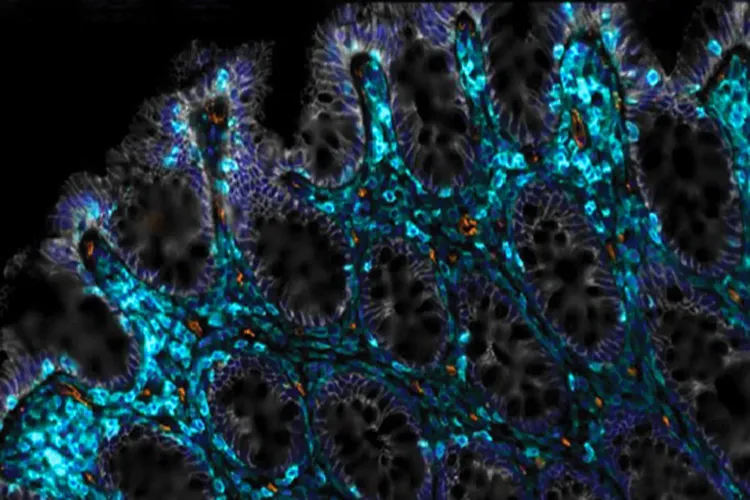
Researchers have discovered that CAR T-cell therapy, a form of immunotherapy, can help aging intestines repair themselves by targeting senescent cells that accumulate over time. In mouse studies, the treatment enhanced gut regeneration, reduced inflammation, and improved nutrient absorption.
The therapy also offered protection against radiation-induced intestinal damage, with benefits lasting up to a year. Preliminary results in human intestinal cells suggest the approach could one day support gut health in older adults and cancer patients.
As people age, certain foods often become harder to tolerate, partly due to damage to the intestinal epithelium—a thin, single-cell layer lining the gut. This layer is vital for digestion and overall gut function, renewing itself every three to five days under normal conditions. Aging or exposure to cancer radiation can disrupt this renewal, potentially causing inflammation and conditions like leaky gut syndrome.
Scientists at Cold Spring Harbor Laboratory (CSHL) have now demonstrated a promising method to jump-start intestinal repair using CAR T-cell therapy, which is already widely used to treat certain cancers. By directing this therapy toward the gut, the team hopes to pave the way for future clinical trials targeting age-related intestinal decline.
Targeting Senescent Cells
The work builds on research by CSHL Assistant Professor Corina Amor Vegas, whose lab focuses on cellular senescence. Senescent cells stop dividing but do not die off, contributing to aging-related conditions such as diabetes and dementia. Amor Vegas’ team previously engineered anti-uPAR CAR T cells that selectively eliminate senescent cells in mice, improving their metabolism.
Partnering with CSHL Assistant Professor Semir Beyaz and graduate student Onur Eskiocak, the researchers tested whether removing senescent cells could restore the intestine’s healing ability. CAR T cells were administered directly to the intestines of both young and old mice. Amor Vegas described the results as striking: “In both cases, we see really significant improvements. They’re able to absorb nutrients better. They have much less inflammation. When irritated or injured, their epithelial lining is able to regenerate and heal much faster.”
Radiation Protection
Leaky gut syndrome is common in cancer patients receiving pelvic or abdominal radiation. In experiments, mice exposed to intestinal-damaging radiation recovered far more effectively when treated with CAR T cells. Remarkably, a single dose continued to support healthy gut function for at least a year. Early evidence also suggests anti-uPAR CAR T cells promote regeneration in human intestinal and colorectal cells.
READ MORE: IUML's Fatima Muzaffar Ahmed is the epitome of Muslim woman leadership
While the exact mechanisms are still being studied, the findings highlight promising therapeutic potential. Beyaz emphasised the broader implications, saying, “This is one good step toward a long journey in understanding how we can better heal the elderly.”



.webp "Union Home Minister Amit Shah")









.webp)