





New Delhi
Union Home Minister Amit Shah on Friday chaired a high-level meeting to review the security and operational preparedness for the upcoming annual Amarnath Yatra, officials said.
The yatra is scheduled to begin on July 3.
The meeting was attended by National Security Advisor (NSA) Ajit Doval, Jammu and Kashmir Lt Governor Manoj Sinha, Army Chief Gen Upendra Dwivedi, and Central Reserve Police Force (CRPF) Director General GP Singh, besides other senior security and administrative officials.
The 57-day pilgrimage to the 3,880-metre-high cave shrine in the Himalayas requires a massive security deployment, with the Central and Union Territory agencies working in close tandem.
Officials said the agencies are combining advanced surveillance technology, intelligence-led monitoring, and multi-agency coordination to ensure a completely secure environment for the devotees.
Pilgrims will travel through the traditional 48-km Nunwan-Pahalgam route in Anantnag district and the shorter but steeper 14-km Baltal route in Ganderbal district.
Earlier this week, Lieutenant Governor Sinha reviewed the preparations, directing departments and security agencies to ensure smooth arrangements covering infrastructure, security, healthcare, sanitation, connectivity and pilgrim services.
The Jammu and Kashmir Police has also deployed sophisticated screening and anti-sabotage equipment.
These include portable RCIED jammers, deep search metal detectors, explosive and liquid explosive detectors, non-linear junction detectors (NLJDs), contraband busters, prodder vehicle search mirrors, optical fibrescopes, multi-type CCTV systems, XBIS, vehicle-mounted XBIS, multi-zone DFMDs (Fixed/multizone), HHMDs, search metal detectors, and other specialised equipment, they added.
Police have also launched the QR-based "Pahchan App", designed to digitally verify workers and vendors operating along the yatra route.
Officials say the system will help prevent unverified individuals from infiltrating the pilgrimage ecosystem while improving accountability and crowd management.
Tenant verification drives, inspections of lodgement centres and intelligence-gathering operations have also been intensified.
The CRPF, which plays a pivotal role in securing the pilgrimage, has undertaken extensive reviews of operational preparedness.
CRPF DG Singh also visited the Valley and took stock of security arrangements along the route to Baltal and directing commanders to adopt proactive measures.
He reviewed security and logistical arrangements along the yatra route up to the Baltal base camp and emphasised the importance of maintaining a robust security grid through close coordination among all the stakeholders.
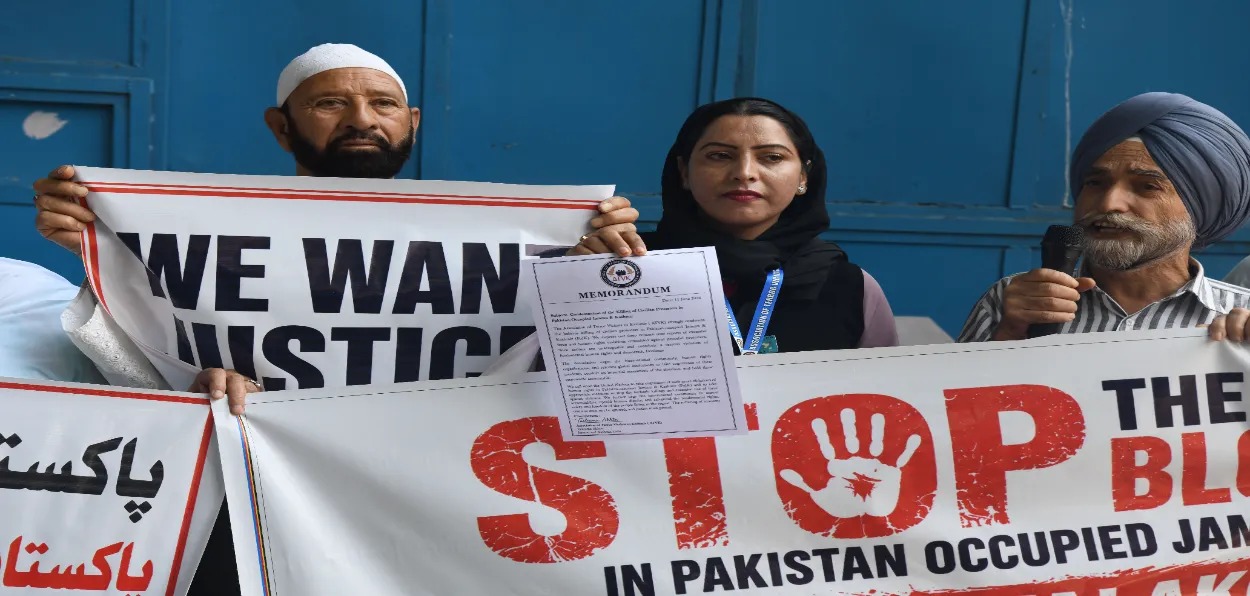
READ MORE: Srinagar: leaders, civil society members protest against PoJK killings
Singh said inter-agency coordination must be strengthened to ensure a safe and incident-free pilgrimage.
















.webp)