Guwahati
As January is being observed as National Road Safety Month with a renewed focus on achieving a ‘Zero-Fatality Month’, the Assam government has sought technical support from SaveLIFE Foundation (SLF) to strengthen the implementation of evidence-based road safety interventions, in line with directives issued by the Ministry of Road Transport and Highways (MoRTH).
According to an official release, India continues to face a severe road safety crisis, with more than 1.7 lakh people losing their lives annually in road accidents—an average of over 450 deaths every day—inflicting a significant social and economic burden on the country.
Addressing this challenge requires systematic, science-driven reforms in road design, trauma care systems and policymaking. These three pillars form the foundation of SLF’s zero-fatality strategy, which is currently being rolled out across 100 national highways under the Zero Fatality Corridor (ZFC) programme and in 100 districts through the Zero Fatality District (ZFD) initiative. The targeted corridors and districts have recorded substantial year-on-year declines in crashes, fatal accidents and overall road deaths.
Under the Zero-Fatality Month framework, SLF has proposed a structured, week-wise action plan led by district administrations, with a strong emphasis on measurable and time-bound outcomes.
The process begins with data-driven risk assessment, requiring districts to identify their three most dangerous road corridors and ten high-risk accident locations. This assessment also includes analysis of crash timings, vulnerable road users and typical crash patterns.
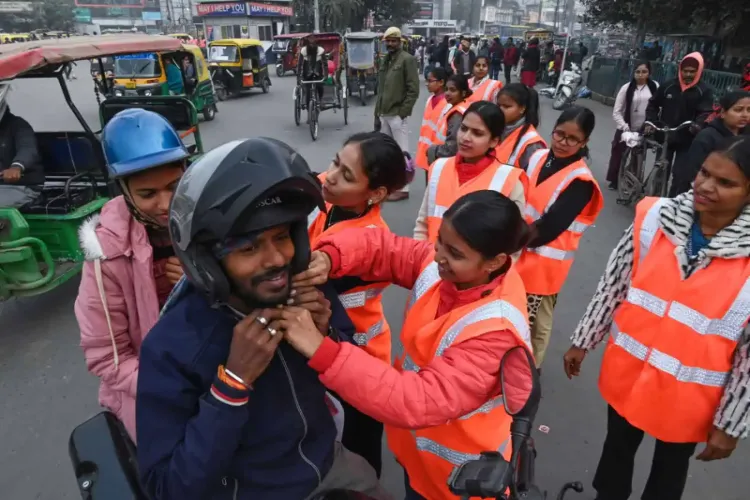
Based on these findings, districts are expected to implement coordinated interventions across multiple pillars—engineering measures such as speed calming, better signage, pedestrian facilities, improved lighting and safer junctions; strict enforcement against violations like drunk driving, speeding, wrong-side driving and non-use of helmets and seat belts; strengthened emergency response through strategic ambulance deployment and trauma care preparedness; and community outreach programmes aimed at high-risk groups.
The framework also calls for continuous oversight through weekly monitoring and mid-course reviews. District task forces will submit standardised progress reports to the state government, followed by a mid-January state-level review to refine strategies and scale up effective measures swiftly.
Commenting on the initiative, SaveLIFE Foundation Founder and CEO Piyush Tewari said India’s road safety crisis can be addressed with stronger institutional systems and coordinated governance. “The loss of more than 450 lives every day is equivalent to a major aviation disaster occurring daily, yet it does not receive the urgency it warrants,” he said.
Drawing from SLF’s on-ground experience, Tewari noted that integrating scientific road engineering, strict enforcement, reliable trauma care and district-level accountability has consistently resulted in fatality reductions ranging between 30 and 60 per cent. “This National Road Safety Month must move beyond awareness campaigns to measurable action. Zero fatalities are not merely aspirational—they are achievable when road safety is treated as a public health priority,” he added, expressing satisfaction at supporting MoRTH and multiple state and Union Territory administrations.
SLF’s zero-fatality interventions are designed to suit local conditions and are often developed in partnership with communities, emphasising cultural sensitivity and solutions that go beyond conventional Western models.
The organisation follows a six-step methodology that includes collaboration with local stakeholders, data analysis to identify problem areas, detailed field audits, customised solutions, rigorous impact evaluation and assessment for replication and scale-up.
While the Zero Fatality Corridor programme was launched in 2015, the Zero Fatality District initiative began in 2021. Together, the two programmes have delivered a 30–60 per cent reduction in road deaths on several high-risk stretches across the country.
Notable outcomes include a 58 per cent decline in fatalities on the Mumbai–Pune Expressway, a 51 per cent reduction on the Mumbai–Pune stretch of NH-48 with spillover benefits to the Pune–Satara and Satara–Kagal sections, and nearly a 40 per cent fall in road deaths on the Yamuna Expressway.
Several states, including Assam, have already initiated MoRTH’s National Road Safety Month directives by activating multiple departments—transport, police, health, education, urban and rural local bodies, and district administrations—to ensure coordinated and effective implementation.
SLF’s model seeks to decentralise road safety governance by embedding scientific solutions at the district level. The responsibility for delivering tangible outcomes lies with district administrations, which are mandated to implement comprehensive measures based on the four Es of road safety: engineering, enforcement, emergency care and education.
READ MORE: IUML's Fatima Muzaffar Ahmed is the epitome of Muslim woman leadership
By integrating these strategies into governance systems, the initiative aims to move beyond partnership towards full government ownership, enabling sustained progress and scaling of safety measures, with the ultimate goal of making zero road fatalities a reality in India and beyond.

.jpg "Gujarat’s women entrepreneurs bring their craftsmanship to life during Navratri")









.webp "Lok Sabha Leader of Opposition Rahul Gandhi")