New Delhi
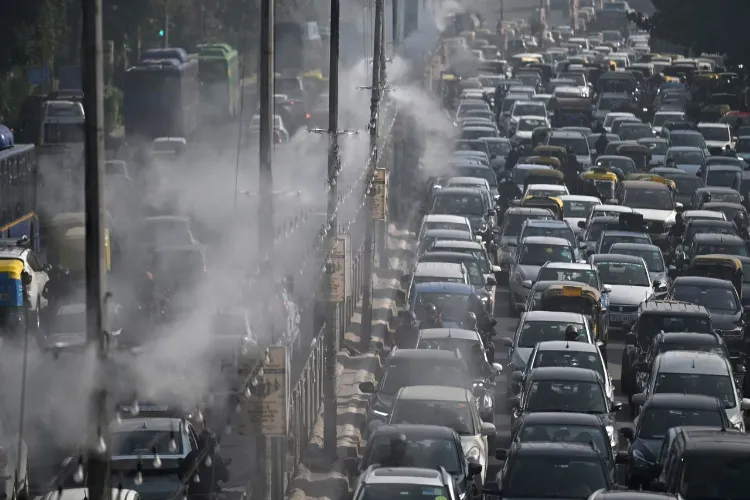
Chief Justice of India Surya Kant on Tuesday observed that owning a car has increasingly become a status symbol, with people saving money to buy four-wheelers and moving away from the use of bicycles, while hearing a matter related to air pollution in the Delhi-NCR region.
The Chief Justice made the remarks during the hearing of a plea concerning deteriorating air quality, after senior advocate Rakesh Dwivedi suggested that one way to address air pollution could be to curb the practice of individuals owning multiple cars.
“Car has become a status symbol. People are saving money to buy cars and have stopped using cycles,” the CJI said.
Dwivedi also pointed out during the arguments that the automobile industry wields significant influence, making policy interventions challenging.
Responding to the issue of excessive private vehicle usage, the Chief Justice remarked that responsibility for reducing pollution should also be borne by the affluent sections of society.
“The rich people should also sacrifice. Instead of going for high-end vehicles, they should go for good electric vehicles,” he said.
The Supreme Court also came down heavily on the Commission for Air Quality Management (CAQM), observing that the statutory body was not discharging its duties effectively. The court criticised the CAQM for seeking a two-month adjournment on the issue of temporary closure or relocation of toll plazas at Delhi’s borders to ease traffic congestion.
The bench, comprising Chief Justice Surya Kant and Justice Joymalya Bagchi, noted a lack of seriousness in the CAQM’s approach and said the authority appeared to be in no urgency to either identify the causes behind the worsening Air Quality Index (AQI) or to put in place long-term remedial measures.
READ MORE: IUML's Fatima Muzaffar Ahmed is the epitome of Muslim woman leadership
Directing corrective action, the top court instructed the CAQM to convene a meeting of experts within two weeks and submit a detailed report identifying the primary contributors to the rising pollution levels.





.png)