New Delhi
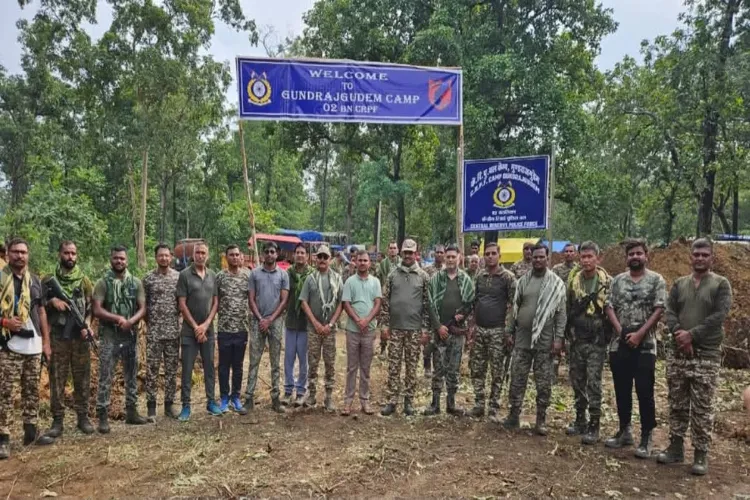
As the Centre intensifies its push to eliminate Left Wing Extremism (LWE) by March 2026, the Central Reserve Police Force (CRPF) has established 229 Forward Operating Bases (FOBs) across six Naxal-affected states since 2019, significantly expanding the security footprint in insurgency-prone regions.
The FOBs form a crucial part of the government’s counter-Naxal strategy and have been set up in remote forested areas that were once considered strongholds of Naxal groups. These semi-permanent installations enable sustained deployment of security forces and are equipped with communication systems, medical facilities and logistical support.
According to official data, the highest number of FOBs—59—were established in 2025, followed by 40 in 2024, 27 in 2023, 48 in 2022, 29 in 2021, 18 in 2020 and eight in 2019. The bases are spread across Chhattisgarh, Odisha, Maharashtra, Madhya Pradesh, Jharkhand and Telangana.
Chhattisgarh accounts for the largest share of FOBs set up this year, with 32 installations, followed by Jharkhand and Madhya Pradesh with nine each. Maharashtra and Odisha have four bases each, while one was established in Telangana.
In a written reply in the Rajya Sabha during the recently concluded Winter Session of Parliament, Minister of State for Home Affairs Nityanand Rai said that a total of 377 FOBs have been set up by all Central Armed Police Forces in Naxal-affected areas since 2019.
Officials said the FOB network has helped reduce the distance between security forces and conflict zones, improving response times, intelligence gathering and coordination with local police. The presence of these bases has also enabled uninterrupted execution of development activities such as road construction, mobile connectivity and welfare schemes in previously inaccessible areas.
FOBs typically host company-sized units of over 100 personnel and are positioned roughly five kilometres apart to ensure rapid mutual support during operations. Their presence has restricted Naxal movement, with insurgents generally avoiding activity within a five-kilometre radius of these installations.
The government’s efforts are guided by the National Policy and Action Plan to address LWE, approved in 2015, which adopts a multi-pronged approach combining security measures, development initiatives and protection of local community rights.
According to Ministry of Home Affairs data, Naxal-affected districts have reduced sharply from 126 in 2018 to 11 by October 2025, with only three districts remaining in the most affected category. Violence linked to LWE has declined by nearly 90 per cent since 2010, while fatalities have fallen by over 90 per cent during the same period.
READ MORE: Nirmal, my Abba's most trusted son
In 2025 alone, security forces neutralised 335 Naxals, arrested 942, and facilitated the surrender of over 2,100 cadres, officials said.





.png)