




 Malick Asghar Hashmi
“Would Nirmal do this?”
Call Nirmal, his opinion is usually correct.”
“When everyone leaves the house, Nirmal will stay with me at night.”
“Nirmal, come with your bike tomorrow, I have to go to the office.”
Unforgettable Experiences
These sentences are not mere fragments of a conversation, but documents of trust. These sum up years of companionship, unspoken responsibilities, and a sense of belonging that transcends blood ties. These sentences by my aged father embody a human relationship that neither needs labels nor a distinct identity. The relation is accepted without any preconditions or loud pronouncements.
Nirmal Singh has since retired from his post as a clerk at the Bihar Electricity Board. His children have built their own lives in Delhi and abroad, but Nirmal still lives in his ancestral home in Gaya city, Bihar. He is like an old tree rooted to the ground, refusing to leave its soil despite the changing winds.
His house is one kilometre from the Vishnupad Temple in a Hindu neighbourhood. The sound of temple bells, the chants of aarti, and the fragrance of devotion permeate the air. The nearby Nadarganj neighbourhood has a famous dargah, from which whispers of prayers rise as evening falls.
All roads to the Vishnupad Temple or Bodh Gaya from Gaya Junction railway station go through Nirmal's house in Nadarganj. Having seen Abba’s lifelong relationship with Nirmal, I see his house’s location as symbolic of traversing between two faiths.
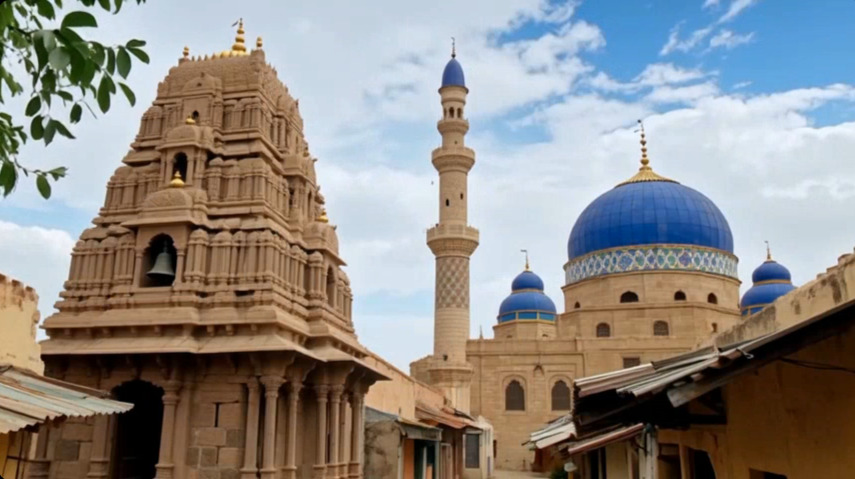
Occasionally, there are reports of tension in this area. But it has never escalated to the point where people become bloodthirsty towards each other. Just as disagreements happen within families, they also occur in neighbourhoods, but the foundation of relationships remains intact. Nirmal grew up in this environment, where even amidst differences, there is always room for harmony.
Our family, that is, my father's family, is from the Murarpur neighbourhood near Gaya railway station. This area has a mixed population, where Hindus, Muslims, and Sikhs live, walk, and interact together.
To reach our ancestral home from the station, one has to go via Gurudwara Road. There's a special kind of carefree camaraderie in this neighbourhood, without knocking or formalities. Near my house, there's a temple at one intersection and a mosque at another. A kilometre away is the Dukhaharani Mai temple, and just 50 meters away is the city's largest Jama Masjid.
This is the world we opened our eyes in. There, the muezzin’s call to prayer and the temple bells resonated together, making a divine sound; religion was a bridge, not a wall.
In our large family of eight siblings, Nirmal and his family hold a special place, not just on paper, but in our hearts.
Nirmal is younger than me, but our three younger sisters call him "Bhaiya" (older brother). His mother is everyone's "Chachi" (aunt), as if the definition of the relationship was established automatically.
Nirmal's younger brothers are also like our own, without needing any separate introduction. The new generation may not be as close, but when they meet, it's with respect and affection. Whether it's a new son-in-law or a new bride, the first introduction is always made at Nirmal's house, as if it's essential to show that this relationship runs in the very veins of our family.
This "family" relationship is not a recent one. Its roots lie in the days when our father and Nirmal's father, whom we called "Chacha Ji" (uncle), were colleagues at the Bihar Electricity Board.
Their friendship blossomed during union meetings, struggles, and movements. Then, one day, Chacha Ji passed away, suddenly. It seemed as if the story would end there. But the opposite happened; time only deepened this bond.
Abba became Nirmal’s undeclared guardian. He played a key role in securing a government job in place of his father on compassionate grounds. However, it was not so easy back then. Abba had to struggle and convince a lot of people.
Nirmal proudly recounts how, at one point during this effort, Abba's job was at stake. Perhaps it's this courage and selflessness that turned his father's friend into his "Abba", as he calls him today.
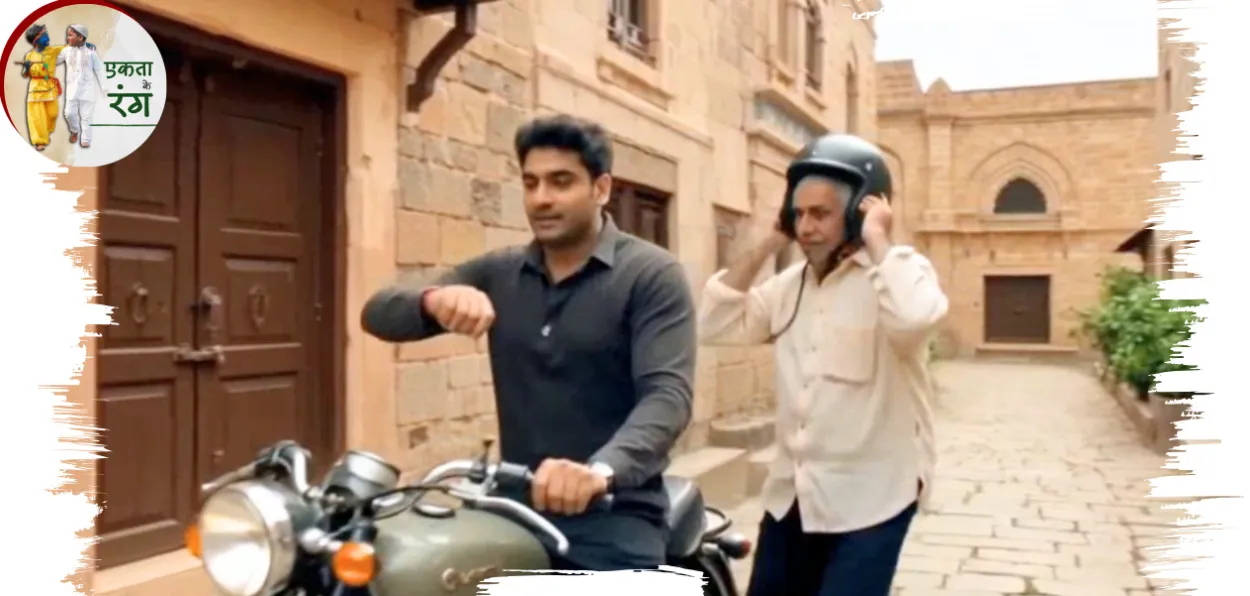
Abba has only two companions in his free time: books and Nirmal. Recently, when I visited my hometown, Abba excitedly told me how Nirmal had taken him on his motorcycle for an event.
After dropping him back home, Nirmal told Abba, "If you need to go anywhere, anytime, just call me."
A few days earlier, everyone in the family had gone for a family wedding leaving Abba at home. He didn't have to call anyone to keep him company; Nirmal trooped in to take care of Abba. He stayed the night as a son would for his father and towards the safety of the house. He does it in a manner that Abba and taking care of the house are his responsibilities.
Today, when religious divide seems to be deepening around, our family's relationship with Nirmal has ironically become stronger. We even share our deepest secrets.This relationship is not based on any transaction or self-interest, but. on trust, shared memories, and an unwavering commitment to stand by each other.
ALSO READ: At Sabrimala divine lullaby embraces all faiths to put Lord to sleep
Being Nirmal is not just about being a single individual. It's about embodying a philosophy where humanity is greater than religion, and relationships are more important than identity. Perhaps this is what it means to have a shared life, a shared heart.

.jpg "Gujarat’s women entrepreneurs bring their craftsmanship to life during Navratri")






_(2).webp)
.webp)
