




Eman Sakina
In every age, human beings are tested by the tools they create. Today, social media and digital technology have become among the most powerful tools shaping how we think, speak, connect, and live. These platforms influence opinions, relationships, habits, and even faith. For Muslims, the question is not whether to accept or reject technology, but how to use it in a way that aligns with Islamic values, ethics, and purpose.
Friday Musings
A believer should strive to ensure that even their online presence reflects their faith. When used with taqwa, social media can become a means of reward rather than regret on the Day of Judgment.
Islam is a timeless way of life. Its principles are not limited to a particular century or culture. Therefore, even though social media did not exist in earlier times, the guidance of the Qur’an and Sunnah provides a clear framework for navigating this digital world.
Technology as a Trust (Amanah)
In Islam, everything given to human beings is an amanah (trust) from Allah. Our time, intellect, speech, and resources are all trusts for which we will be accountable. Technology, therefore, is also part of this trust.
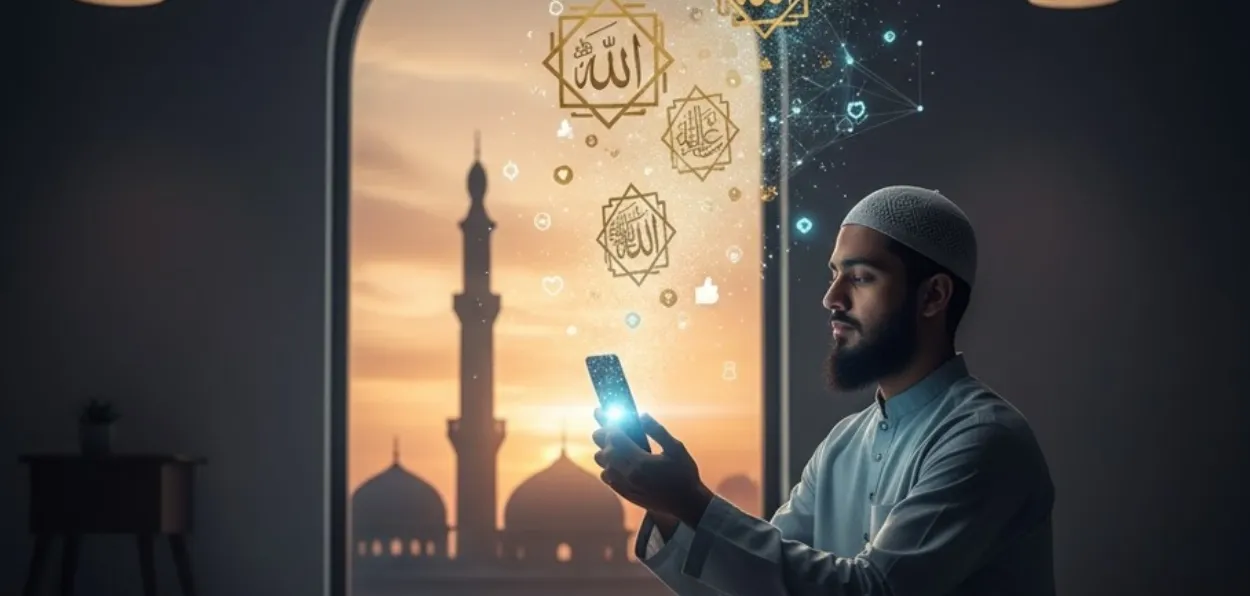
A smartphone in our hand is not merely a device; it is a gateway to endless information, conversations, images, and influences. How we use it reflects our consciousness of Allah (taqwa). When a Muslim logs into social media, they are still under the same moral responsibility as when they speak in person.
Allah says in the Qur’an: “Not a word does a person utter except that there is an observer ready to record it.” (Qur’an 50:18)
This verse applies as much to typed words as to spoken ones. Comments, tweets, posts, and messages are all recorded deeds.
Guarding the Tongue in the Digital Age
The Prophet Muhammad said: Whoever believes in Allah and the Last Day, let him speak good or remain silent.” (Bukhari & Muslim)
Today, “speaking” includes posting, sharing, forwarding, and commenting. Social media often encourages quick reactions without reflection. People share rumours, engage in arguments, mock others, and spread negativity without thinking of consequences.
Islam teaches restraint, wisdom, and dignity in communication. Backbiting (ghibah), slander (buhtan), suspicion, and spying are clearly prohibited in the Qur’an (49:12). Yet these sins have become easy to commit online—sometimes with a single click.
Islam places great emphasis on modesty and the protection of privacy. Social media, however, often promotes the opposite—oversharing personal lives, displaying oneself for attention, and exposing private matters to strangers.
The Prophet said: “Every religion has a distinct characteristic, and the distinct characteristic of Islam is modesty.” (Ibn Majah)
See a related Podcast on Muslim women and social media:
Sharing pictures, personal moments, family matters, or seeking validation through likes and comments can slowly erode the sense of modesty. Muslims are encouraged to maintain dignity in how they present themselves online, just as they would in public.
Time Management and Accountability
One of the greatest harms of social media is the silent theft of time. Hours can pass scrolling aimlessly, watching videos, and engaging in distractions.
The Prophet warned: “There are two blessings which many people waste: health and free time.” (Bukhari)
Islam teaches purposeful living. A believer’s time is precious and should be spent in beneficial activities—learning, worship, family, work, and rest. Excessive use of technology can lead to neglect of prayers, family responsibilities, and personal growth.
Using technology with intention transforms it from a distraction into a tool for benefit.
Seeking Knowledge and Spreading Good
Despite its challenges, social media and technology also offer tremendous opportunities for (good). Islamic lectures, Qur’an recitations, reminders, educational content, and charitable campaigns can reach millions within seconds.
The Prophet said: “Convey from me, even if it is one verse.” (Bukhari)
A Muslim can use these platforms to:
Share authentic knowledge
Promote kindness and positivity
Support charitable causes
Connect with scholars and beneficial content
Strengthen faith through reminders
When used wisely, technology becomes a means of ‘sadaqah jariyah’ (continuous charity).
Avoiding Envy, Comparison, and Showing Off
Social media often creates a culture of comparison. People display their wealth, travel, beauty, and achievements. This can lead to envy (hasad), dissatisfaction, and showing off (riya).
Islam teaches contentment (qana’ah) and sincerity. A believer measures success by closeness to Allah, not by online popularity. Posting for admiration or validation can slowly corrupt intentions.
Verifying Information before sharing
Fake news, misinformation, and rumours spread rapidly on social media. Islam strictly warns against spreading unverified information.
Allah says: “O you who believe! If a wicked person brings you news, verify it, lest you harm people out of ignorance.” (Qur’an 49:6)
Forwarding messages without verification can lead to fear, hatred, and confusion in society. Responsible digital behaviour is part of Islamic ethics.
Maintaining Real Relationships
While technology connects people virtually, it can weaken real-life relationships. Islam emphasizes family ties (silat ar-rahm), visiting the sick, helping neighbours, and maintaining strong community bonds.
Excessive screen time should not replace face-to-face interactions, family conversations, and community involvement.
Practical Guidelines for Muslims
To align technology use with Islamic values:
Begin with intention before using social media.
Set time limits to avoid waste.
Follow beneficial accounts and unfollow harmful ones.
Avoid arguments and negative discussions.
Protect modesty and privacy.
Verify information before sharing.
ALSO READ: Teacher Irfana Tabassum revives defunct schools in Kashmir
Use platforms to spread good and knowledge.
Regularly disconnect for worship, reflection, and family.















_(1).webp)


.webp)