New Delhi
The government on Monday said that domestic aviation turbine fuel (ATF) prices continue to be influenced by global market trends, resulting in an under-recovery of nearly Rs 30 per litre at present. It also outlined measures being taken to regulate LPG consumption, including adjustments in booking schedules and restrictions on certain commercial supplies.
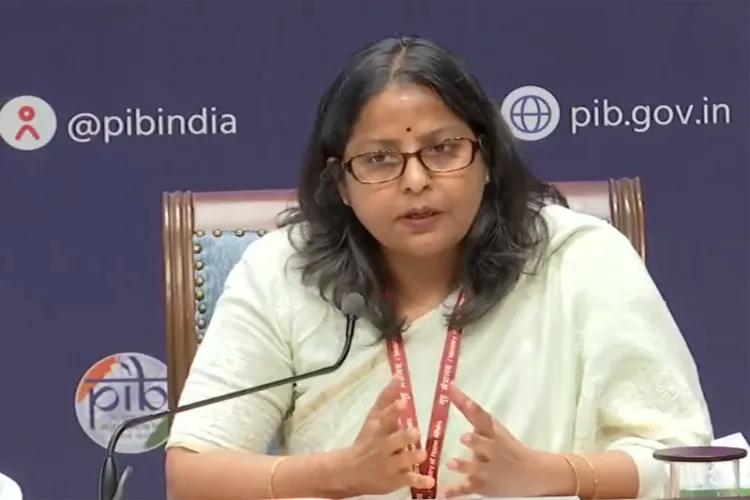
Addressing a press briefing, Sujata Sharma, Joint Secretary in the Ministry of Petroleum and Natural Gas, said the extent of under-recovery on jet fuel fluctuates in line with international fuel prices.
She noted that ATF pricing is linked to global benchmarks and therefore varies depending on movements in international markets.
On the issue of liquefied petroleum gas (LPG), Sharma said the government has adopted administrative interventions to moderate demand. These include managing refill booking intervals and limiting commercial distribution in some segments, which has led to a marginal decline in overall consumption.
The remarks come at a time when fuel demand has risen sharply across several parts of the country. To provide some relief, the Centre recently reduced export levies on petroleum products through a gazette notification issued on May 31. The export duty on petrol was lowered from Rs 3 per litre to Rs 1.5 per litre, while the levy on diesel was reduced from Rs 16.50 per litre to Rs 13.50 per litre. The duty on aviation turbine fuel was also cut from Rs 16 per litre to Rs 9.5 per litre.
The government had earlier announced a reduction of Rs 10 per litre in excise duty on petrol and diesel to help cushion consumers from rising fuel costs.
Officials maintained that the country has sufficient fuel reserves despite reports of long queues and increased activity at petrol pumps in certain regions. According to the Petroleum Ministry, while some retail outlets have witnessed unusually high sales volumes and heavy customer turnout, supplies of petrol and diesel remain adequate nationwide.
Data shared by the ministry showed that petrol and diesel sales in several districts during May 2026 recorded increases of more than 30 per cent.
The surge in demand has also altered sales patterns within the fuel retail sector. Sales by private oil marketing companies have reportedly declined by 38 per cent, while bulk sales by public sector oil marketing companies have fallen by 29 per cent, as consumers increasingly shift to retail outlets operated by public sector firms.
To prevent diversion and hoarding of petroleum products, the Centre has asked states and Union Territories to set up special enforcement teams. These teams have been tasked with monitoring and acting against black marketing, unauthorised storage, diversion of fuel supplies meant for retail consumers, and other violations under the Essential Commodities Act and related control orders.
READ MORE: Adeeba Anam's story of becoming first Muslim woman IAS from Maharashtra is inspirational
Industry bodies have also been advised to encourage their members to procure diesel only through authorised supply channels to ensure transparency and prevent misuse.












.webp "Randhir Jaiswal")
_(1).webp)
.webp)