New Delhi
Bangladesh's former prime minister Khaleda Zia's rise had symbolised the country's "resilience" in reclaiming democracy after turbulent military rule, and she also strengthened the BNP, which was in "great danger" of being totally fractured after her husband's death, according to two former envoys of India.
They also said that India-Bangladesh relations under Zia's tenures were "complex" and "often strained" due to alleged support for insurgents in the Northeast and their sheltering in Bangladesh.
Zia, 80, who died in Dhaka on Tuesday after a prolonged illness, was Bangladesh's first woman prime minister and dominated the country's politics for decades.
Veteran diplomat Veena Sikri, who served as India's high commissioner in Dhaka from 2003-2006, said during Zia's second tenure (2001-2006), it was a "very difficult time as the influence of Pakistan was very big".
A "lot of things" were discussed between India and Bangladesh on the bilateral cooperation front, while she was at the helm of the government, she said.
Sikri recalled Zia's visit to India in 1992, soon after her first tenure (1991-96) began, as also the then prime minister Manmohan Singh's visit to Dhaka in November 2005 for attending the SAARC Summit.
Zia had also paid a state visit to India in March 2006 at the invitation of then Prime Minister Singh.
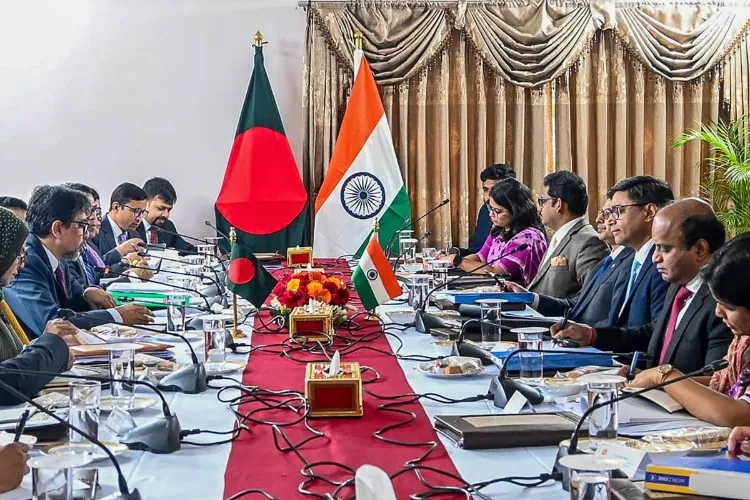
During the visit, two leaders had held comprehensive discussions on the entire gamut of bilateral relations. The talks were underpinned by the common desire to "strengthen and consolidate the friendly ties" that already existed between the two countries based as they are on shared history and culture and wide-ranging people-to-people relations, the MEA had then said in a statement.
Former diplomat Venu Rajamony said India-Bangladesh ties under Zia were "complex and often strained".
Unlike Sheikh Hasina's Awami League, Zia's BNP governments "maintained a cautious, transactional stance towards New Delhi", he said.
Hasina served as Bangladesh's prime minister during 1996-2001 and again during 2009-2024, before she was ousted after a mass movement in August 2024.
During Zia's first term, there were mixed signals -- progress on trade and the historic 1996 Ganges Water Sharing Treaty (though signed later post her tenure), but there were "persistent tensions over border issues, alleged support for Northeast insurgents sheltering in Bangladesh, and migration concerns," Rajamony said.
Her second full term, particularly after allying with Jamaat-e-Islami, saw "ties reach a low ebb" as India "raised serious concerns about anti-India elements operating from Bangladeshi soil, affecting our internal security", he said.
Zia had "consistently opposed" transit rights for India to its Northeast and was unable to see the long-term wisdom in improving connectivity between the two countries, the former envoy said.
Sikri also flagged the issue of Northeast insurgents, who were "very active" during her tenure and allegedly found shelter in that country. "It was a big problem."
However, both former diplomats concurred that Zia had also played a major role in restoring democracy after a period of tumultuous military rule in Bangladesh.
After the 1982 military coup by the then Army chief Gen HM Ershad, Zia initiated a movement for restoring democracy.
"She did strengthen the BNP, after her husband Ziaur Rahman (ex-president of Bangladesh) died. She gradually took over the leadership of BNP, and kept it together. It was in great danger of being totally fractured after her husband's death. She kept it together, carried it to great height," Sikri told PTI.
On her legacy, the former high commissioner of India to Bangladesh said, Zia and Hasina played a "very big role" on few occasions when BNP and Awami League came together to bring a "peaceful end to dictatorship of President Ershad".
"He agreed to step down and to arrange for elections... and this return to democracy in Bangladesh after 15 years of dictatorship, it was coming together of Zia and Hasina, and it was a rare moment," she said.
It was also a great example of the two parties coming together, although they seem to be at loggerheads today, Sikri said.
Rajamony said "Begum Zia's rise symbolised Bangladesh's resilience in reclaiming democracy after military rule. Regional cooperation made little progress under her rule, but her contribution to ending military rule is undeniable."
Asked what could be the likely road ahead for the BNP, given Zia's death came at a time when Bangladesh is going through a turbulent period and elections in the country are due in February, he said, "The road ahead centres on her son, Tarique Rahman, who returned from exile just days ago after 17 years."
"As acting chairman, he is now the de facto leader and likely prime ministerial face. Surveys suggest BNP remains the frontrunner, with strong grassroots support and energy from his homecoming. BNP may also benefit from a sympathy factor in the aftermath of her passing away," Rajamony opined.
READ MORE: Cricket taught me to value human talent over caste and religion
Zia was born on August 15, 1946, to Taiyaba and Iskandar Majumdar in Dinajpur district in undivided India. Her father migrated from Jalpaiguri, where the family ran a tea business, to what was East Pakistan after the Partition.



.png)