Chandigarh
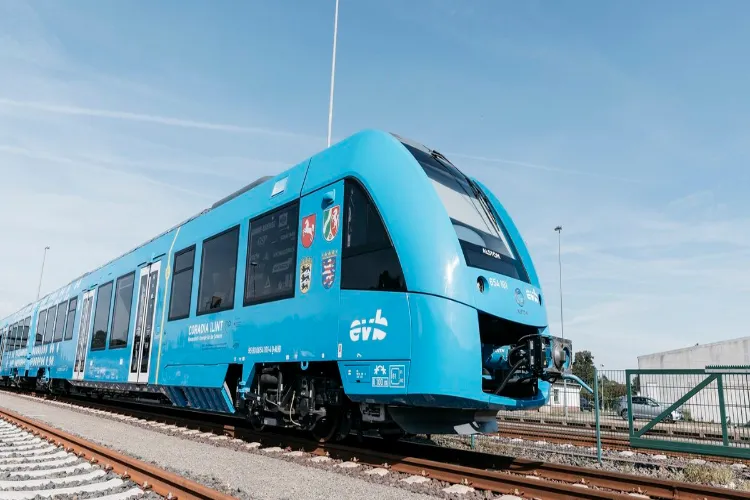
India's first hydrogen-powered train, to be flagged off by Prime Minister Narendra Modi from Haryana's Jind railway station on Friday, is equipped with multi-layer safety systems capable of detecting hydrogen leaks, heat, flames and smoke.
The train will run between the Jind and Sonipat railway stations.
Unlike conventional electric trains that draw power from overhead lines, the Hydrogen Fuel Cell Trainset generates electricity on board through a chemical reaction between hydrogen and oxygen, with water vapour and heat as its only by-product.
"In a sense, the train once again carries its own source of power, as steam and diesel locomotives once did. But instead of burning traditional fuels, such as coal or diesel, hydrogen generates electricity inside the train using oxygen from the atmosphere, eliminating combustion and dependence on an external power supply," according to an official statement issued on Thursday.
As electricity is generated on board through clean-hydrogen technology, the train represents the greenest form of rail propulsion, powering the future of sustainable mobility.
"To complement this advanced propulsion system, India has equipped the train with multi-layer safety systems capable of detecting hydrogen leaks, heat, flames and smoke," the statement said.
With an operational speed of 75 kmph and a design speed of 110 kmph, the train is not only safer but also faster on the 89-km Jind-Sonipat section.
Hydrogen-powered trains are still at a nascent stage globally. Germany was the first country to introduce commercial hydrogen passenger trains, while France, Italy, China, Japan and a few other countries are pursuing pilot projects or limited deployments. However, these trains typically comprise two to four coaches and are intended primarily for regional passenger services.
In contrast, the Indian Railways' trainset has been configured as a 10-coach passenger train with a capacity of around 2,600 passengers, demonstrating the scalability of hydrogen-powered rail transport for high-capacity passenger operations.
The hydrogen-powered train will initially operate on the Jind-Sonipat section of the Northern Railway, connecting Jind Junction, Gohana Junction and Sonipat, while serving intermediate stations and proposed halts, including Jind City, Pandu Pindara Junction, Lalit Khera Halt, Bhambhewa, Isapur Kheri Halt, Butane Halt, Khandrai Halt, Rabrah Halt, Lath Halt, Mohana, Barwasni Halt and Sonipat New.
The route has been selected to demonstrate the operational viability, safety and reliability of hydrogen-powered passenger train services under regular operating conditions. The dedicated hydrogen storage, compression and dispensing facility established at Jind will support refuelling operations, creating India's first integrated hydrogen railway ecosystem, the statement said.
Beyond the train itself, India has also established the country's largest railway hydrogen refuelling facility at Jind, creating a complete hydrogen rail ecosystem encompassing rolling stock, storage, dispensing infrastructure, safety systems and operational protocols, it added.
The Indian Railways is also exploring the deployment of hydrogen technology on heritage railways, including the Kalka-Shimla route, by leveraging the experience gained through the Jind-Sonipat hydrogen train project, it said.
"The train and the plant are fitted with devices that continuously watch for hydrogen leaks, unusual heat, flames or smoke, so any problem is caught within seconds. On top of this, non-stop ventilation keeps air moving through the train at all times, so that even if a tiny amount of hydrogen were to leak, it gets safely carried away and diluted in the open air instead of collecting anywhere," the statement said.
There is also an automatic shut-off system. If anything unusual is detected, it can automatically cut off the hydrogen supply on its own, without waiting for a person to react.
Loco pilot safety has been given particular attention. The Loco pilot's cabin has been specifically designed to keep the person safe, with a special mode that allows the train to be moved to safety in an emergency and a screen that shows the loco pilot the real health of the whole system at all times.
The Jind hydrogen plant itself has similar protections, including leak detectors, flame detectors, automatic shutdown systems, water sprays to control any fire and fire alarms, all working together.
Before this train was cleared to run, it was put through a series of demanding tests.
Unlike conventional diesel locomotives that burn fuel to generate mechanical power, a hydrogen train carries a small power plant on board in the form of a Proton Exchange Membrane (PEM) fuel cell.
The hydrogen stored in the train's cylinders combines with oxygen from the surrounding air inside the fuel cell, producing electricity that powers the traction motors and turns the wheels. The only direct by-products of this electrochemical reaction are water vapour and heat. There is no combustion, smoke and tailpipe carbon emissions.
READ MORE: Gram Sevak Aslam Shaikh behind the most awarded Thikekarwadi Panchayat
The flagging off of India's first hydrogen-powered train will mark the latest chapter in how the Indian Railways has powered its trains, reflecting the country's broader journey from coal and steam to cleaner, more sustainable sources of energy, the statement said.
Over the last 12 years, rapid electrification has significantly reduced dependence on imported diesel, paving the way for the next leap in clean rail mobility, it said, adding that today, with more than 99 per cent of broad gauge routes electrified, the Indian Railways is taking that journey a step further.











.webp "Uttarakhand Chief Minister Pushkar Singh Dhami")
_(1).webp "Supreme Court of India")

_(2).webp)