New Delhi
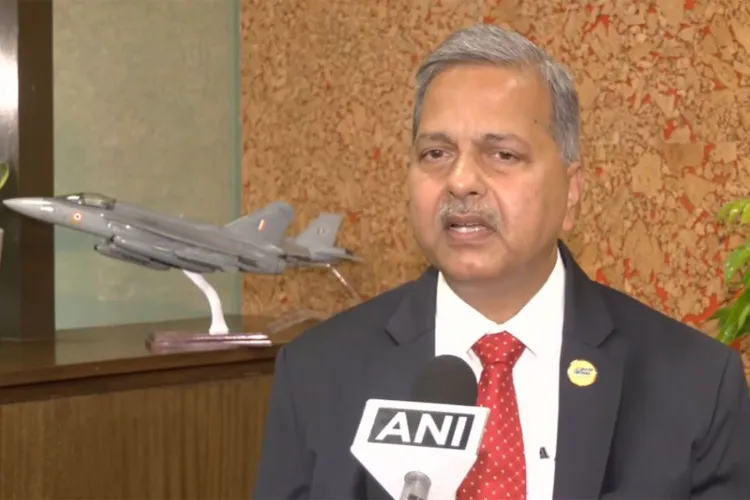
India’s economic growth is expected to moderate in the coming years due to a rapidly evolving global environment, climate-related risks and rising trade uncertainties, Devendra Kumar Pant, Chief Economist and Head of Public Finance at India Ratings & Research, said on Tuesday.
Speaking to ANI, Pant said India’s GDP growth is estimated at 7.4 per cent for the current fiscal year and is likely to slow to around 6.9 per cent in the next fiscal. He cautioned that these projections could change as the base year for national income accounting will be revised from 2011–12, with updated GDP figures expected on February 27.
“It is very difficult to put a precise medium-term number at this stage because things are changing very fast,” Pant said, pointing to global economic volatility and the impending base-year revision.
Pant noted that consumption demand remains the primary driver of India’s growth, with rural consumption providing strong support over the past two years. Consumption growth is expected to remain robust at around 7.4 per cent this year and continue at a similar pace next year if current trends hold.
However, he warned that a possible El Nino event by mid-2026 could adversely affect agricultural output and dampen consumption demand.
Pant identified rising global trade barriers as the biggest medium-term risk to India’s growth outlook. “Current growth projections assume a weighted average tariff of 38.6 per cent, significantly higher than the nearly 3 per cent level prevailing until January 2025,” he said, adding that sustained high tariffs would necessitate additional growth-supporting measures.
“For FY26, India Ratings expects a tax revenue shortfall of about Rs 2 lakh crore, roughly evenly split between direct and indirect taxes,” Pant said, attributing this partly to upward revisions in FY25 GDP estimates compared to assumptions made in last year’s Budget.
Despite possible fiscal slippage in absolute terms, he said the fiscal deficit is expected to remain contained at around 4.4 per cent of GDP due to the expanded economic base.
On external balances, Pant said capital flows remain challenging, though marginal improvement is expected. India Ratings estimates the current account deficit at 1.3 per cent of GDP this year, widening slightly to 1.5 per cent next year. The net external balance is projected to deteriorate marginally to 0.8 per cent of GDP next year, from 0.7 per cent this year.
Pant also noted that credit growth has picked up in recent months, while deposit growth continues to lag, partly due to slower nominal income growth. He added that stronger consumption and investment activity could further boost credit demand.
Highlighting India’s trade strategy, Pant said the country continues to actively pursue trade agreements and has concluded deals with Oman, the UK and New Zealand. He suggested further movement on customs duty reforms could follow, recalling that major changes were last undertaken after the 1991 economic reforms.
Pant added that the recommendations of the 16th Finance Commission on tax devolution to states will be crucial in shaping future fiscal space and the government’s ability to respond to economic challenges.
He said the 6.9 per cent growth estimate for next year assumes US tariff levels remain unchanged. “Any increase in tariffs could lower growth further, while a reduction could push growth closer to 7 per cent,” Pant said.
READ MORE: IUML's Fatima Muzaffar Ahmed is the epitome of Muslim woman leadership
“In short, growth will depend heavily on how global trade policies evolve and how domestic reforms support the economy,” he added.