New Delhi
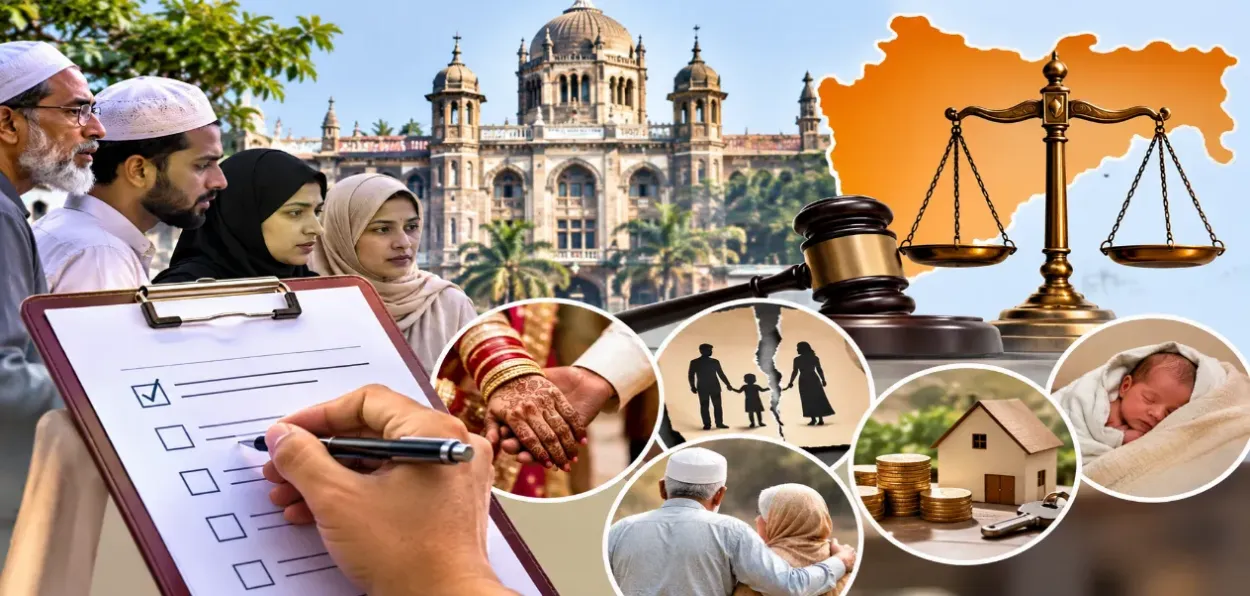
Preparations are afoot to being the uniform civil code, which replaces the religion-based personal laws for communities across India with same-law-for- all code, in Maharashtra.
The Devender Fadnavis government has launched the public consultations, a process which is mandatory part of the law making in India, to seek public opinion and suggestions on the proposed law.
The government has already appointed a seven-member committee led by Retired Supreme Court Judge Justice Ranjana Desai to oversee the drafting of the proposed law.
The seven member committee formed in July 2026 includes former High Court judges R.C. Chavan and S.G. Mehare, former Chief Secretary D.K. Jain, former Advocate General Virendra Saraf, constitutional expert Ramesh Patange, and educationist Suvarna Rawal.
Last month, the panel released a 37-question survey covering personal matters such as the legal age of marriage (options including 18, 21, 24, or 27), polygamy restrictions, equal inheritance rights, and mandatory registration for live-in relationships.
The citizens can submit suggestions via the official portal, email ([email protected]), or postal mail to the committee office in Fort, Mumbai. The consultations closes on November 15.
Committee chairperson and former Supreme Court judge Justice Ranjana Desai launched the special web portal through video-conferencing on Thursday to facilitate public participation in the consultation process.
As of 2026, Goa is the long-standing state with a historical common civil code (dating back to 1867), while Uttarakhand is the first independent Indian state to have implemented a modern UCC. Additionally, Gujarat, Assam, and Madhya Pradesh have passed UCC bills in their respective state assemblies, though they await final notification/assent or full operational rollout.
Uttarakhand is the first state in independent India to officially bring a Uniform Civil Code into force. It was implemented in early 2025.Gujarat, Assam and Madhya Pradesh have passed the Uniform Civil Code Bills and are awaiting final consent, while States like Rajasthan, Maharashtra, and West Bengal have set up committees or are moving toward introducing UCC legislation.
ALSO READ: Hindu-Muslim couples light up the lamp of love on Diwali
UCC basically addresses the issue of multiple marriage (polygamy, polyandry), inheritance, live-in relationships and marriage-divorce laws, which are different for different people in India.