




New Delhi
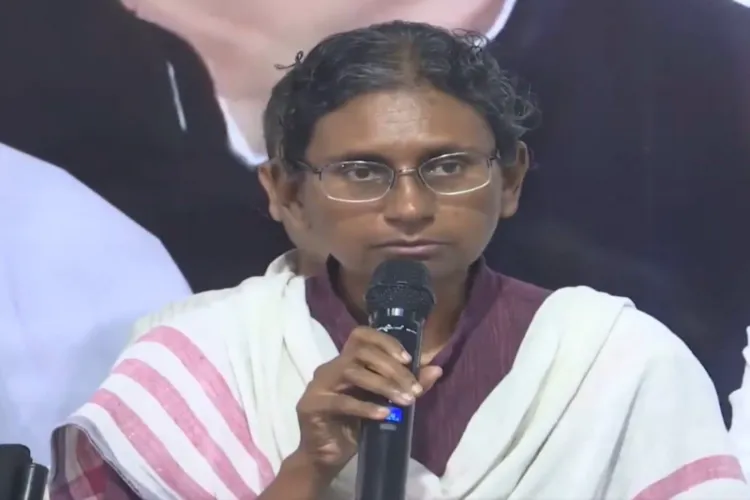
The Supreme Court of India on Friday dismissed a petition filed by Congress leader Meenakshi Natarajan challenging the rejection of her nomination papers for the Rajya Sabha elections from Madhya Pradesh.
A bench comprising Justices Prashant Kumar Mishra and Atul S Chandurkar clarified that it had not expressed any opinion on the merits of Natarajan's case.
"However erroneous the decision may be, once a nomination is rejected, the remedy ordinarily lies elsewhere," the bench observed.
Court cites Article 329
The apex court relied on Article 329 of the Constitution, which bars judicial interference in electoral matters during the election process.
The bench said accepting arguments that courts could intervene only in select cases of nomination rejection would amount to creating principles not envisaged under the Constitution.
"Any such interpretation that in some matters this Court can interfere while leaving some others to avail the remedy of election tribunal cannot be encouraged," the court said.
Singhvi's arguments
Senior advocate Abhishek Manu Singhvi, appearing for Natarajan, argued that candidates are required to disclose only those criminal cases carrying a minimum punishment of two years.
He contended that in the present case, only summons had been issued and that the returning officer had wrongly rejected the nomination citing non-disclosure of a criminal case under the Representation of the People Act framework.
Why the nomination was rejected
The order passed by Rajya Sabha Election Returning Officer Arvind Sharma stated that Natarajan had submitted an incomplete affidavit by omitting details of a court complaint in Form 26 accompanying her nomination papers.
According to officials of the Madhya Pradesh Legislative Assembly, BJP candidate Mahesh Kewat had objected to Natarajan's nomination, alleging that she failed to disclose a case registered against her in Telangana.
READ MORE: Srinagar: leaders, civil society members protest against PoJK killings
With the Supreme Court declining to intervene, Natarajan's challenge to the rejection of her nomination comes to an end at this stage, while leaving open other remedies available under election law.











.webp "NITI Ayog")
.webp "Supreme Court of India")




.webp)