United Nations
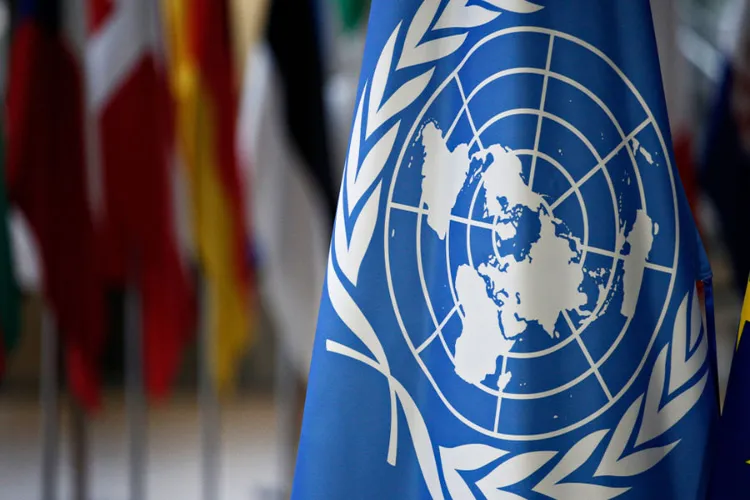
As the United Nations marked its 80th anniversary in 2025, the milestone was overshadowed by raging global conflicts, mounting financial stress and renewed criticism from US President Donald Trump, even as India called on the world body to rediscover “leadership and hope” and signalled its readiness to shoulder greater responsibility.
Wars in Ukraine and Gaza continued unabated through the year, alongside protracted crises in regions ranging from Sudan to Myanmar. These conflicts once again exposed the limitations of the UN, particularly the deeply divided Security Council, in responding effectively to today’s global challenges.
With humanitarian emergencies intensifying, climate disruptions worsening and economic inequality widening, questions grew louder over the relevance of the 80-year-old institution—founded in 1945—and its ability to address the complexities of a rapidly changing 21st-century world.
Against this backdrop, India emerged as one of the strongest voices advocating reformed multilateralism. Speaking at the UN General Assembly in September, External Affairs Minister S Jaishankar said an honest assessment would reveal that the UN is facing a serious crisis.
“When peace is threatened by conflicts, development stalled by lack of resources and human rights violated by terrorism, the UN finds itself paralysed,” he said, warning that declining effectiveness was eroding global faith in multilateralism.
India squarely attributed the UN’s credibility deficit to long-standing resistance to reform. Jaishankar said the Security Council, with its current composition of 15 members, no longer reflects geopolitical realities and must be expanded in both permanent and non-permanent categories.
“A reformed Council must be genuinely representative, and India stands ready to take on greater responsibilities,” he said, adding that the UN’s ninth decade must be defined by renewed leadership and optimism.
On counter-terrorism, India continued to project itself as a proactive global player. Following the Pahalgam terror attack in April, carried out by The Resistance Front, India launched Operation Sindoor, targeting terror infrastructure in Pakistan and Pakistan-occupied Kashmir.
Despite Pakistan’s presence on the Security Council as a non-permanent member at the time, the UN issued a strong condemnation of the attack, stressing the need to bring all those responsible—including organisers, financiers and sponsors—to justice. The Resistance Front, a proxy of the Pakistan-based Lashkar-e-Taiba, was also named for the first time in a UN Security Council report for its role in the attack.
Calls for reform were echoed from within the UN leadership as well. Secretary-General António Guterres repeatedly urged member states to overhaul the Security Council to make it more representative, transparent and effective.
The UN’s anniversary year also coincided with the return of one of its fiercest critics to the White House. Donald Trump began his second term as US President in January 2025, reviving tensions between Washington and the world body.
Relations during Trump’s first presidency were marked by open hostility, with the US leader once dismissing the UN as little more than “a club” for talk without action. His return prompted diplomats at UN headquarters to brace for renewed friction.
Within hours of assuming office, Trump signed an executive order pulling the US out of the Paris climate agreement for the second time. Soon after, his administration announced that Washington would not participate in the UN Human Rights Council, would review its role in UNESCO and suspend funding for the UN agency assisting Palestinian refugees.
When Trump addressed the UN General Assembly in September, he delivered a blistering critique, accusing the organisation of failing to translate words into action. “Empty words don’t stop wars,” he said, questioning the very purpose of the UN.
He also attacked the UN’s stance on migration, alleging that the organisation was worsening border crises, and criticised its climate change assessments, calling them a global deception. Trump pointed out that the UN had allocated hundreds of millions of dollars in cash assistance for migrants heading to the US, and sharply questioned such spending priorities.
Although the US remained the UN’s largest contributor in 2025, it cut back more than USD 1 billion in funding. Guterres later disclosed that the organisation was grappling with severe cash-flow problems, ending 2024 with USD 760 million in unpaid dues and facing another USD 877 million outstanding for 2025.
The financial strain was evident even in everyday operations, with the UN announcing cost-cutting measures such as discontinuing paper towels in its headquarters to save expenses.
READ MORE: Five places in India where Christmas comes alive in spirit and celebration
India, meanwhile, reiterated its support for stable and predictable financing for the UN system, stressing the need for efficient use of resources. Addressing the General Assembly, India’s Permanent Representative Parvathaneni Harish said global peace and prosperity were under serious threat and warned that no institution could remain effective indefinitely without reform.
“In the real world,” he said, “nothing can endure forever without repair and renewal.”