Dhaka (Bangladesh)
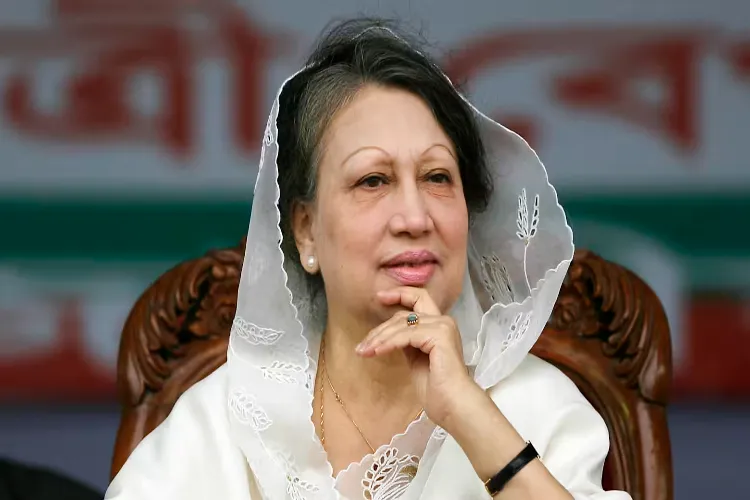
Global leaders on Tuesday continued to express condolences following the death of former Bangladesh Prime Minister and BNP Chairperson Begum Khaleda Zia, remembering her as a towering democratic leader in her country.
Interim Prime Minister of Nepal, Sushila Karki said that she was "deeply saddened" by Khaleda Zia's passing and extended condolences on behalf of the Government and people of Nepal to her family and the people of Bangladesh.
"Begum Zia leaves behind a legacy of lifelong public service, with her enduring leadership marking a historic chapter in the democratic journey of her country," Karki said in a post on X. She also described Khaleda Zia as "a true friend of Nepal", recalling her role in strengthening Nepal-Bangladesh relations.
Karki also prayed for eternal peace for the departed leader, noting that her contributions would be remembered across the region.
"Begum Zia leaves behind a legacy of lifelong public service, with her enduring leadership marking a historic chapter in the democratic journey of her country. As a true friend of Nepal,she will be remembered for her significant role in strengthening Nepal-Bangladesh relations. May her departed soul rest in eternal peace!" the post read.
Karki and Begum Zia share a significant distinction, as both were the first women Prime Ministers of their respective countries.
President of the Maldives Mohamed Muizzu also conveyed his condolences, expressing sympathy to the Government and people of Bangladesh during what he described as a time of "immense grief."
"My deepest condolences to the Government and the people of Bangladesh as the country mourns the loss of its first female Prime Minister, Begum Khaleda Zia," Muizzu said, praying for strength and patience for her bereaved family.
Begum Khaleda Zia died in the early morning today at the age of 80, while she was undergoing treatment at Evercare Hospital in Dhaka.
According to a BNP statement on Facebook, Zia died at around 6 am (local time), shortly after the Fajr prayer.
"Khaleda Zia passed away at around 6:00 am, just after Fajr prayer," the BNP statement read.
"We pray for the eternal peace of her soul and ask everyone to pray for her departed soul," it added.
Zia was admitted to the capital Dhaka's Evercare Hospital on November 23 with a lung infection. The former Prime Minister has been suffering from various physical ailments, including heart disease, diabetes, arthritis, liver cirrhosis, and kidney complications, for a long time, and earlier this month, she was sent to London for advanced medical treatment for her ailments.
Earlier, Prime Minister Narendra Modi expressed deep sorrow over the death of former Bangladesh PM and BNP Chairperson, extending condolences to her family and the people of Bangladesh.
In a post on X, Prime Minister Modi said he was "deeply saddened" to learn about the passing of Khaleda Zia, who died at the age of 80 and prayed for strength for her family to bear the loss.
"Deeply saddened to learn about the passing away of former Prime Minister and BNP Chairperson Begum Khaleda Zia in Dhaka. Our sincerest condolences to her family and all the people of Bangladesh. May the Almighty grant her family the fortitude to bear this tragic loss," the Prime Minister said.
Meanwhile, local leaders in Bangladesh also mourned the loss of the BNP leader.
Biplobi Workers Party General Secretary Saiful Haque said that Khaleda Zia's death was not only a loss for the Bangladesh Nationalist Party but also a significant blow to the country's democratic forces.
READ MORE: Cricket taught me to value human talent over caste and religion
Haque said Khaleda Zia's political life was marked by oppression and sustained struggle, but her commitment to democracy never wavered.
"It's a great loss not only for BNP. It's a big loss for the democratic people of Bangladesh... She was oppressed. She and her family faced a lot of atrocities. But her fight to establish democracy continued. After her death, this would be a source of inspiration for the whole country to fight for democratic values, democratic transition and for the next democratic government in the Parliament," he said.







.webp "Representational image")
.webp "MEA spokesperson Randhir Jaiswal")