New Delhi
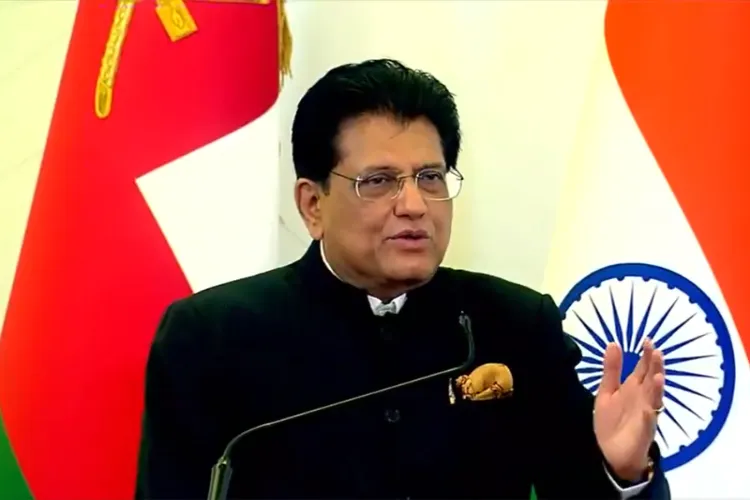
The recently implemented Comprehensive Economic Partnership Agreement (CEPA) between India and Oman is expected to offer strategic advantages that extend beyond trade, according to the Global Trade Research Initiative (GTRI). The think tank noted that Oman's unique geographic position outside the Strait of Hormuz makes it a dependable trade and energy partner for India, particularly during periods of regional instability.
The trade agreement, signed in December 2025 and effective from June 1, is viewed as an important step toward enhancing India's long-term economic and energy security. Unlike many Gulf nations whose shipping routes depend heavily on the Strait of Hormuz, Oman possesses extensive coastlines along the Arabian Sea and the Gulf of Oman. Major ports such as Salalah and Duqm remain accessible even if traffic through the Strait is disrupted.
GTRI founder Ajay Srivastava highlighted that recent geopolitical tensions in the Gulf region have underscored Oman's strategic value. While India's trade with several Gulf countries witnessed a decline amid disruptions caused by the US-Iran conflict, trade with Oman moved in the opposite direction. Imports from Oman surged significantly, rising from approximately USD 430 million in April 2025 to nearly USD 1.5 billion in April 2026, largely due to increased purchases of crude oil and urea. Indian exports to Oman, meanwhile, registered only a modest decline.
The report observed that Oman can serve as a reliable alternative route for trade and energy supplies whenever movement through the Strait of Hormuz becomes difficult. The conflict has affected oil and gas supplies from countries such as Saudi Arabia, Qatar and the UAE, while also contributing to higher global crude oil prices.
Under the CEPA, Oman has granted duty-free access to nearly 98 percent of its tariff lines, covering about 99 percent of Indian exports by value. India's exports to Oman during fiscal year 2026 stood at around USD 4 billion and included refined petroleum products, calcined alumina, iron and steel products, machinery and rice.
Although most Indian goods already entered Oman at relatively low tariff rates, the removal of duties on several products is expected to improve their competitiveness in the Omani market. However, experts believe export growth may be limited by Oman's relatively small domestic market and population of around 5.5 million.
For Oman, the agreement offers benefits in sectors where it already enjoys a strong presence in the Indian market. India has agreed to eliminate or reduce tariffs on approximately 78 percent of its tariff lines. In fiscal 2026, India imported goods worth USD 7.2 billion from Oman, including crude oil, liquefied natural gas, fertilisers, methanol and ammonia.
READ MORE: Adeeba Anam's story of becoming first Muslim woman IAS from Maharashtra is inspirational
According to GTRI, the CEPA reinforces a partnership that is crucial not only for expanding bilateral trade but also for ensuring secure supplies of energy resources and industrial raw materials. The agreement marks India's fifth free trade pact to become operational in the past five years and its fifteenth overall.














_(1).webp)
.webp)