Tehran
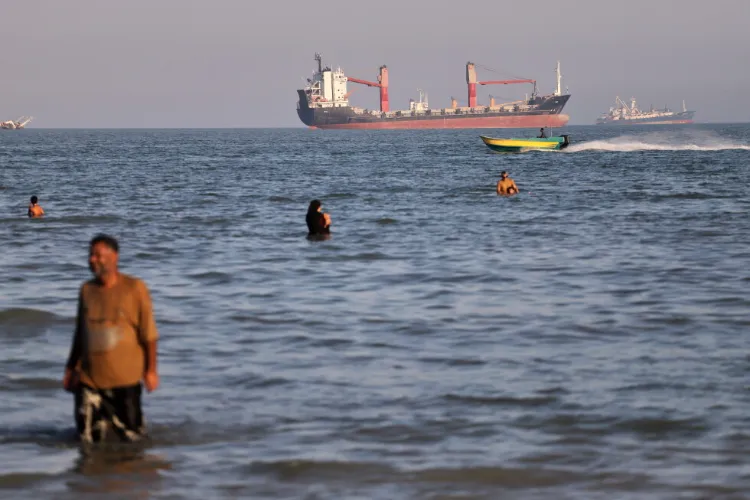
Iran's Islamic Revolutionary Guard Corps (IRGC) said that two oil tankers attempting to leave an "unsafe route" south of the Strait of Hormuz turned back after a fire broke out on one of the vessels, according to Iran's state broadcaster IRIB.
In a statement the IRGC said, "Last night, two oil tankers, provoked by American birds, attempted to leave the unsafe route south of the Strait of Hormuz. After a severe fire broke out in one of them, both vessels quickly turned back."
The IRGC asserted control over the strategic waterway, saying, "The Strait of Hormuz is our land, and the IRGC's navy sailors have full control over it, and a stranger who has come from thousands of kilometres away will not be allowed to interfere."
"With the help of God Almighty, the aggressor will be punished today," it added.
The IRGC also issued a warning to countries supporting the alleged aggressor [US].
"Countries involved in aiding the aggressor will receive a harsh response if they do not correct their behaviour," the statement said.
On the continued status of the Strait of Hormuz, the IRGC said it could not be reopened while American authorities continued "exaggerations and threats" and interference in maritime movements in the region.
"The Strait of Hormuz cannot be reopened as long as the American authorities' exaggerations and threats and their interference in maritime movements in the region continue, and threats and interference will only make the situation more difficult and complicated," it said.
Addressing the Iranian public, the IRGC said their "determination, will, and steadfastness on the battlefield have shattered the enemy, strengthened the ranks of the warriors of Islam, and given them new spirit and life."
Earlier, amid heightened tensions with Tehran and mounting anxieties regarding maritime safety in the Gulf, the United States Central Command (CENTCOM) accused the Islamic Revolutionary Guard Corps (IRGC) of trying to intimidate merchant vessels navigating the Strait of Hormuz, maintaining that the crucial sea route remains accessible for global passage regardless of claims made by Iran.
Earlier, in an official communication released on Wednesday (local time), CENTCOM stated that the IRGC had recently issued threats and attempted strikes against commercial ships and civilian seafarers traversing the strategic passage.
The American military also charged the Iranian outfit with attempting to force preferred navigation routes on global commercial transport passing through one of the most critical energy transit points worldwide.
"After recently threatening and attempting to attack commercial vessels and innocent mariners transiting the Strait of Hormuz, Iran's Islamic Revolutionary Guard Corps (IRGC) continues to claim that international mariners should only use routes the IRGC prefers," the US military said in its statement.
Refuting the position taken by Tehran, the US armed forces emphasised that the maritime corridor is an international passage governed by global maritime regulations, placing it outside the jurisdiction of the IRGC.
READ MORE: Nigar Sultana: A pioneer Muslim woman lawyer in Jaipur
"The Strait of Hormuz is an international waterway. The IRGC has no authority to dictate routes for free and open traffic flow," CENTCOM stated, noting that merchant shipping is actively proceeding through the maritime passage under the protection of American forces positioned across the region.

_(1)_(1).webp "Jagannath Rath Yatra")






.webp "Ukrainian President Volodymyr Zelenskyy")

.webp "Representational Image")