Tehran
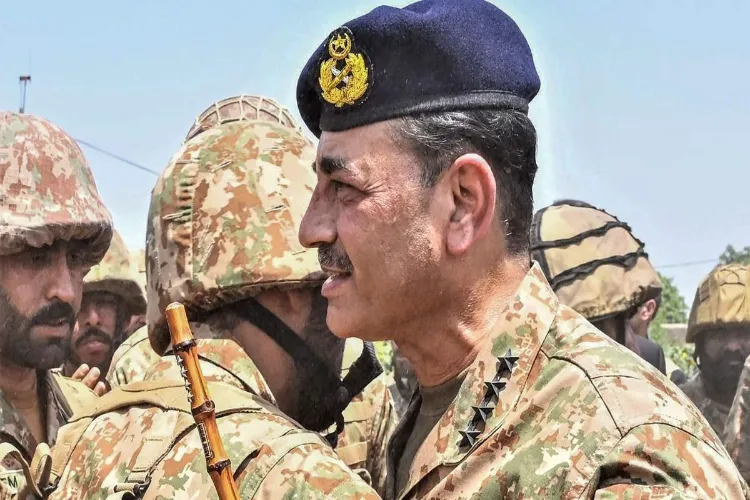
Pakistan's army chief is set to meet with Iranian officials in Tehran on Thursday in a bid to ease tensions in the Middle East and arrange a second round of negotiations between the United States and Iran after almost seven weeks of war.
In a related development, China's foreign minister told his Iranian counterpart that reopening of the Strait Hormuz was an international demand.
Wang Yi told Abbas Araghchi in a phone call that Iran's sovereignty, security, and legitimate rights should be respected as a littoral state of the Strait of Hormuz, but freedom of navigation and safety through the strait should be ensured.
“Working to resume normal passage of the strait is a unanimous call from the international community,” Wang was quoted as saying in a government statement late Wednesday.
The US naval blockade of Iranian ports continued as US Treasury Secretary Scott Bessent said the Trump administration would ramp up economic pain on Iran with new economic sanctions on countries doing business with it, calling the move the “financial equivalent” of a bombing campaign.
The White House said any further talks with Iran would likely take place in the Pakistani capital of Islamabad, though no decision had been made on whether to resume negotiations. Pakistan has emerged as a key mediator after it hosted direct talks between the US and Iran in Islamabad.
In a development in the war's other front, Trump wrote late Wednesday on Truth Social that leaders from Israel and Lebanon would speak the next day in a renewed effort to broker a ceasefire after the countries' first direct talks in decades ended the previous day in Washington without a deal. It was not clear what leaders Trump was referring to. The Israeli prime minister's office did not immediately respond for comment, which was posted before dawn in Israel and Lebanon.
Here is the latest:
Trump says leaders of Lebanon and Israel to speak
Trump wrote late Wednesday on Truth Social that leaders from Israel and Lebanon would speak the next day in a renewed effort to broker a ceasefire after the countries' first direct talks in decades ended the previous day in Washington without a deal. It was not clear what leaders Trump was referring to. The Israeli prime minister's office did not immediately respond for comment, which was posted before dawn in Israel and Lebanon.
Chinese foreign minister says reopening of Hormuz an international demand
Chinese Foreign Minister Wang Yi told his Iranian counterpart that reopening the Strait of Hormuz was a unanimous demand from the international community.
Wang Yi told Iran's Foreign Minister Abbas Araghchi in a phone call that Iran's sovereignty, security, and legitimate rights should be respected as a littoral state of the Strait of Hormuz, but freedom of navigation and safety through the strait should be ensured.
“Working to resume normal passage of the strait is a unanimous call from the international community,” Wang was quoted as saying in a government statement late Wednesday.
Wang noted that the current situation had reached a critical juncture between war and peace and also said that the window of peace was opening.
Consecutive Israeli strikes kill 4 Lebanese medics
Paramedic groups say a fourth Lebanese rescue worker has died after three consecutive, targeted strikes by the Israeli military Wednesday that also wounded six others.
The back-to-back Israeli attacks on the southern village of Mayfadoun, near the bigger town of Nabatiyeh, hit the first group of medics responding to a distress call from wounded civilians, a second group trying to assist their wounded colleagues and a third group rushing to aid the first two teams that had been targeted.
The Israeli military did not respond to a request for comment on the strikes beyond saying it was “looking into” what happened. It has previously accused the Iran-backed Hezbollah militant group of using ambulances as cover for militant activities, without offering evidence.
Fire damages Australian oil refinery, further reducing nation's fuel supply threatened by the Iran war
Officials say there were no suspicious circumstances behind the blaze that broke out late Wednesday at the Viva Energy Geelong refinery southwest of Melbourne, and no one was injured.
The facility is one of two refineries in Australia and provides 10% of the nation's gasoline, diesel and jet fuel.
Australia has agreed to underwrite two companies buying fuel at prices inflated by the war. Prime Minister Anthony Albanese warned last week that supply disruptions would “have a long tail” even if the Iran ceasefire holds.
The government had agreed to terms with Australia's largest suppliers Ampol and Viva Energy to underwrite contracts for gasoline and diesel bought on the spot market for prices above normal commercial rates, Albanese said.
Energy Minister Chris Bowen said Thursday it was too early to tell the extent of the fire's impact on gasoline production.
“The refinery is still producing diesel and jet fuel at reduced levels as a safety precaution,” Bowen told the Australian Broadcasting Corp.
On gasoline, Bowen said, “It's not a positive development. It will have an impact.”
Firefighters said the blaze had been contained to the gasoline plant.
Sharif praises Saudi restraint
According to the statement, Sharif assured the Kingdom of Pakistan's “full solidarity and support” and praised what he described as Saudi Arabia's restraint under the crown prince's leadership.
Pakistan has a defense agreement with the Kingdom, which has faced retaliatory attacks from Iran in recent weeks, causing damage.
Military adviser to Iran's supreme leader says he does not support extending ceasefire, according to state media
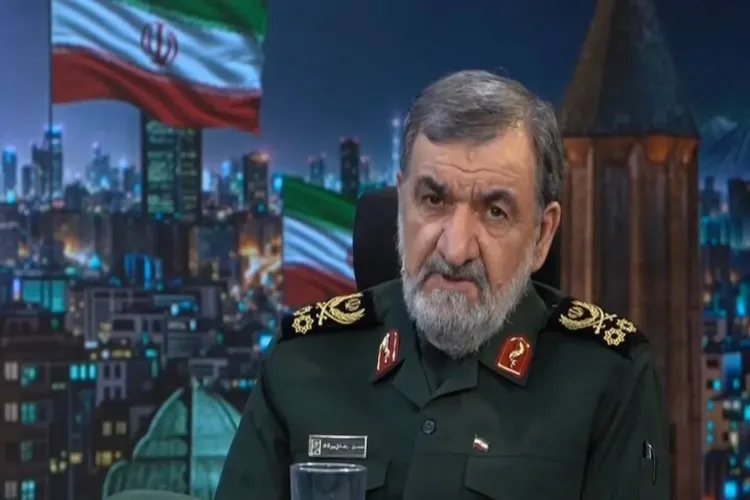
“We are subject to the decisions of the relevant officials, but personally I do not agree to extend the ceasefire,” said Mohsen Rezaei, formerly a commander in the Iranian Revolutionary Guard Corps who now advises Mojtaba Khamenei on military affairs, Iranian state media reported.
Rezaei also urged officials to be more cautious than they had been before in negotiations over economic matters with the US.
He said Iran was setting the preconditions in the next round of talks, not the U.S.
“Unlike the Americans who are afraid of continuous war, we are fully prepared and familiar with a long war,” he said, according to the report.
Blockade has been fully implemented,' US admiral says
That's according to Adm. Brad Cooper, head of U.S. Central Command, who says: “U.S. forces have completely halted economic trade going in and out of Iran by sea.”
The command said Wednesday that no vessels have made it past its forces during the blockade's first 48 hours. The blockade began Monday.
Central Command noted that 10 vessels have complied with directions to turn around and return toward an Iranian port or Iran's coastal area.
READ MORE: Poet, educationist Iffat Faridi is Godmother to children of lesser God
The blockade is being enforced “impartially against all vessels of all nations entering or leaving coastal areas or ports in Iran,” the Command said. Vessels avoiding Iranian ports are not affected.
The action could put serious pressure on the Iranian economy, while Tehran's earlier cutoff of the waterway crucial to oil and gas supplies has sent energy prices higher.










.webp "Russian Foreign Minister Sergey Lavrov")