New Delhi
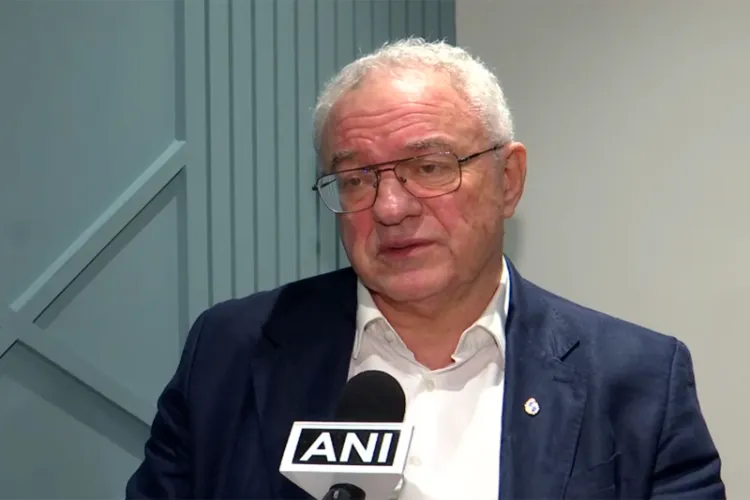
Uruguay's Foreign Minister Mario Lubetkin on Monday praised India's BRICS chairship, calling the 18th BRICS Summit in New Delhi a success and highlighting Prime Minister Narendra Modi's role in achieving consensus among the grouping's members despite a complex international scenario.
In an exclusive interview with ANI, Lubetkin said, "I think that the presidency of India needs to be happy, because it was a success. And it was not easy to try to achieve success. The international scenario is very complicated, and BRICS represent the international scenario."
He said the consensus reached at the summit was a "huge result", particularly given the diverse interests of the BRICS members.
"And if that is correct, logically, the picture at the start was not easy. Just for this, when the conclusion of Prime Minister Modi concluded, and he explained that it was a consensus, I think that is a huge result," Lubetkin said.
"Any type of consensus is, especially when we are talking about key players, when we are talking about countries that together represent 40 or more per cent of the GDP, showed that these discussions here in Delhi, in this 18th event or 18th meeting of BRICS, were a success," he added.
The Uruguayan Foreign Minister also praised the outcome of the summit, saying the New Delhi Declaration was not a "soft final declaration" but a substantive document addressing issues facing the international community.
"Because if you check the final declaration carefully, it's not a soft final declaration; it's a real final declaration, with many things that try really about the issue, the real scenario in the world," he said.
Lubetkin said India's presidency had made a "very strong contribution" to the global atmosphere and international scenario.
"But the point that finally the presidency of India could achieve, I think, is a very strong contribution to the atmosphere and for the scenario in the world," he said.
On Uruguay's participation in the BRICS Outreach Session, Lubetkin said his country was not a member of BRICS but had been invited to participate in the meetings in Rio de Janeiro last year and New Delhi this year.
"We are not part of BRICS, but we were part of the BRICS meeting last year in Rio de Janeiro, and now in Delhi. Last year invited by President Lula, this year invited by Prime Minister Modi. And we are very happy that we received this type of invitation," he said.
Highlighting Uruguay's role in the Global South, Lubetkin said, "Our message is clear: we are ready in each one of these areas to try to work better with India and with the BRICS countries, because it's clear that the trend of the Global South is the moment in which we need to reinforce, and we come from the Global South, and we need to play from the Global South."
He said Uruguay's participation was aimed at highlighting the importance of consensus on issues including sustainability and innovation.
"Our message was clear: we wanted to highlight the concept of the consensus about key aspects: sustainability, innovation--so issues that for us are very important," Lubetkin said.
Lubetkin also said there was a need for the wider international community to better understand the significance of the BRICS Summit and the developments taking place in the Global South.
"The other point is how it's possible to create and to pass on to other actors who don't continue to see what is happening in the Global South, to understand what the Global South is. That will be better for the future for all of us," he said.
He said communicating the significance of the New Delhi Summit to the wider world was part of the challenge ahead.
READ MORE:Mizan – Towards a new Muslim imagination
"But others need to understand what the Delhi weekend means. And it's part of the challenge to try to develop negotiation capacities and development capacity, the friendly capacity for the future. It's a challenge," Lubetkin said.

.webp "Union Home Minister Amit Shah")







.webp "Representational Image")