New Delhi
Health experts have urged the government to increase expenditure and infrastructure in the Union Budget which is to be presented on February 1.
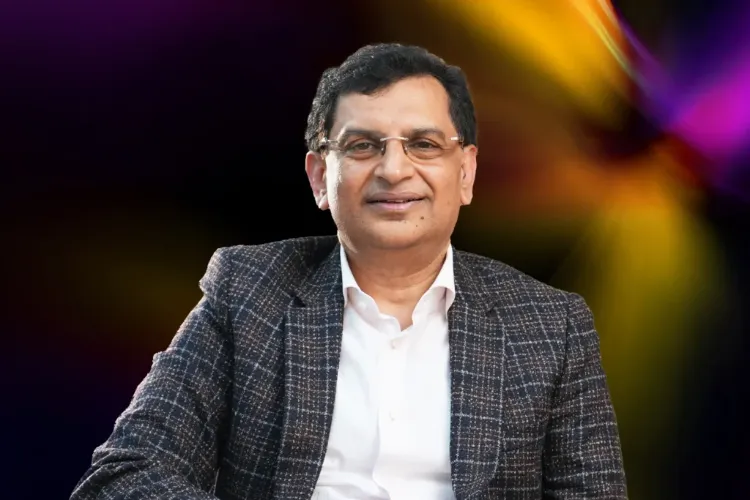
Speaking to ANI, MD Poly Medicure & CoA Member EPCMD, Himanshu Baid on Union Budget 2026, said, "We need to increase expenditure on health care, which is a bigger problem that the whole country is facing...I want to propose to the government that our health expenditure should go to 2.5% of GDP...
Secondly, at least in tier 3 and 4 cities, we need better healthcare infrastructure, so incentives should be provided to enterprises that want to set up hospitals in those cities... There is also GST inversion, especially in the medtech sector... I am grateful to the Government of India for reducing the GST on medical equipment and devices to 5%."
"Our final duty is only 5%, so we have an inverted structure... Some special export incentives should be given, because India's exports are still lagging; we have a still healthy foreign exchange, but I think our exports are still far behind China or maybe other developing countries, so a small support on export incentives is also important to make India resilient," he said.
An Indian MedTech leader in balance and vertigo solutions stressed that clinical evidence funding is key to unlocking India's US$50-billion MedTech ambition.
Rajneesh Bhandari, Founder, NeuroEquilibrium, which works in the area of balance and vertigo disorders, said, "India is rapidly emerging as a MedTech manufacturing hub, with exports exceeding US$4 billion and the MedTech sector projected to reach USD 50 billion by 2030. To accelerate this transformation into a true global exporter, the Budget must create 'clinical evidence and validation grants' - a dedicated corpus to finance multi-centre studies, real-world evidence, and health economic outcomes, so that India's home-grown technologies prove their value on the world stage."
Dr. Aashish Chaudhry, Managing Director at Aakash Healthcare, said the biggest need is for a long-term healthcare policy backed by sustained investment in people. "India has made progress in expanding hospital infrastructure and insurance coverage, but we now need a deeper focus on healthcare policy and human resources," he said.
"The budget should prioritise training and upskilling of doctors, nurses and allied health staff, along with continuous medical education. Without well-trained professionals, even the best infrastructure cannot deliver quality care," he said.
Dr Chaudhry also emphasised the importance of strengthening medical education outside metro cities. He believes targeted incentives for teaching hospitals, simulation-based training and partnerships between government and private hospitals can help address shortages in tier-2 and tier-3 regions.
ALSO READ: I received my wages for hard work of decades: Ghafruddin on Padma Shri
"A future-ready healthcare system depends on how well we prepare today's medical workforce," he added.
Shobana Kamineni, Promoter Director of Apollo Hospitals Enterprise Ltd. and Executive Chairperson of Apollo Healthco, said, "A Viksit Bharat will be built on a healthy youth and workforce, nearly one billion strong by 2047. A prevention-first healthcare system, powered by mandatory check-ups, digitised records, and UPI-style data portability, can unlock early risk detection, personalised care, and long-term productivity at scale. As India led the world in digital payments, preventive healthcare can be our next global export."