




Vidushi Gaur/ New Delhi
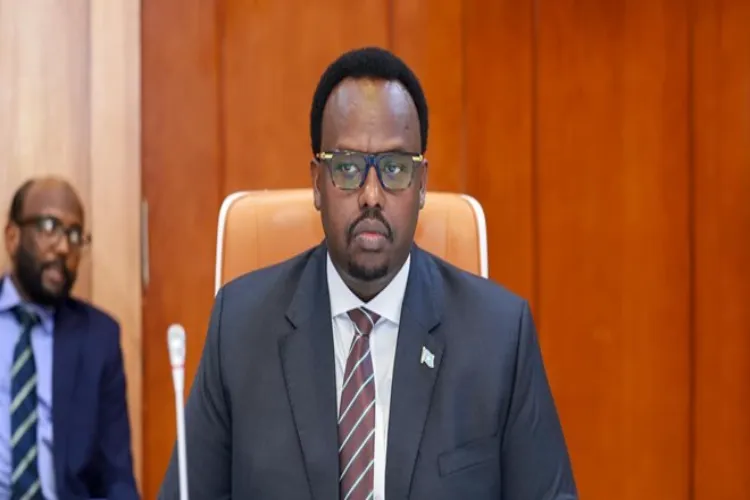
In the midst of global leaders and economic policy talks at the World Economic Forum (WEF) 2026 in Davos, one moment captured international attention not for geopolitical strategy, but for the power of language and personal connection. Somalia’s Deputy Prime Minister, Salah Ahmed Jama, surprised viewers and journalists alike when he responded in fluent Hindi during an interview with Indian journalist Rajdeep Sardesai, a moment that instantly went viral across social media platforms and news outlets.
At #WEF26, I joined the New Alliances for Aid & Development session with leaders from the UN, the European Commission, @WEF, @Devex and other partners. I highlighted Somalia’s reform progress and urged stronger partnerships and more effective financing arrangements for fragile… pic.twitter.com/QgBSkuWfQb
— Salah Jama (@SalahJama) January 25, 2026
For many in India and beyond, seeing a senior African leader answer questions in Hindi was unexpected. But for Jama, it was not accidental or an act of performance: it was a reflection of deep, formative experiences that shaped his worldview. Born in Erigavo in northern Somalia in 1980, Jama has had a long journey through academia and public service, serving in key roles including as Minister of Labour and Minister of Constitutional Affairs before being appointed Deputy Prime Minister in August 2022.
What many found most striking about his Davos interview was not just the vocabulary or grammar, but the warmth and comfort with which Jama spoke Hindi. As he recounted, his command of the language stemmed from years spent studying in India, living in cities such as Pune, Hyderabad, and Delhi during his youth, a period he described as “the best days of my life.”
My interview with @IndiaToday’s @SardesaiRajdeep on the sidelines of #WEF26 in #Davos. pic.twitter.com/eIEpIqTVPR
— Salah Jama (@SalahJama) January 23, 2026
These years in India were more than just an educational pursuit. They were an immersion into a vibrant culture, a diverse society, and the everyday rhythms of life that left a lasting impression. Jama even spoke fondly of Indian cuisine, including his appreciation for dal makhani, illustrating not just linguistic fluency but cultural affinity.
The moment went beyond a linguistic curiosity. In responding to questions about global perceptions of Somalia, particularly critical remarks made by other world leaders, Jama chose to speak in Hindi when addressing Indian audiences. This was not only an effective conversational choice, but also a diplomatic one: by speaking in a language familiar to more than half a billion people in South Asia, he bridged cultural and linguistic barriers that often complicate international dialogue.
But this personal story also points to a broader narrative: the historical and evolving relationship between India and Somalia. The two nations share a legacy of connections stretching back through the post-colonial era, when educational, maritime, and trade ties first took shape. Many Somali leaders, including current President Hassan Sheikh Mohamud, have studied in India, underlining the depth of this relationship and the role of education as a form of soft power.
In recent years, India’s engagement with African nations, including Somalia, has been multifaceted, spanning education, infrastructure, healthcare, technology, and maritime cooperation. In his Davos remarks, Jama highlighted the need for stronger partnerships with India in areas such as digital infrastructure, renewable energy, and strategic cooperation in the Indian Ocean region, a testament to how diplomatic ties are becoming increasingly practical and forward-looking.
Behind the smile and the fluency, Jama’s Hindi episode resonated because it brought a human dimension to international diplomacy. It reminded many Indians that their language, culture, and educational institutions extend beyond geopolitical boundaries. It also reminded the global audience of the interconnectedness of the world, where leaders are shaped by cross-cultural experiences and where dialogue sometimes begins not in boardrooms, but in the languages people learn and cherish.
Critically, such moments do more than garner likes and shares online; they help reshape perceptions. For Somalia, a nation rebuilding itself amid challenges, having its Deputy Prime Minister speak directly to Indian audiences in Hindi conveyed dignity, respect, and a willingness to engage on equal terms. It underscored Somalia’s resilience and its vision for constructive international partnerships.
ALSO READ: I received my wages for hard work of decades: Ghafruddin on Padma Shri
In a world grappling with geopolitical tensions, language became a diplomatic tool, an unexpected ambassador of goodwill. Salah Ahmed Jama’s fluency in Hindi was more than a conversation starter; it was a symbol of what sustained people-to-people ties and shared educational heritage can achieve. It showed that diplomacy is not only about treaties and trade, but also about empathy, mutual respect, and the universal language of respect.


.webp "Representational Image")






_(1).webp)
.webp)