New Delhi
India has already gained credibility in the semiconductor sector and the approved Semicon 2.0 programme provides policy continuity that will help strengthen the country's manufacturing capabilities and expand the industry according to CEO and President of SEMI India and the India Electronics and Semiconductor Association (IESA), Ashok Chandak.
Speaking to ANI in an interaction on the government's Semicon 2.0 programme, Chandak said the new policy covers the complete semiconductor value chain and is expected to support the growth of fabrication units, assembly and testing facilities, research and development, chip design and the supply chain.
"The fabrications, foundries, the assembly or OSAT, the R&D activities, the design, the talent, and most importantly, the machines and materials, we call as supply chain components. All these six items put together complete the entire value chain or supply chain of semiconductor manufacturing. And this is the single biggest differentiator and the important item out of this policy announced," Chandak told ANI.
The Union Cabinet has approved Semicon 2.0 with an allocation of Rs 1,27,000 crore, increasing the government's support for building India's semiconductor ecosystem.
Commenting on the programme, Chandak said the additional allocation and clearly defined incentives for different segments of the semiconductor industry would help accelerate capacity creation.
"The total amount allocated is 127,000 crores, which is incremental compared to the previous policy. And the incentives are also been defined for verticals, for fabs, and for OSATs and other stuff," he said.
According to Chandak, India has already established credibility in the semiconductor sector and the latest policy builds on that progress.
"What I see right now is, as an industry body, is India has already gained the credibility. This is the policy continuity. And it is going to result into the capability," he said.
He added that the industry sees significant opportunities for further expansion under the new programme.
"The outcomes have already been defined, what the government is expecting. And I can tell that from industry body perspective as well, we see a very good opportunity for expansion of the industry in the country with more fabs, more OSATs, more R&D, more designs, fabless and so forth," Chandak said.
On the impact of the programme on electronics manufacturing, Chandak said several OSAT plants are already operational and chips produced at these facilities will increasingly be used in electronic products, including mobile phones.
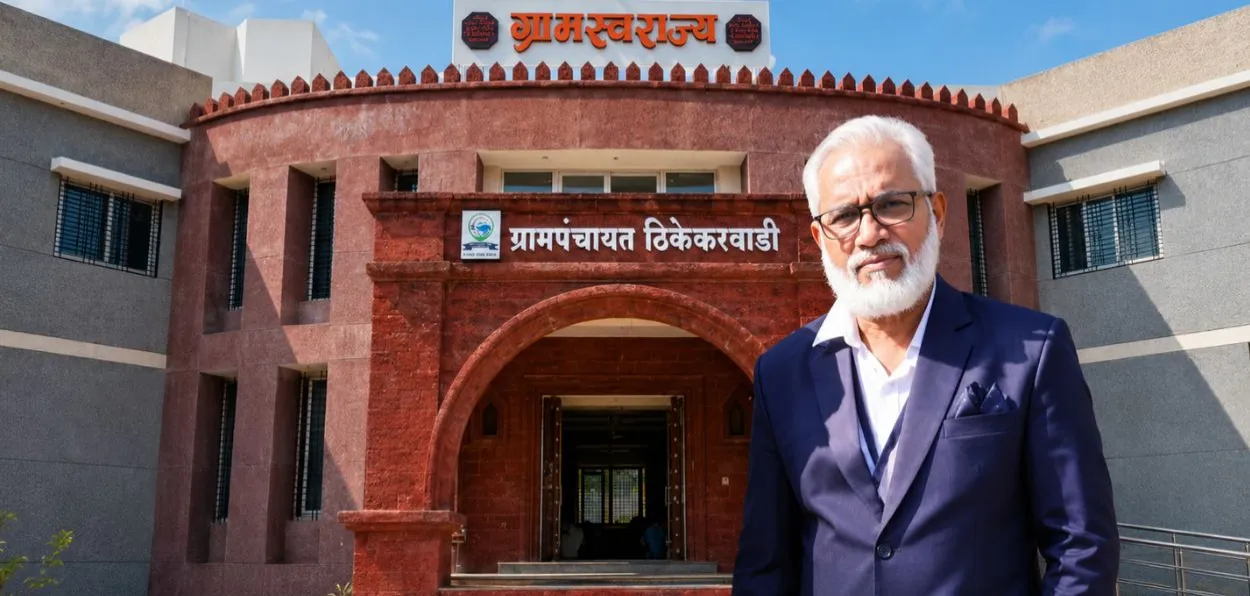
READ MORE: Gram Sevak Aslam Shaikh behind the most awarded Thikekarwadi Panchayat
He added that several other semiconductor components, including displays and passive components, are expected to be used across a wide range of products.
Referring to the Design Linked Incentive (DLI) programme, Chandak said the industry is awaiting detailed guidelines, adding that the revised framework could make grants more accessible.












.webp "Representational Image")
.webp "Representational Image")
_(2).webp)