Ashhar Alam
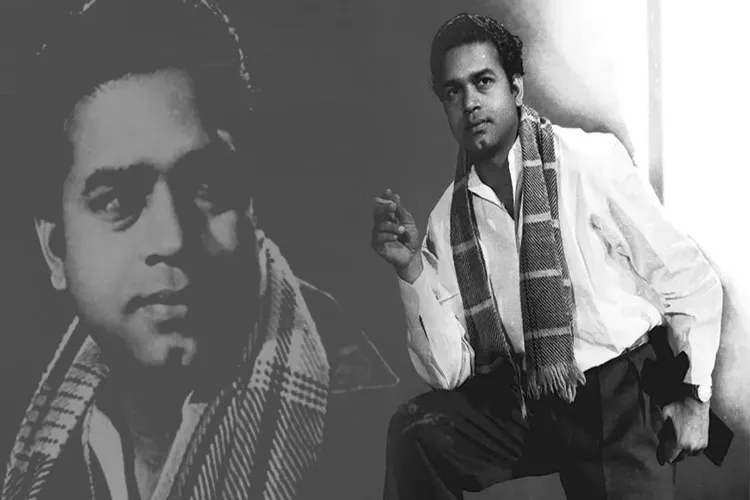
Celebrated filmmaker Shakti Samanta, the creative force behind classics such as Aradhana, Amar Prem and Kashmir Ki Kali, never received a national honour like the Padma Shri despite his immense contribution to Indian cinema, his son Ashim Samanta said on the director’s 100th birth anniversary.
Reflecting on his father’s legacy, Ashim described Samanta as a rare filmmaker who effortlessly moved across genres, from his debut Hindi film Bahu to crime thrillers like Howrah Bridge, romantic adventures such as China Town and An Evening in Paris, and emotionally rich love stories including Aradhana, Amar Prem and Kashmir Ki Kali.
“My father truly deserved a Padma Shri, even a Padma Vibhushan,” Ashim told PTI. “But such honours often require political backing, and he was never the kind to seek recognition. He believed that if it came on its own, it was fine. That was his philosophy.”
According to Ashim, the absence of official recognition did affect the filmmaker.
“When a film like Amar Prem didn’t win music awards while others did, it spoke volumes. He once mentioned that he felt he should have received the Dadasaheb Phalke Award,” he said.
Shakti Samanta, who passed away on April 9, 2009, aged 83, was among the most influential directors of his generation. Known for blending commercial appeal with social commentary, his films explored themes such as women’s struggles, human greed and corruption, backed by memorable music and performances by stars like Ashok Kumar, Madhubala, Shammi Kapoor, Sharmila Tagore and Rajesh Khanna.
Ashim said he hopes his father will be remembered as a filmmaker who fearlessly experimented with every genre.
“He had an exceptional, God-gifted sense of music and was also a skilled flute player. His early years assisting filmmakers Gyan Mukherjee and Phani Majumdar shaped him tremendously,” he said.
Recalling personal memories, Ashim spoke fondly of birthday celebrations attended by close friends from the industry, including S D Burman, R D Burman, Basu Chatterjee and lyricist Anand Bakshi.
To mark Samanta’s centenary, Hindi OTT platform Ultra Play has announced Shakti Samanta@100: A Celebration of Timeless Cinema, a month-long festival featuring 32 of his most iconic films.
Ashim said his father personally ranked Amanush, Amar Prem and Aradhana as his favourite works.
“Every filmmaker aims to make a great film each time, but sometimes execution or audience response doesn’t align with the vision,” he noted.
A recurring presence in Samanta’s films was actor Sharmila Tagore, whom the director first noticed in a Bengali magazine. Their collaboration began after he was introduced to her by writer Sachin Bhowmick, who later penned Aradhana.
“She was like family to him,” Ashim said. “They shared a close bond. They would argue passionately over films, costumes or appearances, but it would blow over almost immediately.”
Tagore also made cinematic history under Samanta’s direction by becoming the first Indian actress to wear a bikini on screen in the 1967 film An Evening in Paris.
“She had already done a bikini photoshoot before the film. For the movie, she wanted to wear the same two-piece, but my father insisted on a one-piece, saying the censors would never approve,” Ashim recalled.
Another towering influence in Samanta’s life was actor Ashok Kumar, who encouraged him to pursue a career in films. As a college student, Samanta was an ardent admirer of Kumar’s work.
“He initially aspired to become an Air Force pilot or an actor-singer,” Ashim said. “He was selected for the Air Force during the British era, but my grandmother objected after losing her husband. That’s when he turned to cinema, unsure of what role he would play in the industry.”
After briefly working as a school teacher, Samanta found his footing in Bombay, first as an assistant director to Raj Kapoor, and later under Phani Majumdar and Gyan Mukherjee.
His career spanned nearly five decades, from Bahu in 1955 to Devdas in 2002. Although he stepped away from directing later in life, Samanta remained active as a producer, supported Ashim’s films and television projects, served as president of the Indian Motion Picture Producers’ Association, and chaired the Central Board of Film Certification.
Devdas, released in both Hindi and Bengali and starring Prosenjit Chatterjee, was among the few films in his career that failed commercially.
“He realised at one point that he had lost touch as a director, so he stopped making films, but he was always present on my sets, offering guidance,” Ashim said.
Despite frequent approaches from producers to remake his father’s films, Ashim remains firmly opposed.
“Classics should be left untouched. Someone once suggested remaking Aradhana, but I told him you can’t replicate Rajesh Khanna or that music. He understood immediately,” he said.
ALSO READ: Awaz brings new show on Muslims' relation with faith and world
At home, Ashim remembers his father as a warm and deeply supportive presence.
“He was a friend, a guide, and a parent all rolled into one,” he said.










.webp)
.webp)