Shaikh Nizamuddin
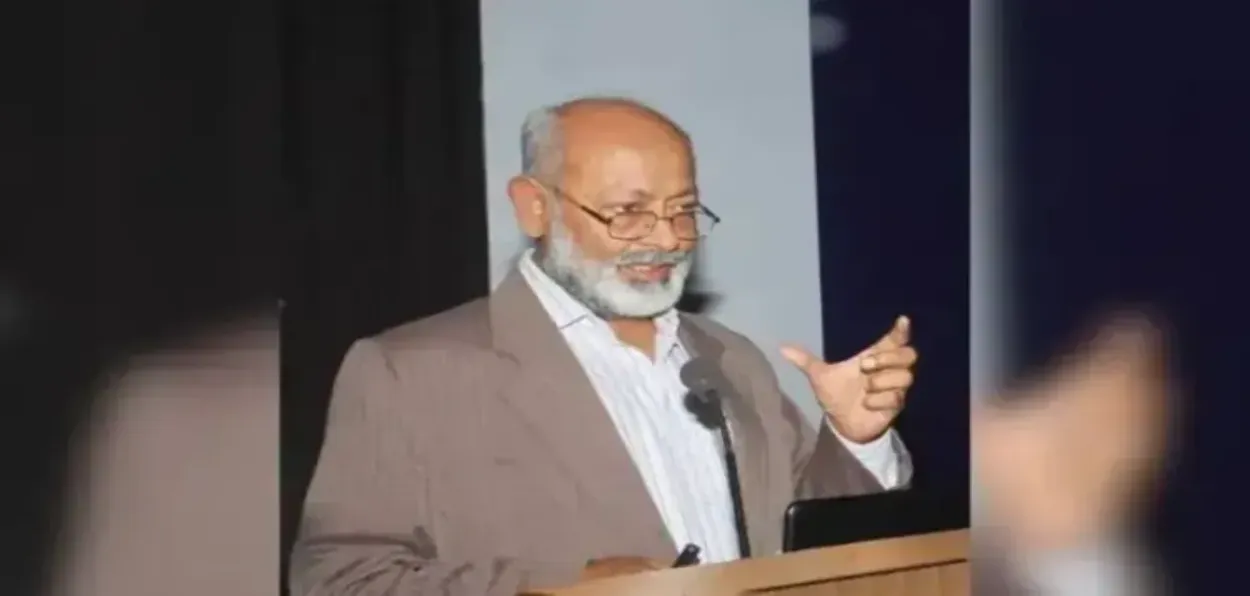
It is with profound sadness and grief that we announce the peaceful passing of Dr Muhammad Manzoor Alam on the morning of January 13, 2026. His passing is not just the loss of an individual, but the loss of an idea, a movement, and an intellectual tradition.
Obituary: Dr Muhammad Manzoor Alam
He was a visionary scholar, a global thinker, a skilled organiser, an inspiring guide, and a lifelong devotee of education, social justice, and the empowerment of marginalised communities. His passing leaves a profound void not only in India but also internationally in the academic, social, and religious worlds.
Dr Muhammad Manzoor Alam was born on October 9, 1945, in Bihar, India. His father was M. Abdul Jalil. From an early age, he demonstrated a deep desire to acquire knowledge and contribute to society.
He earned a PhD in Economics from Aligarh Muslim University. During his studies, he realised that education was not merely a means of personal advancement, but the most powerful vehicle for social change. This vision inspired him to work toward Islamic social science, economic reform, minority empowerment, and the ethical use of knowledge.
Dr Alam's professional and academic career was extensive and multifaceted. He served as the Economic Advisor in the Ministry of Finance of Saudi Arabia, contributing to important economic policy and development projects. He then served as an Associate Professor of Islamic Economics at Imam Muhammad bin Saud University in Riyadh, where he not only imparted knowledge of the subject to students but also inspired them to become responsible scholars. He served as the Chief Coordinator of the Quran Translation Project at the King Fahd Quran Printing Complex, Medina.
Additionally, he served as India's Chief Representative at the International Islamic University, Malaysia, and played a key role as an active member of the Scholarship Program Committee of the Islamic Development Bank (IDB).
Dr Alam’s career was not limited to academic positions; he was also an active social leader and institution builder. He founded the Institute of Objective Studies (IOS) in New Delhi in 1986. This institution embodied his life's mission. He aimed to create a platform for the intellectual, social, and policy empowerment of Indian Muslims and other marginalised communities that was research-based, rooted in ethical values, and offered practical solutions.
Under his leadership, IOS emerged as a prestigious think tank, providing new direction to society through research publications, national and international conferences, seminars, and dialogue programs. Dr Alam believed that no social movement could be sustainable without serious study and a moral foundation.
In addition to IOS, Dr Alam played a key role as General Secretary of the All India Milli Council, served as President of the Muslim Social Sciences Association, and was associated with numerous national and international organisations, including the Fiqh Academy, the Indian Association of Muslim Social Scientists, and the Indo-Arab Economic Cooperation Forum. He always believed in dialogue, cooperation, and collective effort. His thinking transcended narrow-mindedness and was based on humanity, justice, and equality.
Dr Alam's intellectual contributions were substantial at the global level. He interacted with eminent Muslim thinkers such as Prof. Ismail Razi Farooqi and Dr Abdul Hamid Abu Sulaiman, working with them on the Islamization of knowledge, interfaith dialogue, and contemporary challenges. He showed that Islamic thought can offer solutions to the problems of the modern world, provided it is understood with depth, openness, and morality.
Dr Alam's contributions to writing are also noteworthy. His book, The Final Wake-Up Call, focuses on important topics such as media freedom, global discourse, and the voices of marginalised communities. Additionally, he wrote numerous articles and research papers on the socio-economic status of Indian Muslims, education, Islamic economics, interfaith understanding, and social reform. His writings were not merely critical but also solution-oriented.
Dr Alam's greatest recognition was as a mentor and teacher. He guided hundreds of students, researchers, and social activists. He believed in recognising talent, encouraging it, and providing it with the right direction. His humility, simplicity, and clear vision earned him respect across all walks of life. He believed that knowledge is only meaningful when it serves society.
Dr Alam was a deeply sensitive, compassionate, and principled individual. He had a special affection for the marginalised and vulnerable. He dreamed of a society that was just, inclusive, and based on moral values. For him, leadership meant service, not power.
ALSO READ: Awaz brings new show on Muslims' relation with faith and world
Dr Muhammad Manzoor Alam leaves behind a rich legacy of scholarship, organisation, ethics, and social consciousness. The institutions he established, the ideas he presented, and the people he inspired will serve as a guide for generations to come. We pray to Allah Almighty to grant him forgiveness, elevate his status in Paradise, and keep the impact of his noble deeds alive forever. His life teaches us that true change comes from knowledge, service, and moral courage.
The author is the Assistant General Secretary of the All India Milli Council)














.webp)

.webp)