




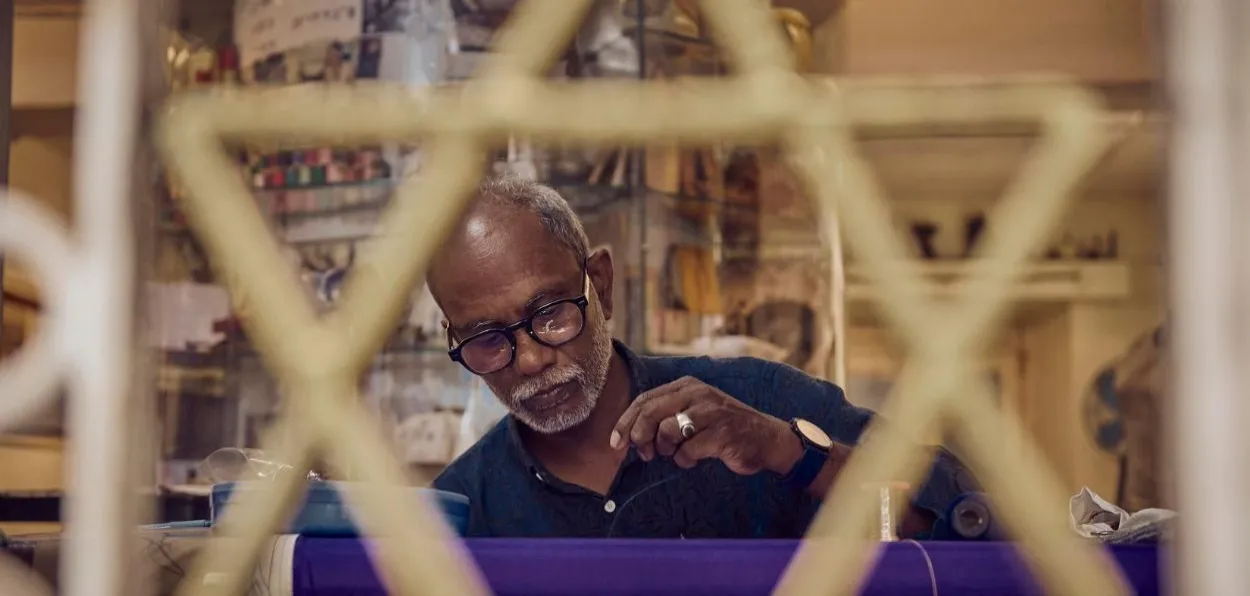
Kochi
In Kerala’s coastal city of Kochi, history breathes quietly through narrow lanes where the ancient heritage of Jewish synagogues coexists with the gentle call of the Azaan. In this shared cultural landscape stands a small embroidery shop that has become a living symbol of trust, remembrance and interfaith harmony, kept alive by a Muslim disciple who honoured a promise to his Jewish guru.
The story recently came into the public eye after an American writer shared a video of the shop on social media, drawing widespread attention. The video, posted by Aiza Merak, features the modest establishment run by Thaha Ibrahim, a Muslim resident of Kochi’s historic Jew Town. Despite the migration of much of the local Jewish population decades ago, the shop has continued to function, quietly preserving a shared past.
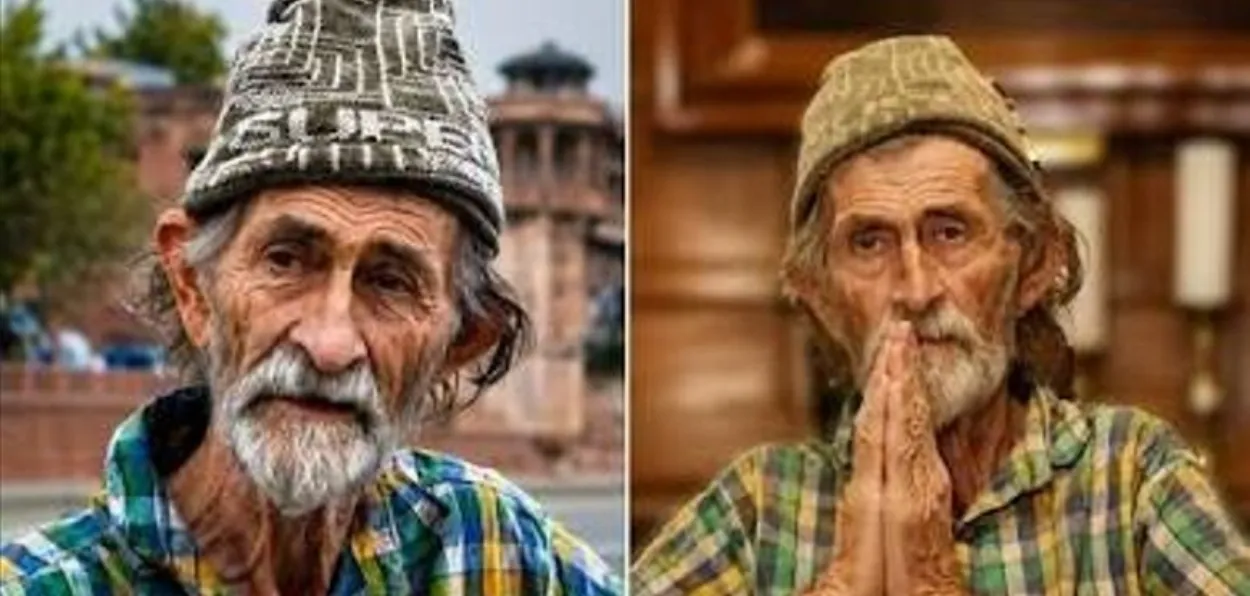
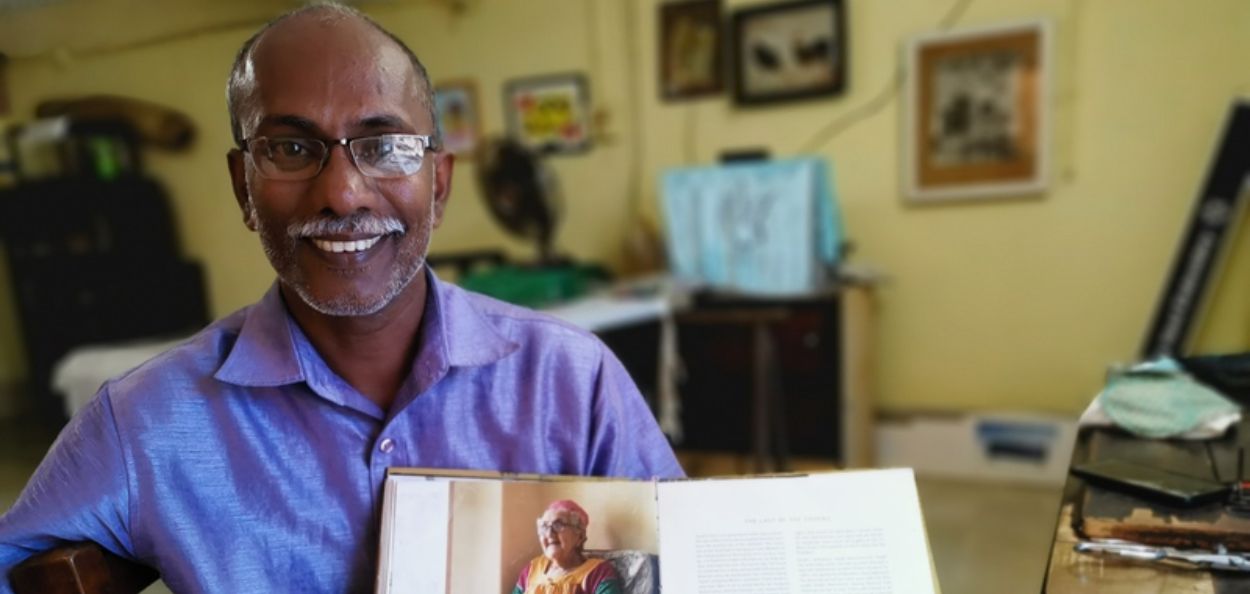 Thaha Ibrahim Showing a book from his library
The shop originally belonged to Sarah Cohen (1925–2019), one of the last permanent Jewish residents of Jew Town. For years, she sold hand-embroidered textiles and souvenirs that became well known among visitors and locals alike. While many members of the Cochin Jewish community migrated abroad in the mid-20th century, Cohen chose to remain in Kochi, holding on to her home, her shop and her memories.
As a young boy, Thaha Ibrahim sold goods on the street outside Cohen’s shop. Over time, she took him under her wing, teaching him the art of embroidery and the daily rhythms of running the business. What began as a simple working relationship grew into a bond of trust spanning decades. Ibrahim assisted Cohen with customers, production and upkeep, becoming inseparable from the life of the shop.
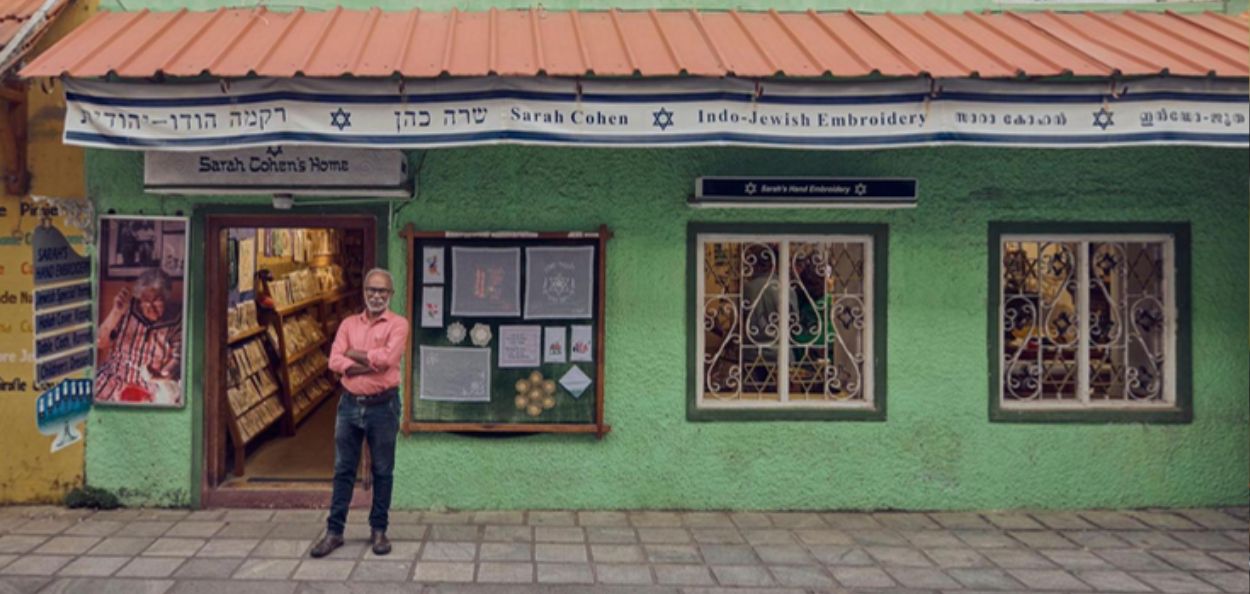 Thaha Ibrahim outside his shop
As Cohen’s health declined, she made a deliberate decision to ensure the shop would continue even after her passing. Before 2019, she asked Ibrahim to take over the business and preserve its character. He gave her his word. After her death, Ibrahim and his family assumed responsibility for the shop, safeguarding not just the merchandise but also the memories embedded within its walls.
Today, the shop operates under the same name and retains its original layout. In keeping with Jewish tradition, it remains closed on Saturdays for the Sabbath, and candles are lit on Friday evenings. Photographs of Sarah Cohen, embroidery samples and personal belongings are displayed with care. Ibrahim has often said that he remains a Muslim and has not changed his faith; his role, he explains, is simply to run the shop and honour the traditions associated with it.
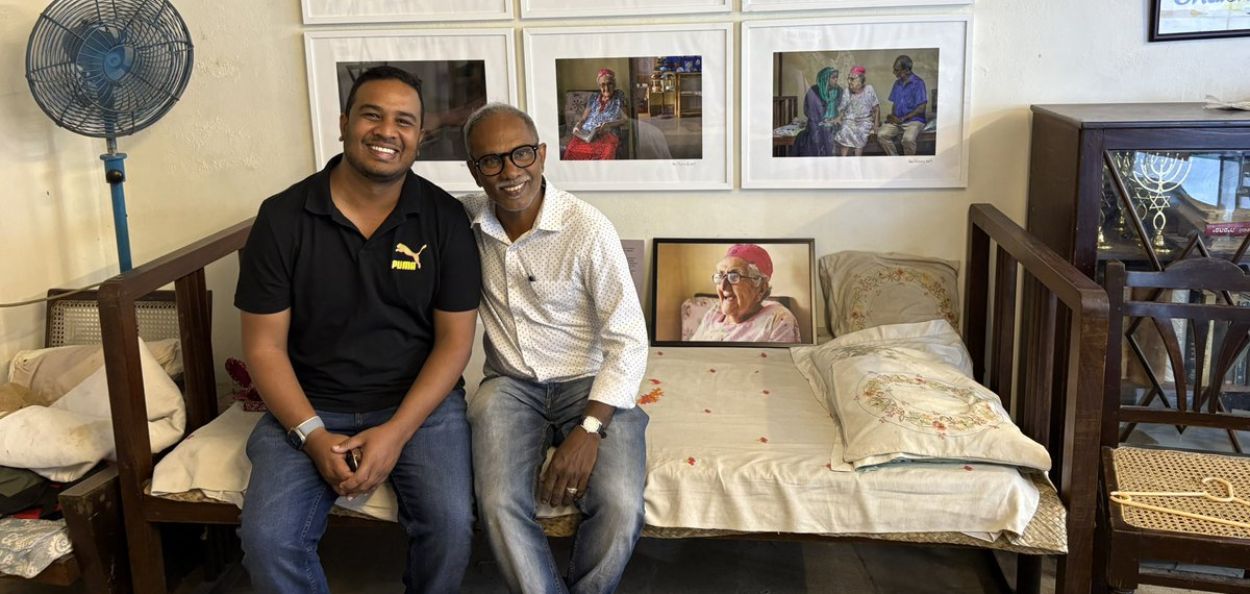 Thaha Ibrahim
Historians such as Nathan Katz and Shalva Weil, along with records from the Cochin Jewish Museum and the Kerala Tourism Department, note that Jews are believed to have lived in Kerala for over two thousand years alongside Hindu, Christian and Muslim communities. While medieval copper plate inscriptions provide early historical evidence, local traditions and scholarship suggest a Jewish presence along the Malabar Coast dating back to ancient trade networks.
This Muslim man is keeping Judaism alive in India. And he is one of the most incredible people I have ever met.
— aijamayrock (@aijamayrock) February 19, 2026
This is Thaha Ibrahim - a devout Muslim.
When Thaha was a child, he was a street vendor outside of an embroidery store in Jew Town, India. The store owner was a… pic.twitter.com/UKvM5AXNUS
Following large-scale migration after 1948, Kerala’s Jewish population declined sharply in the 20th century. Yet synagogues, cemeteries and a handful of old businesses in Jew Town still stand as witnesses to that shared history. The continued existence of Sarah Cohen’s embroidery shop, lovingly maintained by her Muslim disciple, is often cited by local historians as a rare and moving example of how heritage can survive profound demographic change.
READ MORE: When Kalam, Ansari, Dilip Kumar prayed in the mosque as common Muslims
In a time when divisions often dominate public discourse, this small shop in Jew Town tells a quieter, enduring story one where faith does not divide, promises are kept across communities, and humanity remains at the heart of shared history.

_(1)_(1).webp "Jagannath Rath Yatra")








_(1)_(1).webp)

_(1).webp)