.webp "A Maulana with the ancient hand-written Quran")
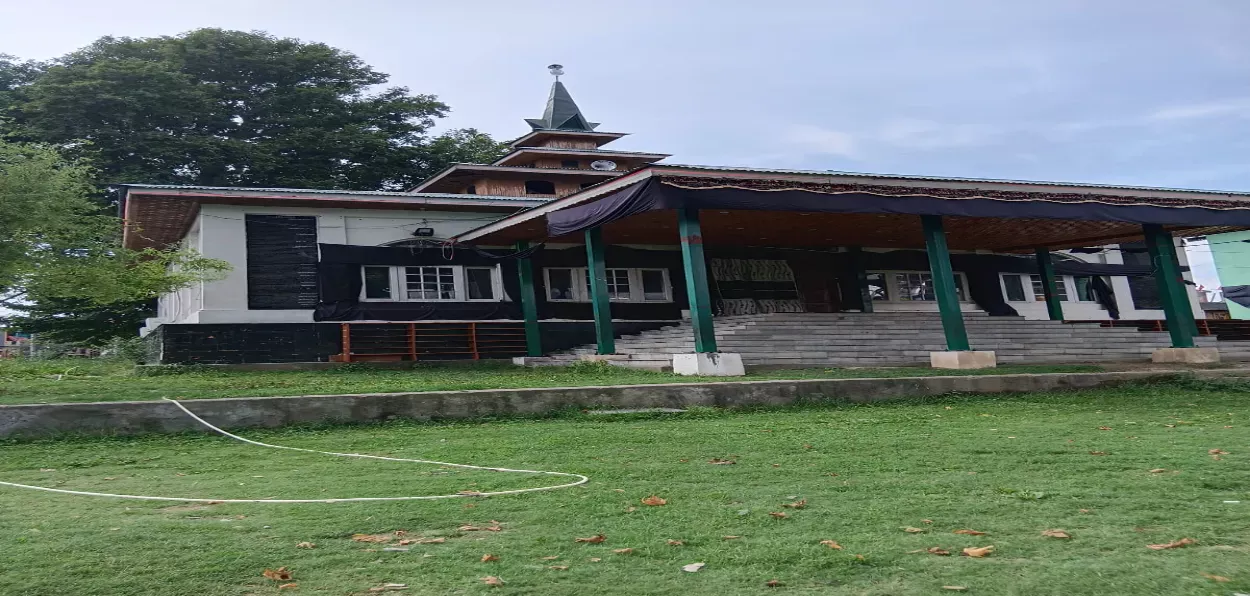
Hidden in the quiet village of Pingleswar in Assam's Kamrup district is a remarkable relic that has, for centuries, inspired devotion, curiosity and communal harmony. Carefully preserved at the Pahlanpara Chuba village mosque, a rare handwritten manuscript of the Holy Quran is revered not only as a sacred religious text but also as a priceless symbol of Assam's syncretic culture and shared heritage.
The story of the manuscript's discovery dates back to around 1770 and has since become an enduring part of local folklore.
According to the oral tradition, an elderly villager named Sheikh Dahai Baid owned a cow that behaved in an unusual manner after giving birth to a calf. While the calf was allowed to drink only a portion of its milk at home, the cow would mysteriously wander into a nearby forest and release the remaining milk over a patch of vetiver grass (locally known as birina). As the cow yielded almost no milk at home, the old man initially considered punishing it.
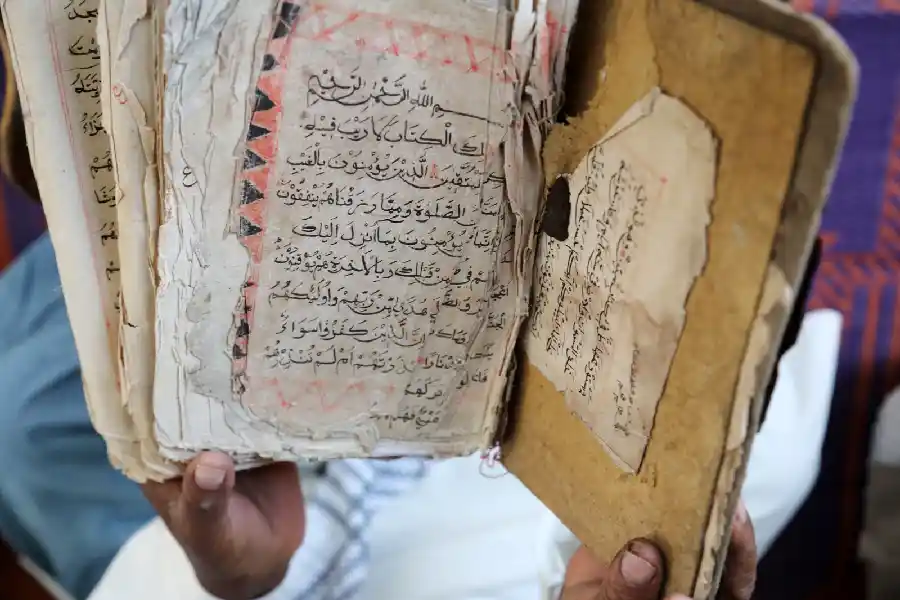 The ancient Quran housed in Pingleshwar village, Assam
One night, however, he is believed to have received a divine revelation in a dream. He was told that a sacred handwritten copy of the Holy Quran lay buried beneath the clump of vetiver grass and was instructed to perform ablution before retrieving it.
The following morning, Sheikh Dahai Baid narrated his dream to the villagers. People from all communities, irrespective of religion or caste, gathered at the site and began digging.
What they reportedly unearthed astonished everyone. The excavation revealed a small stone sculpture of a bull, an exquisitely carved wooden chest and several ancient coins believed to date back to the royal era. When the chest was opened, it contained a remarkably well-preserved handwritten manuscript of the Holy Quran.
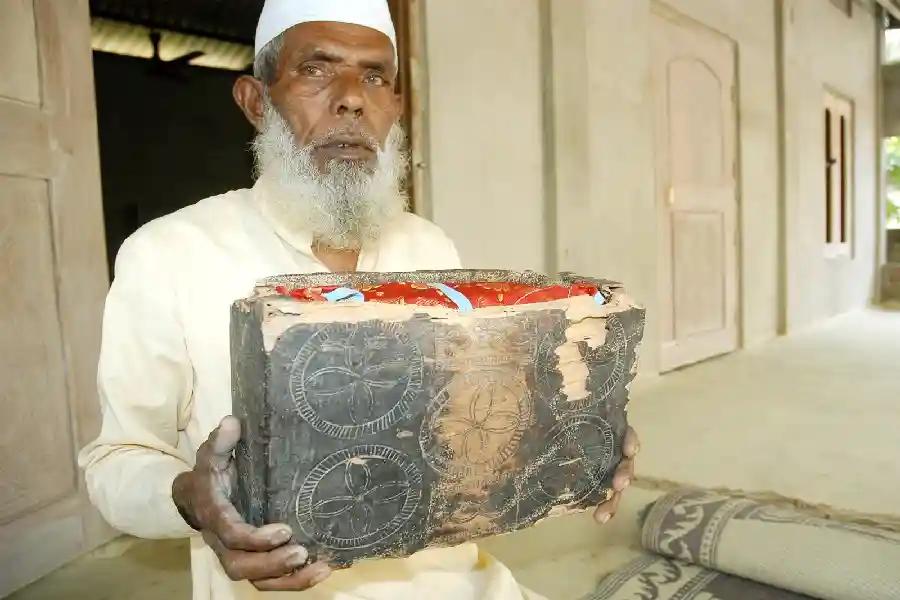 The manuscript of ancient Quran with cover
The manuscript is said to have been inscribed on Papayras, a writing material widely used in ancient and medieval Egypt. The discovery, made close to the renowned Pingleswar temple, was widely regarded as a divine message of communal harmony and religious coexistence.
Initially, the sacred manuscript was preserved in the village granary before being shifted to the village mosque a few years later. Even today, every Friday after congregational prayers, the Quran is displayed on the mosque veranda, where hundreds of devotees and visitors gather to pay their respects.
According to local oral traditions and historians, the manuscript is several centuries old and may date back to the middle period of Ahom rule, coinciding either with the Mughal incursions into Assam or the arrival of Sufi saints in the region.
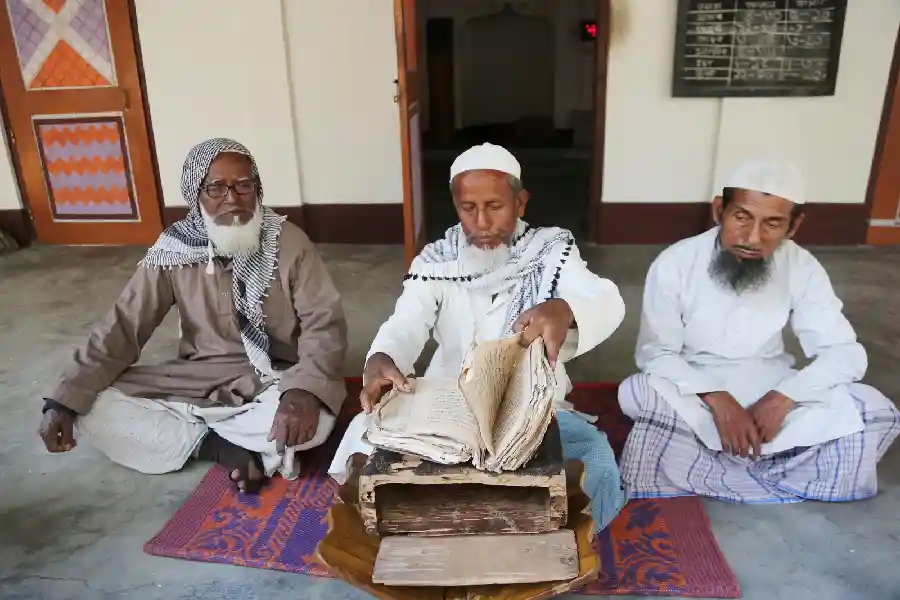 Local Clerics with ancient Quran
During that period, Islam and Sufi philosophy spread across western Assam, particularly in the Hajo region of Kamrup. The spiritual influence of Poa Mecca extended to nearby areas such as Bezera, Patrapur and Pingleswar. Historians believe the manuscript may have been brought to the region by a travelling scholar from Punjab, a Mughal military cleric or a revered Sufi saint.
The manuscript's craftsmanship is equally remarkable. Written with ink prepared from natural ingredients, including tree sap, charcoal and extracts of medicinal plants, its script has remained strikingly clear despite the passage of centuries and Assam's humid climate.
Today, the handwritten Quran is valued not only as an object of faith but also as an important source for the study of Assam's history, archaeology and cultural traditions. Researchers and historians have visited Pingleswar over the years to examine the manuscript and better understand its origins.
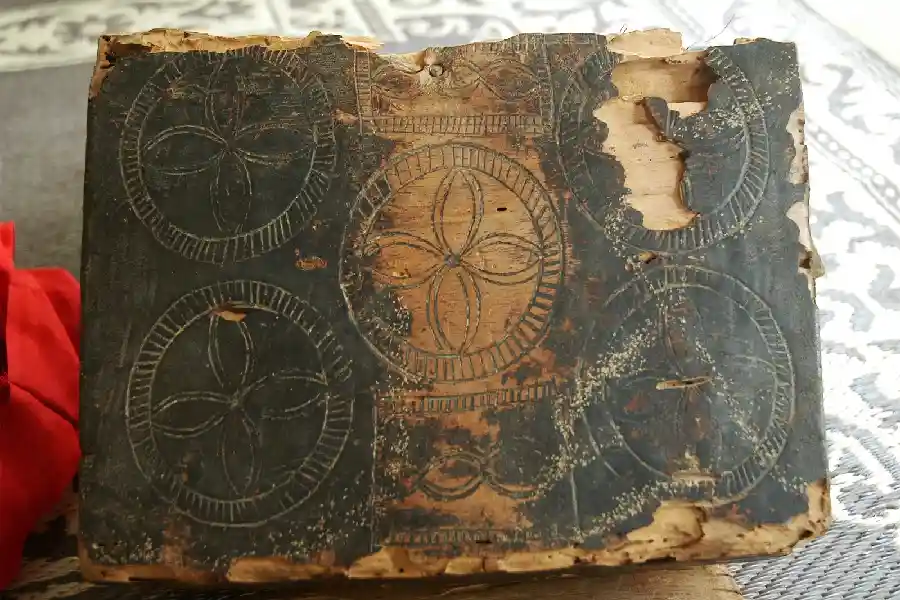
Its preservation, however, has become an urgent concern. Given its immense historical, cultural and religious significance, conservation experts believe the manuscript deserves scientific preservation to ensure that it survives for future generations.
The ancient tradition of Hifzul Quran in the Patrapur-Bezera region of Kamrup perhaps finds its most enduring expression in this extraordinary manuscript. For centuries, the handwritten Quran of Pingleswar has transcended religious boundaries, carrying a timeless message of humanity, harmony and peaceful coexistence.
ALSO READ: Deaf IndiGo employee Afjal wins hearts at Delhi Airport
Today, it stands as a rare testament to Assam's composite heritage and a powerful reminder that faith can unite communities rather than divide them.