New Delhi
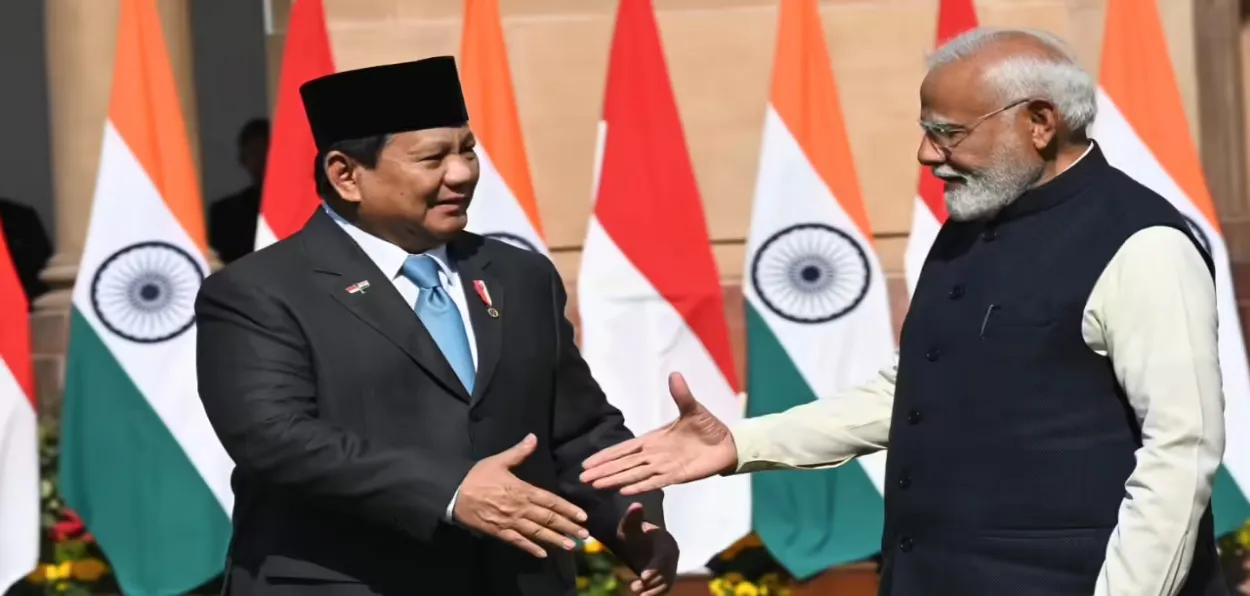
As Prime Minister Narendra Modi embarks on a six-day visit to Indonesia, Australia and New Zealand beginning July 6, his first stop—Jakarta—holds particular significance. During his three-day visit to Indonesia, the Prime Minister will seek common solutions to contemporary global challenges with a country that remains deeply rooted in Indian civilisational traditions and shares centuries-old historical and cultural ties with India.
The world's largest Muslim-majority nation proudly preserves its Hindu and Indian heritage. It is therefore no surprise that, alongside strengthening trade, defence and maritime cooperation, Prime Minister Modi is expected to devote considerable attention to deepening cultural collaboration with Indonesia.
This will be PM Modi's fourth visit to Indonesia and his first bilateral visit since India and Indonesia elevated their relationship to a Comprehensive Strategic Partnership in May 2018.
During the visit, the Prime Minister will hold bilateral talks with Indonesian President Prabowo Subianto and review the progress achieved under the strategic partnership. While his principal engagements will take place in Jakarta, he will also travel to the historic city of Yogyakarta, regarded as Indonesia's cultural heartland.
A key highlight of the visit will be the Prime Minister's trip to the UNESCO World Heritage-listed Prambanan temple complex. India and Indonesia are expected to collaborate on conservation efforts at the magnificent ninth-century Hindu temple, underscoring their shared commitment to preserving their common cultural heritage.
 Prambanan temple complex in Java, Indonesia
According to Rudrendra Tandon, Secretary (East), the Comprehensive Strategic Partnership established during Prime Minister Modi's 2018 visit has emerged as a major pillar of India's Act East Policy and its MAHASAGAR vision. Indonesia, he noted, is also a key member of ASEAN and plays an important role in strengthening a rules-based order in the Indo-Pacific region.
Indonesia occupies a pivotal position in the security and stability of the strategically vital Malacca Strait, one of India's most important sea lanes of communication. The waterway is crucial not only for India's maritime interests but also for global commerce, particularly at a time when instability in the Strait of Hormuz has prompted countries to explore alternative trade routes.
Rajya sabha MP and Former Foreign secretary Harsh Vardhan Singh spoke about the significance of MP Modi's visit to Indonesia in furthering cultural and civilisational ties between the two nations:
#WATCH | Delhi: On Prime Minister Narendra Modi's Indonesia visit, Rajya Sabha MP and Former Foreign Secretary Harsh Vardhan Shringla says, "Prambanan temple complex is very significant one in the Java Island and the idea of the visit will also be to see if we can provide support… pic.twitter.com/w4JnphY4ZW
— ANI (@ANI) July 5, 2026
Beyond strategic considerations, Indian influence in Indonesia runs remarkably deep. Ancient civilisational links coexist with a vibrant modern relationship reflected in trade, a thriving Indian diaspora, "Little India" neighbourhoods, shared culinary traditions and enduring cultural exchanges.
India and Indonesia trace their historical relationship back to the era of the Ramayana. Characters from the epic—including Lord Rama, Hanuman, Garuda and Lord Ganesha—continue to be revered across Indonesia. Indonesians often remark that while their ancestors embraced Islam, they never abandoned their cultural heritage.
One of the first symbols greeting visitors arriving in Jakarta is the towering statue of Garuda at the city's international airport. Garuda, the mythical eagle and the mount of Lord Vishnu, is Indonesia's national emblem, known as Garuda Pancasila. The country's national carrier is aptly named Garuda Indonesia.
 Ramayana being staged in Bali, Indonesia
Hanuman occupies a special place in Indonesian culture, particularly in Java and Bali, where he is celebrated through traditional dance, shadow puppet theatre, temple sculptures and annual festivals.
The Ramayana remains perhaps the strongest cultural bridge between India and Indonesia. Over the centuries, Indonesia has developed its own celebrated adaptations of the epic, including the Kakawin Ramayana and the Serat Rama.
The internationally acclaimed Ramayana Ballet performed against the backdrop of the Prambanan temple complex continues to captivate audiences, while characters such as Rama, Sita, Hanuman and Ravana are revered and celebrated in both countries.
The influence of India is also reflected in the Indonesian language, which contains hundreds of words derived from Sanskrit. Many Hindu festivals are observed not only as religious occasions but also as cherished expressions of Indonesia's rich cultural heritage.
ALSO READ: Rani Khanam broke barriers to become India's top Muslim Kathak dancer
Prime Minister Modi's visit, therefore, is expected to reinforce a partnership that extends far beyond diplomacy and economics. It is a relationship anchored in shared history, civilisational values and cultural affinity, while increasingly assuming strategic importance in ensuring peace, stability and prosperity across the Indo-Pacific.

.webp "Pilgrims on the way to Amarnath shrine")









.webp)