.webp "Advocate Abdul Rashid Hanjura (second from left) at the launch of his Kashmiri translation of Sufi saint Mir Sayyid Ali Hamadani's work .")
Ehsan Fazili/Srinagar
A Kashmiri translation of Zakhirat-ul-Muluk, the celebrated treatise on kingship and governance written by 14th-century Sufi saint Mir Sayyid Ali Hamadani, popularly known as Shah-e-Hamadan, was released in Srinagar on the occasion of the saint’s annual Urs last month.
The translation was unveiled at a function jointly organised by the Islamic Relief and Research Trust (IRRT) and the J&K Urdu Council, both headed by the translator, Advocate Abdul Rashid Hanjura.
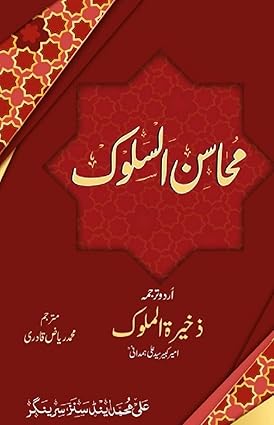
Zakhirat-ul-Muluk (Treasure of the Kings), one of the many works authored by Shah-e-Hamadan, is a treatise on political ethics, governance, moral conduct, and Islamic spirituality. The Persian-born Sufi saint is revered in Kashmir for his pivotal role in spreading Islam in the Valley and across Central Asia.
The book outlines principles of just governance, ethical leadership, and spiritual responsibility, drawing extensively on Islamic teachings. Mir Sayyid Ali Hamadani (1314–1384) visited Kashmir three times and left a lasting influence on the region’s religious, cultural, and social life.
“I was impressed by the content of the book ever since I read it for the first time,” Hanjura told Awaz-The Voice. “I realised that it is not only meant for kings, rulers, and administrators but is equally important for ordinary people. I felt it is one of the finest books and should be read by everyone.”
The translation took him nearly four years to complete while he continued to discharge his professional responsibilities. Initially, Hanjura began translating the text directly from Persian, but the task proved challenging. He later used the Urdu translated version to complete it.
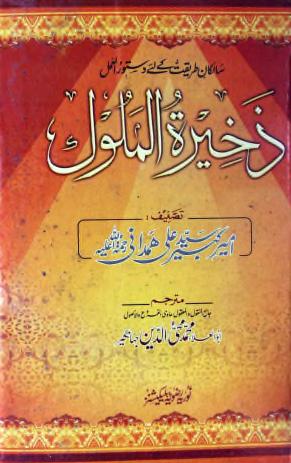
One of the primary motivations behind the project, Hanjura said, was to make this important work accessible to Kashmiri-speaking readers.
“I am a Kashmiri, and I love my mother tongue. I am proud of being a Kashmiri—not only for speaking the language but also for writing in it,” he said. “This translation is my contribution to the Kashmiri language and literature.”
Another reason, he said, was his desire to encourage younger generations to learn through their own language and strengthen their connection with Kashmiri.
“Future generations must have access to such knowledge in their mother tongue,” he said. “It will help them deepen their understanding and appreciation of the language while acquiring knowledge.”
The translation was completed during his spare time and was first prepared in handwritten form before being digitised and published. It was formally released during the Urs celebrations.
“My objective is that the Kashmiri version of this 700-year-old treatise by Mir Sayyid Ali Hamadani should reach every reader,” Hanjura said.
To achieve that goal, he has been distributing copies of the book free of cost among admirers of both the Kashmiri language and Shah-e-Hamadan.
According to Hanjura, the book remains highly relevant even today, particularly for administrators and those in positions of leadership. So far, he has distributed more than a hundred copies of the Kashmiri translation.
Apart from being a translator and author, Hanjura is a prominent social worker and cultural activist. He heads the Islamic Relief and Research Trust (IRRT) and serves as President of the J&K Urdu Council. Over the years, he has written several books in Urdu and Kashmiri.
In 1980, he began serving the Jammu and Kashmir Yateem Trust, an institution dedicated to the welfare of orphans and underprivileged children. He later established the Islamic Relief and Research Trust, expanding the scope of social welfare initiatives.
The Trust runs Darul Ehsan, an orphanage at Kralpora in Budgam district, and Darul Muhsinat, a girls’ orphanage in Pattan, Baramulla.
A committed advocate of Kashmiri culture, Hanjura has also been actively organising programmes aimed at preserving and promoting the region’s language, literature, and cultural heritage.
ALSO READ: Fatima Husna proudly guides tourists through Hyderabad's history
Through his translation of Zakhirat-ul-Muluk, he hopes to ensure that the wisdom of one of Kashmir’s most revered spiritual figures remains accessible and relevant to contemporary readers.