 Pallab Bhattacharyya
A few years ago, the India-Bangladesh border was widely celebrated as a symbol of diplomatic success. The two countries had resolved one of the world’s most complex boundary disputes through the Land Boundary Agreement, strengthened economic ties, deepened security cooperation and developed an unprecedented level of political trust.
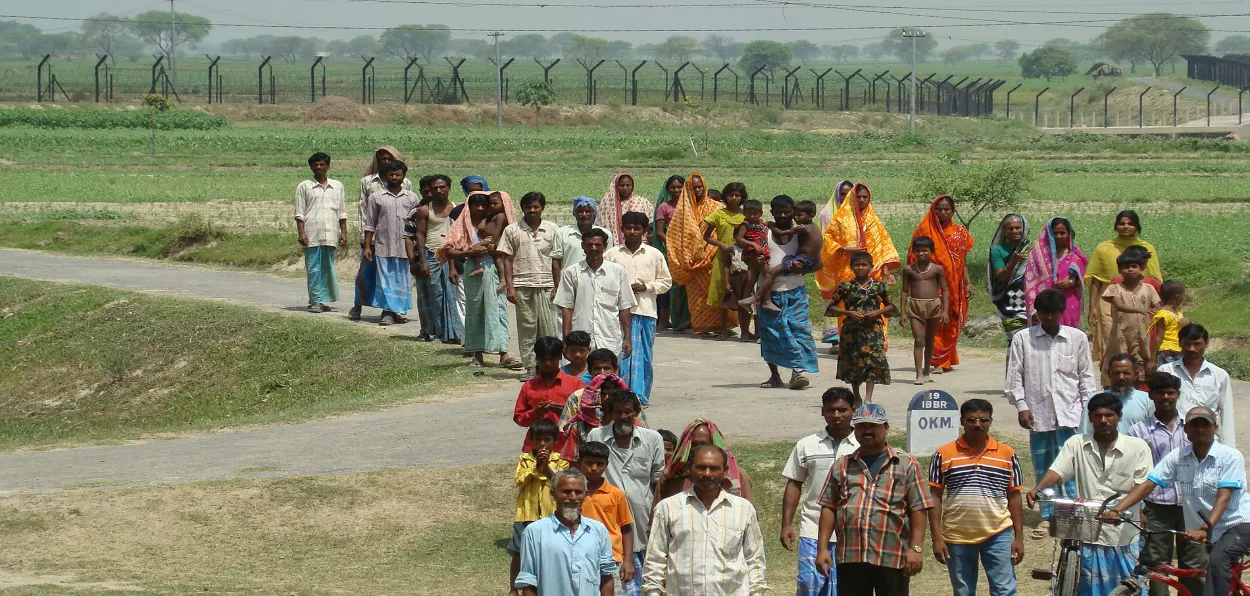
Today, however, scenes unfolding along parts of the border tell a different story. Men, women and children stranded in no-man’s land, border guards facing each other in tense stand-offs, and governments disputing the nationality of vulnerable individuals have created a humanitarian and diplomatic challenge that neither side can afford to ignore.
The recent incidents along the India-Bangladesh frontier have brought the issue into sharp focus. In one widely reported case in West Bengal, a Bangladeshi national allegedly pushed across by Indian authorities was left stranded in no-man’s land after the Border Guard Bangladesh (BGB) refused to accept him without proper verification of nationality. The man remained trapped between the two countries while officials on either side argued over responsibility.
In another incident at the Jamalpur border, residents and BGB personnel reportedly resisted an alleged push-in attempt, preventing individuals from being forced into Bangladeshi territory. These were not isolated events but manifestations of a larger and increasingly contentious issue.
At the heart of the controversy lies the question of illegal migration. India has long maintained that large-scale undocumented migration from Bangladesh has altered demographic patterns in several border states, particularly Assam and West Bengal. The issue has influenced electoral politics, social tensions and public policy for decades. While estimates vary and reliable data remain elusive, concerns over illegal immigration have become deeply embedded in India’s political discourse.
For many years, critics accused the Trinamool Congress government in West Bengal of adopting a permissive attitude toward undocumented migrants. Political opponents alleged that illegal immigrants were able to secure identity documents and access welfare schemes with limited scrutiny. Whether these allegations were fully justified remains contested, but the perception itself became politically significant.
With the BJP coming into power in West Bengal and with a national policy to check illegal immigration, enforcement has become more aggressive.
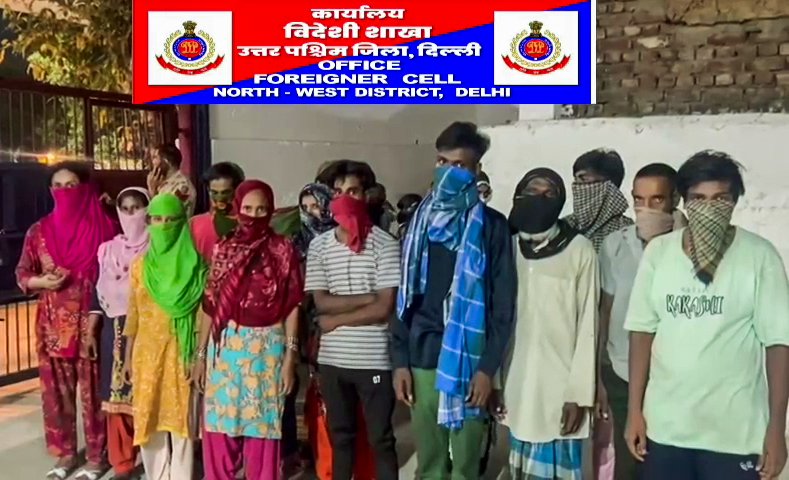 Illegal Bangladeshi immigrants arrested by Delhi Police in January 2026
As a result, a campaign to identify, detain and deport suspected illegal immigrants is going on. From a sovereign perspective, every nation possesses the right to regulate its borders and remove foreign nationals residing unlawfully within its territory. The challenge arises when determining who is actually a foreign national and how deportation should be carried out.
This distinction is critical because deportation is not simply a matter of escorting someone to the border and directing them to cross. International norms require verification of nationality and acceptance by the receiving state. A country cannot merely assume that another country will accept an individual because officials believe that person originated there. When nationality remains disputed, unilateral pushbacks create legal ambiguity and humanitarian distress.
Bangladesh’s position has increasingly reflected this concern. Dhaka has repeatedly argued that individuals presented at the border must first be verified as Bangladeshi citizens through established procedures. The BGB’s refusal to accept certain individuals without documentary confirmation stems from this principle. Bangladesh fears that accepting people without verification could create a precedent under which individuals with uncertain origins are simply transferred across the border.
The consequences of this disagreement are most painfully borne by those caught in between. A person stranded in no-man’s land effectively becomes a human being without protection. Such individuals often lack access to food, medical care, shelter and legal assistance. Women, children and elderly persons face particular vulnerabilities. For them, debates over sovereignty and immigration policy translate into immediate questions of survival and dignity.
Ironically, this crisis has emerged despite the existence of extensive bilateral cooperation mechanisms between India and Bangladesh. Over the past two decades, the two countries have signed numerous agreements covering security cooperation, counter-terrorism, human trafficking, prisoner transfer and mutual legal assistance. The extradition treaty signed in 2013 represented a landmark in bilateral relations and significantly strengthened cooperation against criminal fugitives and insurgent elements operating across borders.
Yet extradition and deportation are fundamentally different processes. Extradition concerns individuals accused or convicted of crimes and is governed by judicial procedures, documentary evidence and formal requests. Deportation, by contrast, deals with immigration status and citizenship determination. While extradition mechanisms between India and Bangladesh have evolved considerably, procedures governing the identification and repatriation of undocumented migrants remain less robust and often depend upon administrative coordination and political goodwill.
The current tensions reveal the limitations of this framework. When trust weakens or verification becomes contested, deportation mechanisms quickly become ineffective. Individuals who cannot prove citizenship may find themselves rejected by both countries, creating a situation that resembles de facto statelessness even if not legally classified as such.
The problem is hardly unique to South Asia. Across the world, governments confront similar challenges. The United States and Mexico have periodically disputed deportation procedures. European nations have struggled with irregular migration across the Mediterranean. Several Southeast Asian countries have faced recurring controversies involving displaced populations and contested citizenship claims. Experience from these regions offers valuable lessons. One lesson stands out above all others: successful repatriation requires verification before removal. Most advanced migration-management systems rely on joint nationality verification processes, biometric databases, consular interviews and formal acceptance procedures. Individuals are deported only after the receiving state acknowledges responsibility for them. Such systems may appear bureaucratic, but they significantly reduce humanitarian crises and diplomatic friction.
European readmission agreements offer another useful model. Under these arrangements, states establish detailed procedures for identifying and accepting their nationals. Joint committees review disputed cases, and timelines ensure that individuals are not left in prolonged uncertainty. Similar arrangements exist between several North American and Asian countries.
India and Bangladesh would benefit greatly from adopting comparable mechanisms. A dedicated bilateral framework focused exclusively on undocumented migration should be established. Joint verification teams could examine disputed cases.
Both governments must also recognise that migration cannot be viewed solely through a security lens. Economic opportunities, historical connections and social networks have shaped movement across the India-Bangladesh border for generations. Sustainable solutions require not only stronger enforcement but also broader cooperation in economic development, labour mobility and border-area governance.
READ MORE: Asra Anjum revived Dakni deserts to preserve culinary heritage
Political leaders on both sides should resist the temptation to convert a complex humanitarian issue into a partisan contest. Illegal immigration undoubtedly presents genuine administrative and security challenges. Equally, citizenship determination must be grounded in evidence, due process and respect for human rights.
.webp "Rocks bearing inscription in ancient Arabic excavated in Saudi Arabia's Madina region")








.webp "Protests at Bimbher (PoJK)")

_(1).webp)