Ratna G. Chotrani
Celebrations aren’t just ceremonies: they’re memories made edible. In Hyderabad, where biryani has long worn the crown, there’s a legacy that once lived only behind palace walls. A legacy of desserts too delicate for common plates, too laborious for rushed hands.
Sweets that shatter like glass, puddings that smell of almonds and milk, and silver that melts on the tongue. For centuries, they were shahi secrets. Dakni Sweet Treats was born to change that.
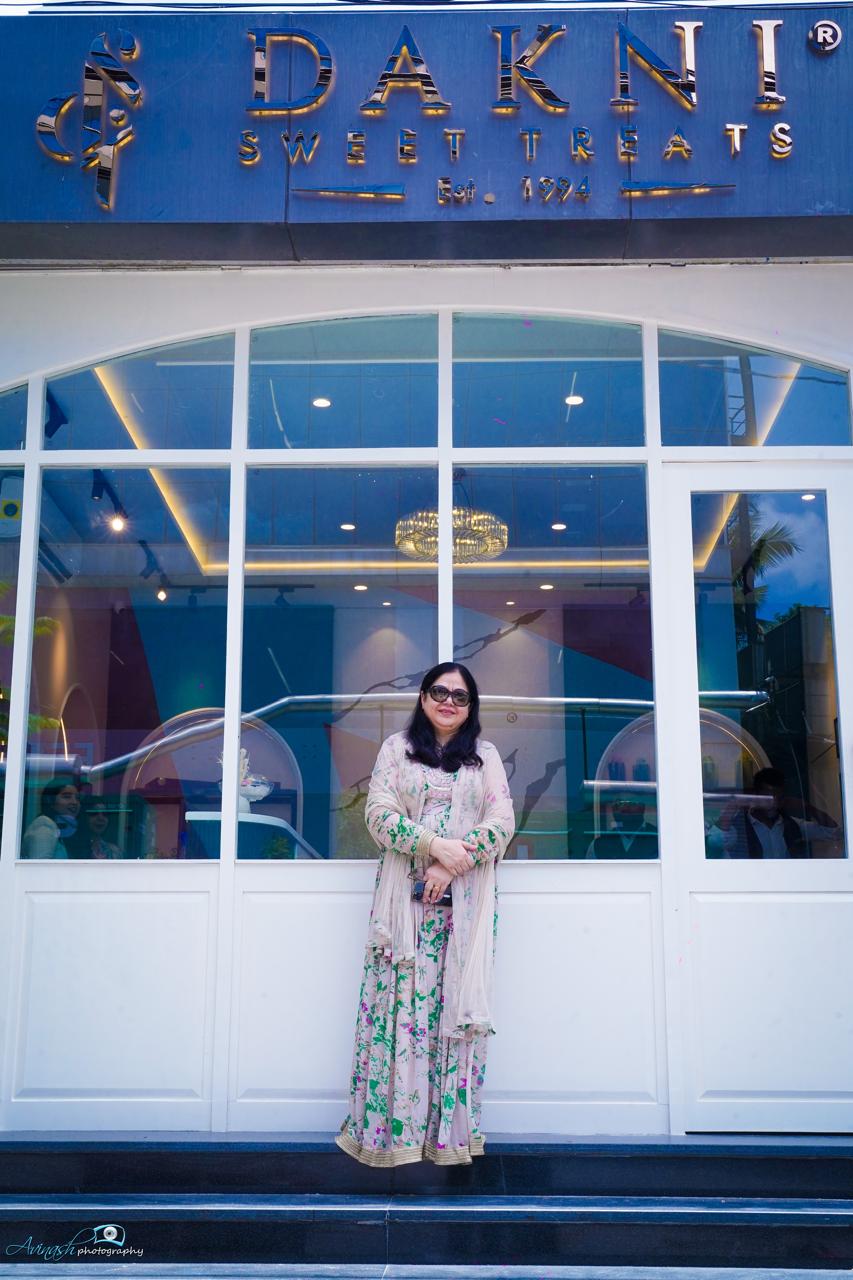
Founded in 1994, Dakni began with a simple rebellion: why should Hyderabadi biryani have all the fame when the city’s desserts carry equal history? The venture set out to make the shahi or royal legacy accessible without losing the flourish and uniqueness of desserts that were once confined to regal kitchens. The mission was clear. To place Hyderabadi desserts on as important a pedestal as the one that has been awarded to the Hyderabadi Biryani.
At the heart of this revival is Asra Anjum, Director of Dakni Sweet Treats. She picked up her rolling pin when she was hardly 10 years old and never looked back. In her childhood home, the kitchen was not just a food place. It was an archive. Marble slabs held the cold imprint of generations. Copper degchis carried the scent of kewra and saffron. And old hands taught her how to coax almonds into lace.
.jpeg)
Her signature became badam ki jali, a Nizam-era sweet that Hyderabad had almost forgotten. To make it, ground almonds are pressed into paper-thin sheets, cut into latticework so fine you can read through it. The hardest step is not the jali itself. It is what comes next: silver foil is layered in between. Edible varq is slipped between each brittle almond layer without tearing the sheet. It is the kind of work Nizami khansamas once did for royal daawats, where sweets had to look like jewellery and dissolve like a blessing.
Asra mastered that trembling precision as a girl. For years, she kept the craft alive for family weddings and Eid tables. In 1994, she decided the city deserved it too. Dakni opened not as a shop chasing scale, but as a promise: that royal recipes would not die in notebooks.
.jpeg)
The menu grew, but the philosophy never changed. Take Gil-e-Firdaus, for instance. Its name means “clay of paradise,” and the desert earns it. Flavoured rice is cooked down in milk for hours until it surrenders all its cereal edge and turns silken. Rose petals add fragrance, and the whole pudding is served chilled with a dusting of cardamom. It is a dessert that asks for patience. Palace kitchens had it. Dakni insists on it.
Then there are the others: *khubani ka meetha* with apricots stewed till jammy and crowned with fresh cream, *double ka meetha* that turns leftover bread into saffron-drenched decadence, and *jauzi halwa* with its nutmeg heat that lingers. Each recipe is a whisper and blessing from the old regal kitchens we can still relish today. Dakni invites you to enjoy these select recipes, not as novelties, but as an inheritance. Definitely an experience to be gifted.
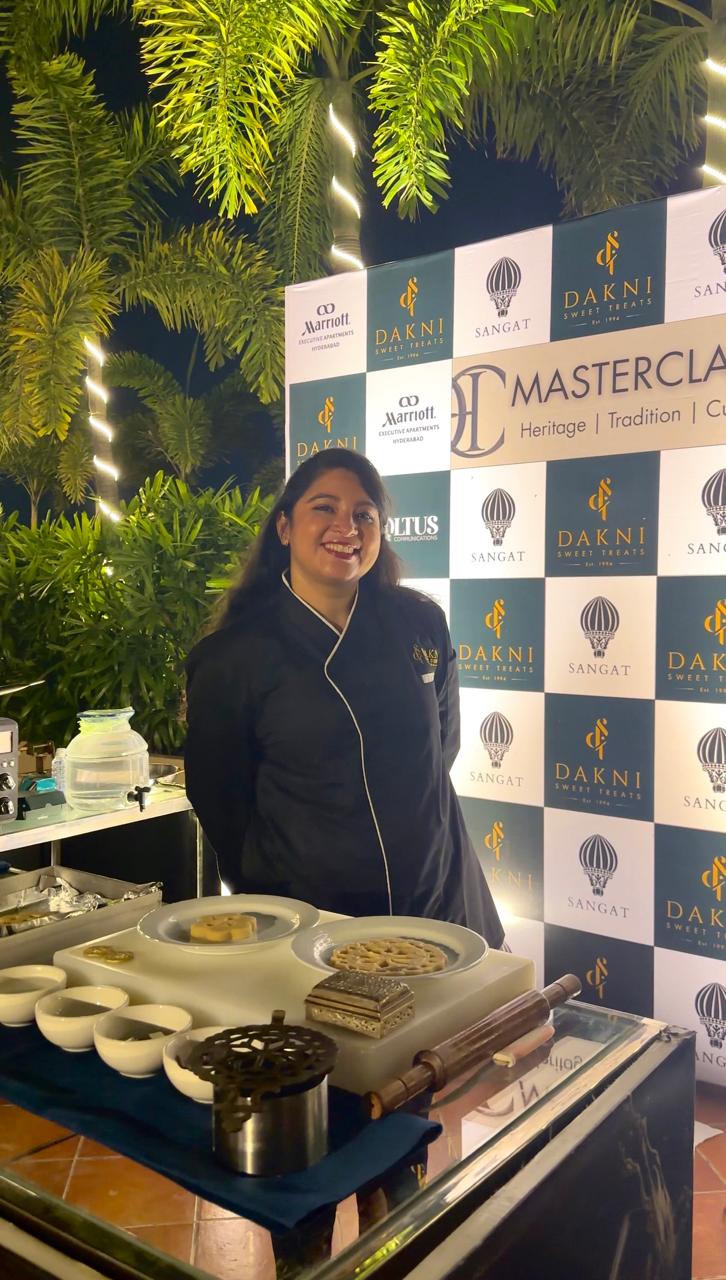
Legacy, though, only survives if someone chooses to carry it. Years later, Asra imparted her skill and shared her small central kitchen with her daughter *Naina Khundmeri*, who joined as Director of Dakni Sweet Treats in 2021. Naina grew up watching varq float onto almond sheets like snow. She learned to judge sugar syrup by its thread, not by a thermometer. When she stepped in, Dakni was no longer just Asra’s mission. It became a two-generation kitchen.
Today, Dakni is located on the busy roads of *Banjara Hills*, a world away from the quiet courtyards where these sweets were first made. Scooters idle outside. Boxes are tied with a string for last-minute gifts. Clients walk in with sweet cravings and share a passion for legacy. Some are Hyderabadi families buying for weddings. Others are first-timers who have never seen badam ki jali before, who hold it up to the light and watch the silver catch.
The work has not gotten easier. Silver still tears. Bottlegourd still takes hours. Almonds still have to be ground to the right texture or the jali turns crumbly. But that is the point. These desserts were never meant to be fast. Their flourish lies in the time they demand.
Dakni refuses to shorten it. At Dakini , this year, they’ve expanded their repertoire with playful yet elegant additions like the Nankhatai, Pistachio relish, Mango melt, a fresh take on the traditional bites that are perfect to share, to travel with, and for interactive displays. They carry craft and flavour with a touch of whimsy—designed for the contemporary celebration. Alongside this, the brand’s bespoke trays, savoury tins, and new barfi block formats bring depth and variety to your celebration table, all while staying rooted in Indian flavour profiles.
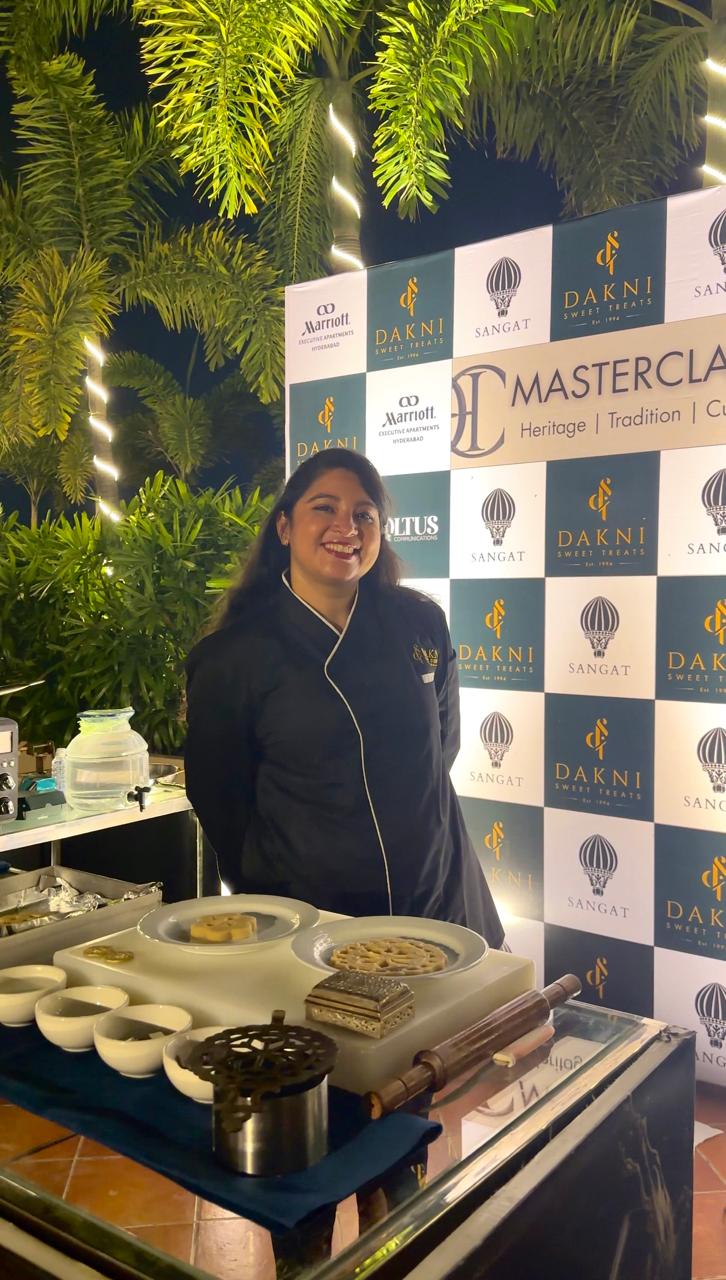
What started in 1994 as a counterweight to biryani’s fame is now part of the city’s own map. Food writers call it a cultural project. Customers call it their childhood. For Asra and Naina, it is both. A rolling pin picked up at age 10 became a central kitchen shared by mother and daughter. A recipe confined to regal kitchens became a box you can carry home. Their packaging is thoughtful, with embossed boxes that evoke warmth and nostalgia, and trays that become part of your home. Each wrap, label, and note is crafted with care, often carrying a little story inside—adding another layer of meaning to the gift.
The Nizams are gone. Their khansamas are gone. But in Banjara Hills, between lunch rush and evening chai, the latticework still gets cut. The varq still gets layered. The gil-e-firdaus still chills in earthen bowls.
Dakni Sweet Treats did not invent these sweets. It simply refused to let the city forget them. And in doing so, it gave Hyderabad a new reason to celebrate: not just with fanfare, but with flavor that remembers.
READ MORE: Zeenat Pannah's enduring work to preserve India's textile heritage
Because some legacies belong on pedestals. Others belong on your tongue.

.webp "Union Home Minister Amit Shah")