




 Rajeev Narayan
The world seldom pauses anymore. Wars rage across continents. Trade tensions disrupt economies. Political polarisation fractures societies. Online media showcases outrage and division every minute. Each new day brings in its tail fresh reasons for anxiety, uncertainty and distrust. Yet, every four years, a remarkable event arrives and cuts out the noise. The FIFA World Cup does not merely attract attention; it commands it. For a few fleeting weeks, football becomes the common language of humanity.
That is what makes the FIFA World Cup unique. It is not just a sporting tournament. It is one of the last truly global experiences in a fragmented and distorted age. In the last World Cup in Qatar in 2022, as many as 5 billion people engaged with the event across the TV, digital and social media platforms, while 1.5 billion watched the grand finale between Argentina and France.
Few events in modern history can claim such reach or emotion. At a time when audiences are splintered across thousands of channels, apps and platforms, the World Cup still possesses the extraordinary power to glue humanity to a single story.
Common Emotion
The impact on the global football audience extends beyond football. The modern world is defined by personalised experiences; Algorithms guarantee that people watch different news, view entertainment diversely and inhabit varied digital realities. Shared moments are rare. Also, national conversations are fragmented. And global conversations are rarer still.
The World Cup defies that trend. A goal scored in Mexico City is celebrated in Mumbai. A penalty missed in New Jersey sparks conversations in Kochi. A stunning upset in Toronto becomes the topic of debate in cafés across Kolkata. For a brief period, crores of people experience the same emotions simultaneously – hope, anticipation, despair, joy and wonder.
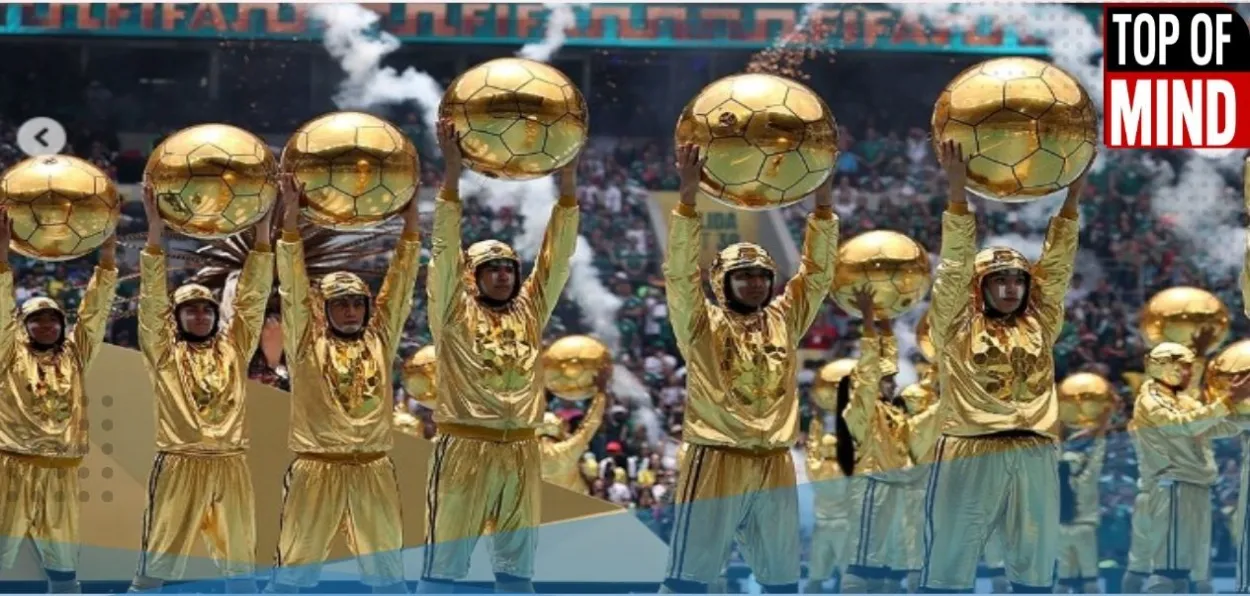
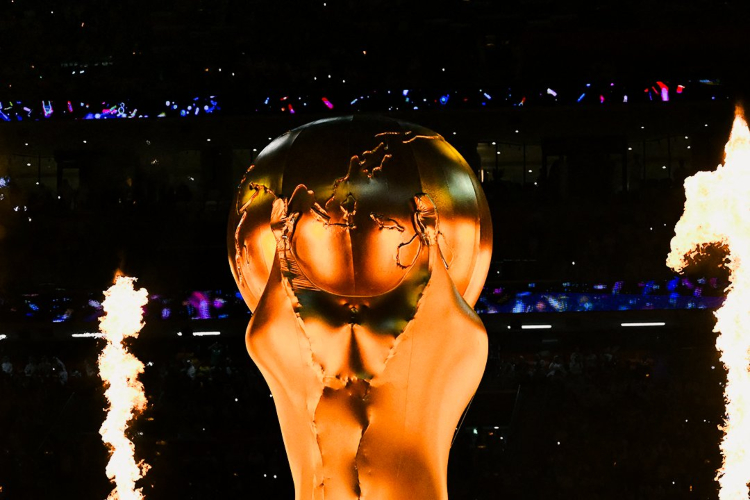 A scene from the Opening ceremony of the FIFA World Cup in Mexico City
That collective emotional experience may be the tournament’s greatest achievement. Football becomes the vehicle, but the destination is something larger: a reminder that despite borders, ideologies and identities, people still possess the capacity and willingness to connect through shared narratives.
India’s Paradox
Nowhere is this phenomenon more fascinating than in India. The country remains one of football’s great paradoxes. It has never qualified for the FIFA World Cup. Its national team remains conspicuous by its absence from this grandest stage. Yet, few countries consume the tournament with greater enthusiasm.
In Kolkata, club loyalties often rival political affiliations. In Kerala, football is woven into everyday life. Goa has nurtured generations of football culture. Across the North-East, football enjoys a following bordering on religion. Through every FIFA World Cup, the streets are decorated with flags of foreign nations, and neighbourhood rivalries emerge around competing teams, with midnight jamborees being commonplace.
India’s relationship with the World Cup transcends participation. It is emotional rather than transactional. Indians watch not because their team is playing, but because they recognise the event as a celebration of excellence, drama and possibility. In a way, that makes India an embodiment of football’s universal appeal, for it reminds the world that passion for sport need not be linked to national representation. Sometimes, it is enough to be part of a larger story.
Attention Economy
There is another reason the World Cup matters. Globally, attention has become a scarce commodity. Businesses compete for it. Politicians seek it. The media depends on it. The World Cup, thus, remains one of the few events capable of commanding global attention at such an unimaginable scale. That explains the fierce competition for broadcasting rights, advertising slots and sponsorship opportunities.
This is not a tournament that showcases sporting capabilities alone, but is an economic ecosystem on its own steam. Every pass, goal and celebration generates value across TV networks, streaming platforms, technology providers and advertisers. Even those countries that do not participate in the field become indispensable markets in the larger commercial scheme of things.
LA is rolling. Pure cinema. 🇺🇸🎬🇵🇾
— FIFA World Cup (@FIFAWorldCup) June 13, 2026
Find where to watch the #FIFAWorldCup! 👇
The World Cup also reveals an important truth about the times we live in now. Sport has become one of the few powerful antidotes to fragmentation. In a crowded information landscape, football still possesses the rare ability to unite audiences that little else can.
Beyond Football
There is a deeper lesson, too. The World Cup succeeds not because it ignores differences, but because it allows them to coexist. Rivalries may thrive, national pride may flourish, and passions may run sky-high. But the event shows that football rivalry does not eliminate community. Sure, millions may be supporting opposing teams, but they remain participants in the same collective experience and underlying joy.
Perhaps that is why the World Cup feels more relevant today. The world does not suffer from a shortage of opinions; it suffers from a lack of shared spaces and joys. Institutions that once brought people together are weakening. Common narratives are becoming harder to find. Football is helping solve these challenges. It offers a reminder of what remains possible in a very hard, cold world.
ALSO READ: Srinagar: leaders, civil society members protest against PoJK killings
The World Cup will not end wars, tame inflation, settle trade disputes or resolve geopolitical rivalries. When the final whistle blows, the world will return to its wars, arguments and anxieties. But for a few weeks, billions will cheer, cry, celebrate and dream together. In an era defined by division, that shared humanity is FIFA’s greatest victory. From the football-crazy streets of Kolkata to the tea houses of Kerala and the hills of the North-East, India will once again be part of that story, even when its team is not.
The writer is a veteran journalist and communications specialist.


.webp "Shrine of Hazrat Maulana Ziauddin Shah-e-Wilayat")
_(1).webp "tHE shrine of Hazrat Syed Shah Ehteram Al Qaderi")







_(1)_(1).webp)