Aasha Khosa/New Delhi
Declassified: Operation Sindoor is the first documentary on India’s retaliatory attacks on the terrorist bases inside Pakistan and the PoJK for massacre of 26 Indian men in front of the women in Pahalgam on April 22, 2025. The four-day operation launched in the wee hours of May 7, was meant to convey to Islamabad India’s clear message that henceforth every terrorist attack would be considered an act of war and responded accordingly.
The two-part docuseries streaming on Discovery Plus is a landmark special that reveals the untold story of Operation Sindoor through the voices of those who planned, led, and executed it.
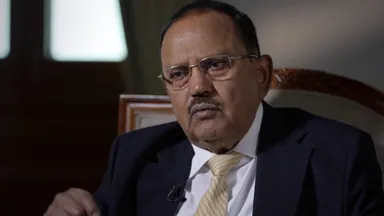
National Security Advisor Ajit Doval is the topmost Indian authority to give the official account of the Operation. He is at the centre of the narrative, while all other military leaders and commanders involved in the Operation also speak on it. As it is the first official account of the operation many interesting and unknown points, the documentary reveals many new and interesting facts.
Below are ten unique facts of the Operation Sindoor:
1. Naming the Operation
According to the then Army Chief Gen Upendra Dwivedi, Prime Minister Narendra Modi asked him what name he had given to the proposed operation. Gen Dwivedi told him that the tentative name for it was “Operation Tulip Garden”. He explained that since the Pahalgam attack happened in Kashmir, “Tulip Garden would be relatable.”
At this, Prime Minister Modi said, “Why don’t you call it Operation Sindoor?” The Army Chief mistook it as in reference to the River Sind and said it looks fine since India has decided to stop the flow of Sind water to Pakistan. At this, Modi explained, “Unhone hamari mahilayon ka Sindoor ujad diya (They have made our women widows).” The Army Chief says he suddenly realised it was a very powerful name and could bring the country together.
2. PM's Response
The preparation for Operation Sindoor began the next morning of the Pahalgam attack. As soon as Prime Minister Narendra Modi returned from Saudi Arabia, cutting short his visit, he held the first meeting of top security guns at the Delhi airport. NSA Doval says Prime Minister had precise questions for his team: “Who has done it? “Are we sure about the perpetrators”? Prime Minister told Doval, “Go after them – wherever they are – on Zameen, Asmaan or Pataal (On the land, in the skies or under the world below the earth).
Under Honourable PM Narendra Modi's call for justice, India answered with #OperationSindoor.@Raphe_mPhibr salutes Declassified: Operation Sindoor, premiering on August 15, 9:00 PM - 11:00 PM, only on @discoveryplusIN & @DiscoveryIN@adgpi @IAF_MCC @indiannavy pic.twitter.com/Xv6S2j9WIT
— discovery+ India (@discoveryplusIN) August 14, 2026
3. Unambiguous Orders
There was absolute clarity in the PM’s command. Within 12 hours of the Airport meeting, the Military leaders were sitting down to strategise Operation Sindoor. The top-secret war room worked on identifying targets inside Pakistan-occupied J&K and deep inside the country. It evaluated Pakistan’s response and its possible use of nukes. At this point, Doval conveyed the possibility to the Prime Minister, who sought some time to think about it before giving a go-ahead.
4. Targets Identified
The Indian army, with Intelligence Agencies and the Directorate of Military Operations, had identified 36 terrorist bases to be struck. The criterion for attacking the sanctuaries was to send a strong message to Pakistan that India will treat each act of terrorism on its soil as an act of war and respond proportionately. The team zeroed in on nine targets – seven of which were inside Pakistan-occupied J&K and two in Pakistan’s Punjab – Muridkey and Bhawalpur, the headquarters of Lashkar-e-toiba and Jaish-e-Muhammad respectively.
5. Refining Strategy
While Northern Command of the Indian Army was in charge of attacking the POJK sanctuaries, the Indian Air Force was entrusted with hitting deep inside Punjab – Muridkey and Bhawalpur. Prime Minister Modi’s instructions were clear -- it was not a war against Pakistan, and all care had to be taken to avoid collateral damage – meaning the civilians had to be saved while hitting the terrorist bases. Navy dominated the Arabian Sea, and as soon as Pakistan realised it would fire, they decided for a ceasefire.
6. Secrecy
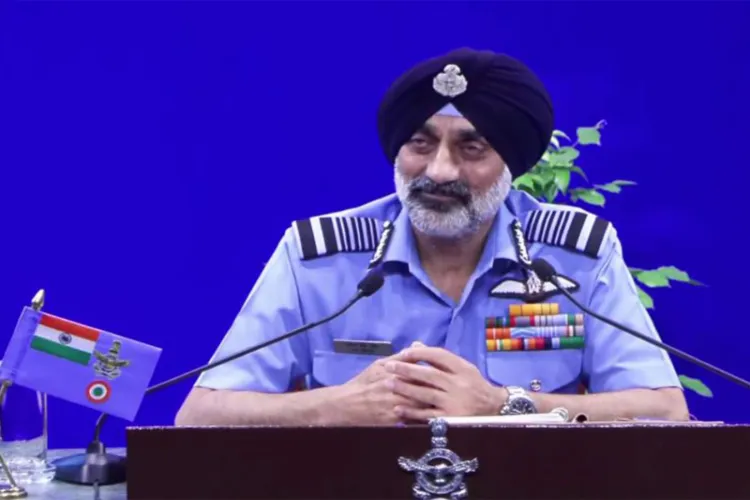
Maintaining top-level secrecy about the plan, the Military leaders camouflaged their engagements during the hours before the day of the attack. DGMO Ghai says he asked his Personal secretary to escort him from the back gate to the South Block late evening; the Army chief was dropped to the war room by his guests; the Air Chief, Field Marshal A P Singh, had announced he was flying to Bhopal and yet took a detour after a local sortie and reached the war room.
7. Symbolism of Op Sindoor
The strategy of avenging the killing of men in front of their wives was also extended to other fields. For example, the pilot of a MIG which hit Muridkey, 50 km from the India-Pakistan border, was a woman flying a MIG. The choice of Col Sofiya Qureshi, Wg. Commander Vyomika Singh as spokespersons of the war operations along with others was meant to convey India's resilience to the world at large.
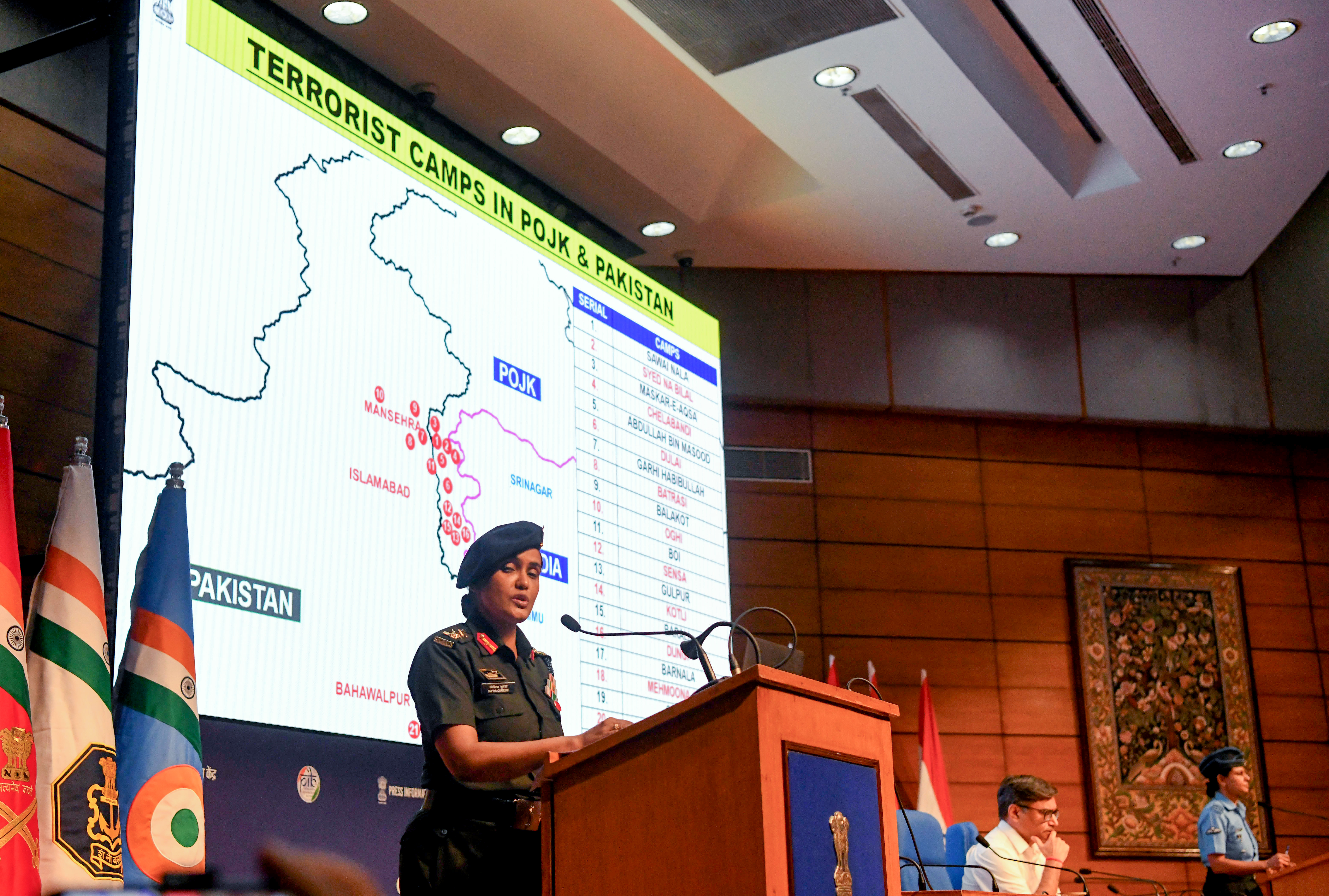 Col Sofiya Qureshi beiefing the media on Operation Sindoor
8.The Strike
The strikes were carried out at 1.05 on May 7. “Everything went as per our plans,” explained one of the leaders. Most leaders said it was the most satisfying moment of their professional life. Soon after the strikes DGMO Lt Gen. Rajiv Ghai informed his Pakistan counterpart Major General Kashif Abdullah about the operation and its purpose. Abdullah said, “What is the use of telling me now?”
Discover how precision became one of the defining elements of #OperationSindoor. @Raphe_mPhibr salutes Declassified: Operation Sindoor premieres on August 15th at 9:00PM - 11:00PM, only on @DiscoveryIN & @discoveryplusIN . @adgpi @IAF_MCC @indiannavy pic.twitter.com/RcwuIq5vR0
— discovery+ India (@discoveryplusIN) August 12, 2026
9. LOC on Fire
Northern Army commander said the army was prepared for Pakistan’s response on the border and LOC. Within a few hours, Pakistan opened fire along the border and LOC; Indians hit back with much more fire. India was waiting for the drone showers to be neutralised by the Air Defence System. In desperation, Pakistan attacked gurudwaras, temples and civilian homes. “We hit terrorists, and they hit civilians.”
#OperationSindoor was proof that India will never stand by while terror strikes its people.@Raphe_mPhibr salutes Declassified: Operation Sindoor premieres on August 15th at 9:00PM -11:00PM, only on @DiscoveryIN and @discoveryplusIN . @adgpi @IAF_MCC @indiannavy pic.twitter.com/fpYODLUAih
— discovery+ India (@discoveryplusIN) August 8, 2026
10 Ceasefire
After India rained hell on 11 Military bases and command centres of Pakistan, Army chief Asim Munir asked for American help to end the attacks. Secretary of Styate Marc Rubio called EAM Dr S Jaishankar to forward Pakistan's request. He was curtly told that India doesn't entertain mediations. Finally, a desperate Abdullah contacted Gen Ghai and sought a ceasefire. Abdullah called Ghai and said, “Sir, you have fired enough BrahMos. Please stop now.” The ceasefire came into effect from 5.30 pm.
ALSO READ: NSA Doval says India’s restraint should not be mistaken for weakness
Interestingly, most of the leaders interviewed in the documentary said, "The unease (with Pakistan) continues as Operation Sindoor is on."