




Amir Suhail Wani
Muharram is a sacred month of reflection, remembrance, sacrifice, justice, and moral awakening for Muslims. The tragedy of Karbala stands as one of the greatest examples of courage, resistance against tyranny, steadfastness in faith, and devotion to divine principles. Imam Husayn ibn Ali, the grandson of Prophet Muhammad, did not sacrifice his life merely for a particular sect or community; rather, his sacrifice was for the preservation of Islam's ethical and spiritual foundations.
His message continues to inspire Muslims and non-Muslims alike across the world. Yet despite the universal nature of Karbala's message, Muharram has often witnessed tensions between Shia and Sunni communities in some parts of the world, creating an unfortunate contradiction between the ideals of Karbala and the realities of contemporary Muslim societies.
The roots of Shia-Sunni tensions are complex. Some differences stem from divergent interpretations of early Islamic history, leadership after the Prophet, jurisprudential traditions, and religious practices. Over centuries, political rivalries, imperial ambitions, external interference, misinformation, and sectarian mobilisation have transformed theological differences into social and political divisions. Many disputes that originally belonged to scholarly circles gradually entered the public sphere, where emotions often replaced knowledge and dialogue. In recent times, social media has further aggravated these tensions by amplifying provocative content, selective historical narratives, hate speech, and inflammatory sermons.
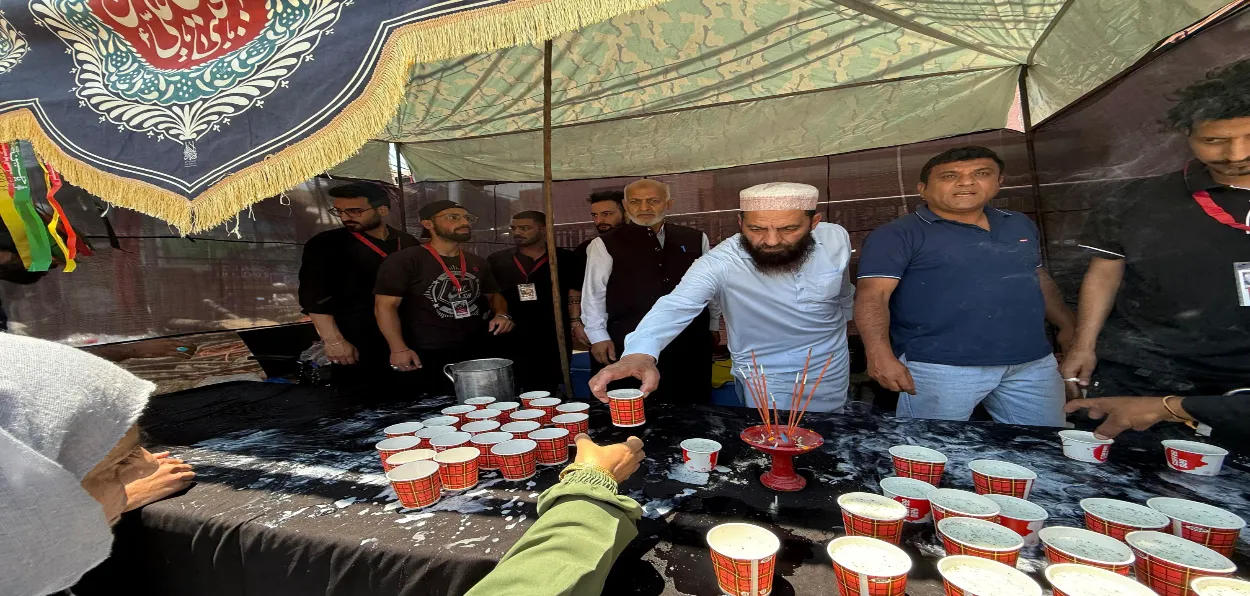
The scene outside Jama Masjid Srinagar on the first day of Muharram:
A beautiful expression of Shia-Sunni unity was witnessed outside the historic Jama Masjid, Nowhatta, Srinagar, on the first day of #Muharram . Volunteers came together to distribute water and juices to the public in remembrance of Hazrat Imam Hussain (RA) and the martyrs of… pic.twitter.com/b6H8CSuZDe
— Mirwaiz Manzil-Office of Mirwaiz-e-Kashmir (@mirwaizmanzil) June 17, 2026
The tragedy is that both communities share far more than what divides them. Shias and Sunnis believe in the same Allah, follow the same Prophet Muhammad, revere the Holy Qur'an, pray towards the same Qiblah, observe the same pillars of Islam, and deeply love the Ahl al-Bayt. The differences that exist should remain within the framework of scholarly discourse and mutual respect rather than becoming causes of social hostility.
In Kashmir, the history of Shia-Sunni relations provides a powerful example of coexistence and shared cultural life. Kashmiri Muslims have lived together as neighbours, relatives, colleagues, and friends. Shared traditions, common linguistic heritage, collective suffering, and a deeply rooted spiritual culture have often outweighed sectarian distinctions.
The influence of Sufi traditions in Kashmir cultivated an ethos of tolerance, compassion, and reverence for saints and scholars across communities. During Muharram, Sunni participation in processions, provision of water and food for mourners, and expressions of respect for Imam Husayn were always common in many parts of the Valley. Likewise, Shias have actively participated in broader social, educational, and religious initiatives benefiting the wider Muslim community. There have been periods of tension, but these remain exceptions rather than the defining feature of Kashmir's social fabric.
The memory of Karbala itself should act as a unifying force. Imam Husayn stood against injustice, oppression, corruption, and moral compromise. The tears shed for Karbala lose much of their meaning if they do not inspire believers to uphold justice, compassion, truthfulness, dignity, and brotherhood in their daily lives.
Ulema possess the moral authority to shape public attitudes and guide communal behaviour. They must emphasise common Islamic values rather than magnify differences. Scholars should educate believers about the ethics of disagreement, the importance of unity, and the sanctity of Muslim life and honour. Joint gatherings of Shia and Sunni scholars can send a powerful message that theological differences need not undermine social harmony. When religious leaders demonstrate mutual respect, ordinary believers are far more likely to do the same.
Mosques and Imam Bargahs carry responsibility during Muharram. These institutions should be centres of spiritual upliftment, moral education, and community cohesion. Sermons should focus on the universal lessons of Karbala, including sacrifice, patience, courage, justice, and service to humanity.
The greatest responsibility, however, rests with ordinary people. Sectarian harmony cannot be imposed solely through government regulations or religious decrees. It must emerge from every Muslim's daily choices. Common people must resist rumours, reject hate-filled messages, verify information before sharing it, and refuse to participate in divisive conversations. Neighbours should continue visiting one another, sharing joys and sorrows, and maintaining the bonds of kinship that have historically united communities.
Parents should teach their children respect for all Muslims and appreciation for diversity within the Islamic tradition. Social media users should become ambassadors of peace rather than carriers of provocation.
Muharram offers an opportunity for collective introspection. Instead of asking how one community differs from another, Muslims should ask whether they are embodying the values for which Imam Husayn gave his life. Are they defending justice? Are they protecting the weak? Are they speaking truth to power? Are they treating fellow Muslims with dignity and compassion? These questions are far more important than sectarian debates. Karbala was not merely an event of mourning; it was a school of moral transformation. Its message is relevant wherever there is oppression, inequality, corruption, or indifference to human suffering.
ALSO READ: Fatima Husna proudly guides tourists through Hyderabad's history
The future of Muslim societies depends not on uniformity of opinion but on unity of purpose. Diversity of interpretation has existed within Islam from its earliest centuries and will continue to exist. The challenge is to ensure that such diversity becomes a source of intellectual richness rather than social conflict. Kashmir's long tradition of coexistence demonstrates that this is possible. The spirit of mutual respect, shared humanity, and collective responsibility must be preserved and strengthened for future generations.

.jpg "Gujarat’s women entrepreneurs bring their craftsmanship to life during Navratri")









.webp)