New Delhi
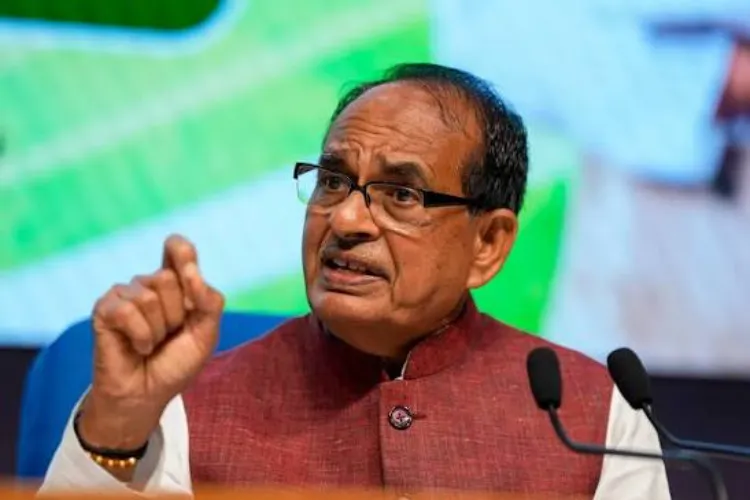
Union Minister of Environment, Forest and Climate Change Bhupender Yadav on Thursday announced a comprehensive roadmap for the ecological restoration and sustainable development of the Aravalli range in the Gurugram region.
Following a high-level review meeting chaired by Union Minister Manohar Lal and attended by Haryana Environment Minister Rao Narbir Singh, the Ministry confirmed that a specialised research initiative has been commissioned to protect the ancient mountain system.
"Specifically, the ICFRE (Indian Council of Forestry Research and Education)--which is one of our premier research organisations--has been tasked with studying the hydrology and flora of the region," Yadav stated. "This also involves identifying our native vegetation. Because just as woodlands are important, grasslands and wetlands are equally important. Therefore, for the study of hydrology, a proposal with ICFRE has been outlined."
As part of the mission for a "Green Gurugram" across the National Capital Region (NCR), authorities are shifting away from non-native plantation toward indigenous ecology.
Building on recent initiatives like the planting of 2 lakh trees over 1,500 acres near Manesar during Van Mahotsav, as well as advancing the 800-acre Matri Van and Aravalli Safari projects.
"In the urban areas of NCR, the government is working extensively on greening--from the Delhi Ridge to the surrounding areas. That is the reason why during this year's Van Mahotsav, across approximately 1,500 acres of land near Manesar, we planted 2 lakh trees," Yadav said. He added that previous works such as the 800-acre Matri Van and the Aravalli Safari project are also being moved forward.
Across nearly 10,000 acres notified as forest by the Haryana government, efforts will focus on planting native species such as Dhak, Ber, Baheda, Neem, Peepal, and Banyan, alongside more than 25 varieties of local grasses.
"We have decided to plant native trees like Dhak, Ber, Baheda, Neem, Peepal, and Banyan, along with more than 25 varieties of grasses," he stated.
It is also planning a consolidated boundary wall along urban-forest fringes to prevent wildlife, particularly leopards, from straying into human habitations and strict adherence to all Supreme Court directives regarding Aravalli preservation.
Beyond forest conservation, Yadav highlighted proactive measures being taken to tackle seasonal winter air pollution across the NCR.
"Just this morning, we held a meeting with the CAQM (Commission for Air Quality Management), and we are continuously working on measures," the Minister remarked, noting that CPCB reviews are underway for Online Continuous Emission Monitoring Systems (OCEMS) and Air Pollution Control Devices (APCD).
Coordination with the Ministry of Transport is targeting vehicular emissions, while updated notifications regarding Construction and Demolition (C&D) waste and Solid Waste Management are being enforced across key municipalities, including Gurugram, Noida, Ghaziabad, Sonipat, and the MCD.
"We want to conduct broader public awareness programs so that maximum people become aware of these rules. We are addressing vehicular pollution, dust pollution, solid waste management, and greening initiatives simultaneously to accelerate our efforts," he added.
READ MORE: Palestinian envoy asks Delhi to set up artificial limb center in Gaza
Spanning approximately 670 kilometres from near Delhi through Haryana and Rajasthan down to Gujarat, the Aravalli range is India's oldest fold-mountain belt, dating back nearly two billion years. Rising to its highest point of 1,722 meters at Guru Shikhar in Mount Abu, Rajasthan, the range serves as a critical ecological barrier against desertification and a vital groundwater recharge zone for Northern India.

_(1)_(1).webp "Khanqah Emadia Qalandaria, Patna, Bihar")
.webp "Shrine of Hazrat Maulana Ziauddin Shah-e-Wilayat")
_(1).webp "tHE shrine of Hazrat Syed Shah Ehteram Al Qaderi")






.webp "Delhi High Court")