




Jammu
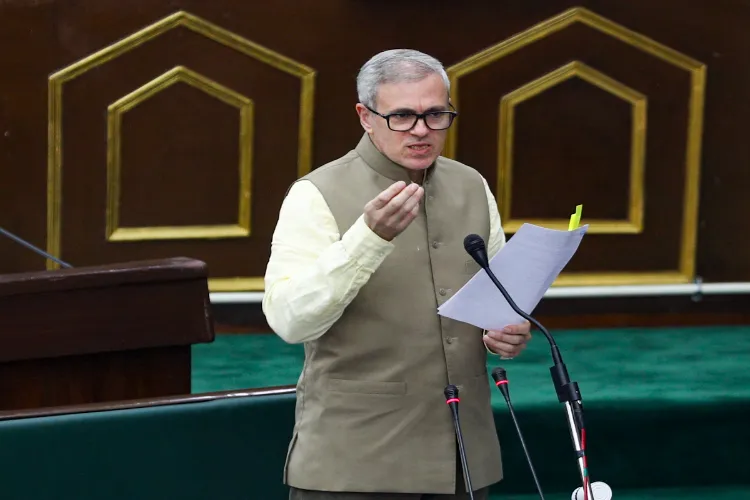
Proceedings of the Jammu and Kashmir Legislative Assembly were disrupted on Monday after PDP MLA Waheed Ur Rehman Para accused the government of pushing the Union Territory into a “debt trap” by implementing the Special Assistance to States for Capital Investment (SASCI) scheme, triggering sharp exchanges across party lines.
Para, supported by fellow PDP legislators and Independent MLA Sheikh Khurshid, faced strong resistance from members of the ruling National Conference (NC), leading to heated verbal clashes. Mubarak Gul, who was presiding over the House, made repeated attempts to restore order before adjourning the sitting about half an hour ahead of schedule.
Amid the disorder, BJP legislators walked out of the House, alleging that the Chair was denying them adequate opportunity to participate in the budget discussion. Some BJP members attempted to enter the well of the House but were restrained by marshals.
Speaking during the budget debate, Para targeted the NC-led government, alleging that the SASCI scheme was being misrepresented as a welfare initiative. “The Chief Minister and NC MLAs are celebrating the introduction of SASCI, but this is not a development scheme. It is a debt trap through which Jammu and Kashmir is being mortgaged to industrial interests,” he said.
Para argued that raising loans from the market would only deepen financial distress and set a dangerous precedent. He reminded the ruling party that it had secured a strong public mandate after the abrogation of Article 370 to safeguard the interests of Jammu and Kashmir and work towards restoring statehood with protections intact.
“Instead of honouring that mandate, the government is effectively putting the entire UT on sale,” he said, urging Chief Minister Omar Abdullah to reconsider the scheme. He warned that unchecked borrowing could push J&K towards conditions faced by economically distressed nations such as Sri Lanka and Pakistan.
Deputy Chief Minister Surinder Choudhary led the government’s response, dismissing the allegations as politically motivated and accusing the opposition of “playing to the gallery” by mischaracterising a financial framework meant to accelerate development.
As the Chair attempted to allow an NC member to speak, BJP MLAs objected, alleging discrimination in allotting speaking time, before staging a walkout. With the uproar continuing, Gul adjourned the House till 2.30 pm, well before the scheduled conclusion of the sitting.
Raising broader governance concerns, Para said expectations from the NC government were high at a time when Jammu and Kashmir was facing “unprecedented challenges”. While acknowledging the constraints under which the present dispensation was functioning, he said public aspirations could not be ignored.
Citing last year’s budget of ₹1.40 lakh crore, Para pointed out that nearly ₹40,000 crore was allocated to revenue expenditure while capital expenditure stood at around ₹7,600 crore. “With barely a month left in the financial year, can the government realistically spend close to ₹1 lakh crore?” he asked.
He claimed that only around 12 per cent of the budget had been utilised so far and alleged zero spending on nearly 100 projects, including those related to agriculture, horticulture, health and education. Para questioned whether administrative paralysis or a dual power structure was responsible for the poor expenditure.
Highlighting social concerns, he said youth constituted nearly 70 per cent of the population, with reports suggesting that around 32 per cent suffered from depression. He also demanded a refund of nearly ₹50 crore collected as various fees, pointing to J&K’s high unemployment rate.
Para further flagged substance abuse, alleging that around five lakh people were affected by drug addiction and nearly four lakh by alcohol abuse, while claiming the budget failed to prioritise the crisis. He described cancer as a “silent pandemic” and questioned the absence of a focused government response.
The PDP MLA also raised concerns over the closure of 215 schools linked to the banned Jamaat-e-Islami, affecting nearly 50,000 students, and sought clarity on the decision. He criticised the lack of budgetary provision for a National Law University and the absence of a policy on establishing deemed universities across all 20 districts.
READ MORE: Why reviving Ganga-Jamuni culture is the need of the hour
Additionally, Para highlighted rising diesel and transport costs, increasing financial stress on households, and inadequate support for orphans and other vulnerable sections of society.









.webp)