Amir Suhail Wani
Indian civilisation has a remarkable capacity for synthesis, accommodation, and coexistence. Among the most evocative expressions of this spirit is the Ganga–Jamuni Tehzeeb, a phrase drawn from the cultural geography of North India, where the rivers Ganga and Yamuna flow. Over time, the term has come to signify not merely a regional cultural style but a broader ethos of shared living in which Hindu and Muslim traditions, along with other strands of Indian spirituality, have interacted in ways that produced a composite culture rich in symbolism, aesthetics, language, devotion, and everyday etiquette.
is less a doctrine than a lived experience — a way of inhabiting diversity without anxiety, allowing faiths to retain their distinctiveness while simultaneously shaping each other in subtle, humane ways.
At its heart, Ganga–Jamuni Tehzeeb represents a syncretic imagination rooted in spirituality rather than institutional religion alone. It developed organically over centuries through proximity, trade, pilgrimage, artistic collaboration, and shared social spaces.
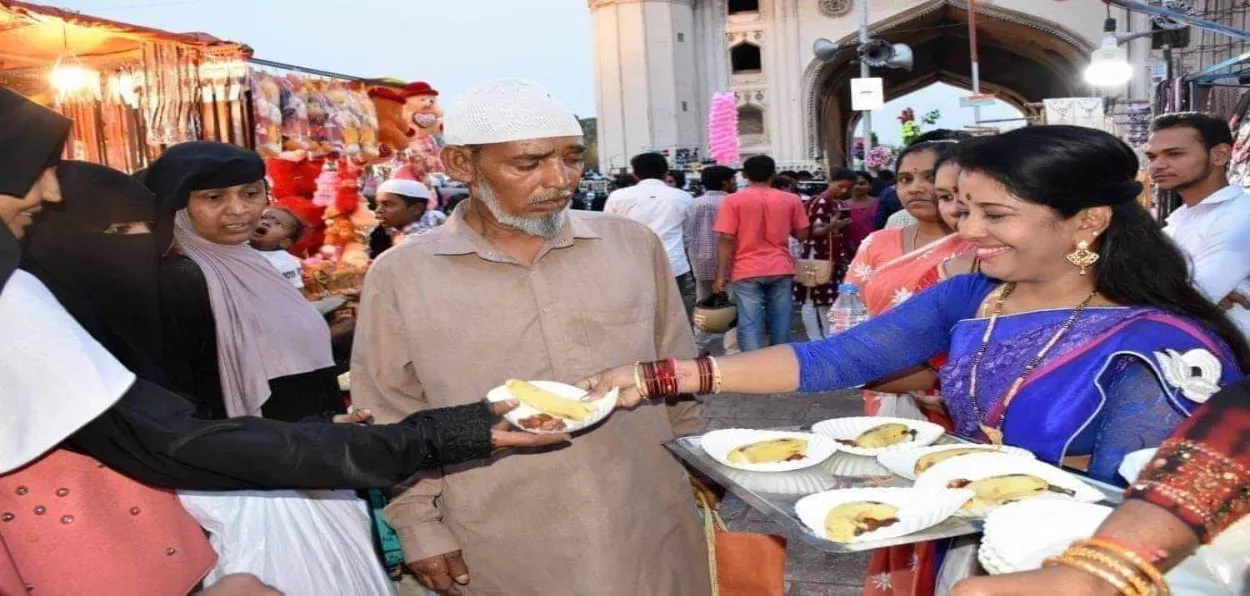
.jpg) Hindus and Muslims celebrating together in Jammu
Hindus and Muslims celebrating together in Jammu
Mystics, poets, musicians, artisans, and ordinary people played a far greater role in shaping it than formal theologians or rulers. The Bhakti and Sufi traditions were particularly influential in nurturing this atmosphere. Both emphasised love of the Divine over rigid ritualism, inner transformation over outward identity, and compassion over sectarian exclusivity.
Saints like Kabir, who spoke in a language accessible to all, criticised narrow religiosity and celebrated a direct relationship with God that transcended labels. Similarly, Sufi saints across North India welcomed devotees of all faiths, and their shrines often became spaces where multiple communities gathered in reverence.
The shared cultural expressions born of this encounter are visible in language, art, music, architecture, and social customs. Hindustani, for example, developed as a linguistic bridge shaped by the influence of Sanskrit, Prakrit, Persian, Arabic, and Turkic languages. Its poetic traditions — whether in the form of ghazal, bhajan, qawwali, or marsiya — reveal a shared aesthetic vocabulary. Musical forms such as khayal and thumri flourished in courts and spiritual gatherings where Hindu and Muslim musicians collaborated freely. Persian melodic sensibilities enriched the classical ragas; devotional poetry often crossed religious boundaries, with Muslim poets composing Krishna bhakti verses and Hindu singers performing Sufi kalaam.
Architecture also bears testimony to this synthesis. The Indo-Islamic architectural style, which developed in cities like Delhi, Agra, Lucknow, and Lahore, integrated local craftsmanship with Persianate design elements. Domes, arches, jalis, and calligraphic ornamentation merged with indigenous motifs, producing spaces that were neither entirely foreign nor entirely native but distinctly Indian in their composite character. Gardens, mosques, temples, serais, and havelis reflected this aesthetic mingling, often serving communities collectively rather than exclusively.
Rishab Rikhiram Sharma performed on the sitar at the T20 World Cup opening ceremony at Wankhede Stadium yesterday, and his music left the entire crowd mesmerized.🎻❤️ pic.twitter.com/t4Eaw2ugPs
— 𝐑𝐮𝐬𝐡𝐢𝐢𝐢⁴⁵ (@rushiii_12) February 8, 2026
Perhaps even more significant than grand artistic expressions were the everyday practices that embodied this shared ethos. Festivals frequently transcended religious boundaries in their social celebration. The lighting of lamps, the sharing of sweets, participation in urs festivals at Sufi shrines, or the exchange of greetings during major religious occasions became part of a common cultural rhythm. Culinary traditions evolved similarly, blending local ingredients with Central Asian techniques to create cuisines that now define entire regions. Clothing styles, etiquette, forms of address, and even humour absorbed influences from multiple traditions, making identity fluid rather than rigid.
Spiritually, the Ganga–Jamuni sensibility fostered a recognition that truth may manifest through different symbols yet remain essentially one. This did not erase theological differences but placed them within a larger framework of mutual respect. The idea that the Divine transcends human categories encouraged humility and empathy. Devotees might visit both temple and dargah, not out of confusion but out of a sense that sacred presence could not be monopolised. Poetry from this milieu often speaks of the Beloved in metaphors that resist strict doctrinal interpretation, inviting seekers into an experiential spirituality rather than a polemical one.
Historically, certain regions became especially emblematic of this cultural synthesis. Awadh, particularly Lucknow, is frequently cited for its refined etiquette, literary culture, and shared artistic traditions. Similarly, the Deccan produced a distinctive Indo-Persian-Indic culture visible in its literature, music, and architecture. Kashmir, Punjab, Bengal, and parts of Gujarat also witnessed deep interweaving of devotional traditions. In each case, syncreticity emerged not from abstract ideology but from lived proximity — markets, farms, workshops, pilgrimage routes, and households where people of different backgrounds interacted daily.
In Sufism, the greatness of heart lies in its boundless capacity for divine love (fanaa in the Beloved). Rumi whispers that, a heart vast as oceans dissolves ego, embraces all creation. It weeps for the world's pain, dances in unity. True magnanimity? Pouring oneself out like a… pic.twitter.com/TVX4rcgv18
— Rekhta (@Rekhta) February 3, 2026
The resilience of this composite culture owes much to its grounding in ordinary life rather than elite theory. Mothers passing on lullabies, artisans collaborating in workshops, farmers sharing seasonal rituals, and musicians performing together ensured continuity even when broader historical conditions shifted. Oral traditions, folk tales, and regional literatures preserved memories of coexistence long after political structures changed. The ethos became embedded in gestures of hospitality, respect for elders, reverence for saints, and a preference for dialogue over confrontation.
Yet in contemporary times, the subtle cultural ecology that sustained Ganga–Jamuni Tehzeeb appears fragile. Rapid urbanisation, social segmentation, and the global homogenization of culture sometimes weaken local traditions of shared living. Increasing emphasis on rigid identity categories can overshadow the nuanced, overlapping identities that earlier generations navigated naturally. The loss is not merely sociological but spiritual, for the composite culture cultivated patience, empathy, and an ability to see the sacred in the other.
Reviving this ethos does not mean romanticising the past or ignoring historical complexities. Rather, it involves rediscovering the cultural and spiritual resources that encourage mutual understanding. Literature, music, and shared heritage sites can play an important role here. When people engage with the poetry of Amir Khusrau, the verses of Kabir, the devotional songs of Meera, or the philosophical reflections of Dara Shikoh, they encounter voices that speak across boundaries. Education that highlights these shared inheritances can nurture cultural literacy and reduce the fear of difference.
Spiritual dialogue is another important avenue. Interfaith gatherings rooted in contemplative practice often reveal common ethical concerns — compassion, justice, humility, service — that transcend doctrinal divides. Visiting each other’s sacred spaces with reverence rather than curiosity alone can also rebuild trust. Artistic collaborations, whether in music, theatre, or visual arts, continue the historical pattern of creativity born from interaction.
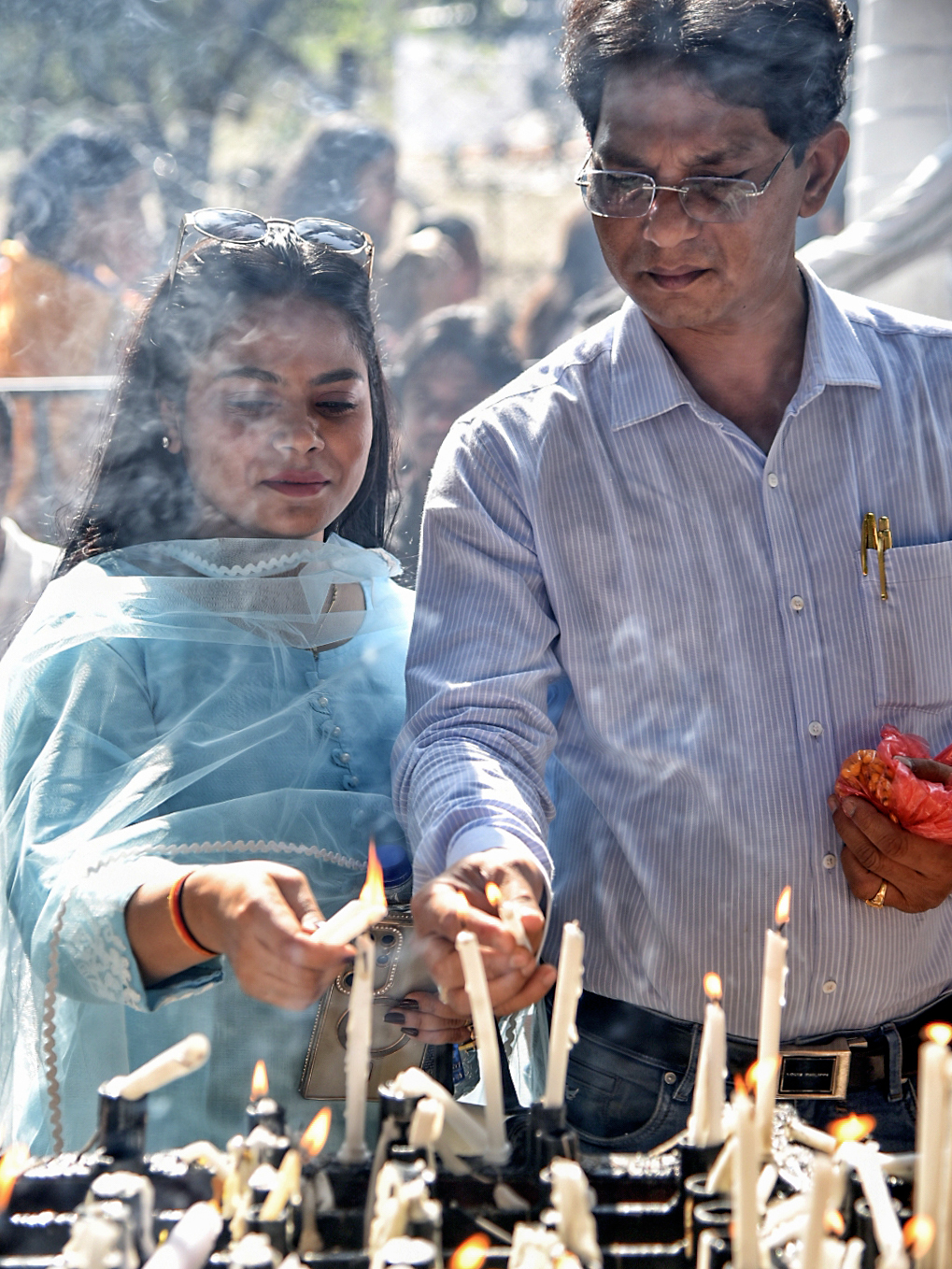
Christians light candles during the annual 9-day Lourd Mata Mahotsav 2026 in Nagpur
Equally vital is the preservation of regional languages, crafts, and folk traditions that carry the memory of syncretic living. When these vanish, so do subtle habits of coexistence embedded in them. Supporting artisans, documenting oral histories, and encouraging community festivals that emphasise shared heritage can help sustain this legacy. Families and local communities remain the most effective custodians, as everyday gestures often speak louder than formal declarations.
Ultimately, Ganga–Jamuni Tehzeeb represents a spiritual vision of humanity rooted in plurality without fragmentation. It affirms that cultural and religious diversity need not lead to alienation; instead, it can deepen collective wisdom. The rivers Ganga and Yamuna, whose confluence inspired the metaphor, do not lose their identity when they meet; rather, they create a broader, more fertile flow. Similarly, India’s composite culture allows traditions to retain distinctiveness while enriching one another.
ALSO READ: Mohan Bhagwat reminds Bollywood stars of fashion responsibility
In a world increasingly marked by polarisation and hurried certainties, this heritage offers a reminder that gentleness, curiosity, and reverence for the other are not signs of weakness but of civilizational maturity. Reviving the spirit of Ganga–Jamuni Tehzeeb thus becomes not merely a cultural project but a spiritual necessity — a way of reaffirming that shared humanity can coexist with deep faith, that devotion need not exclude dialogue; beauty often emerges where traditions meet. Its continued vitality depends less on grand proclamations than on everyday acts of kindness, artistic collaboration, and spiritual openness that quietly sustain the river of composite culture flowing through India’s past, present, and hopefully its future.