
 Pallab Bhattacharyya
The trajectory of Marxism in India presents a complex and layered narrative—one that began as an intellectual and political force shaping anti-colonial resistance and social justice discourse, evolved into both parliamentary influence and armed insurgency, and, in recent decades, has witnessed a gradual ideological decline alongside a significant reduction in violence.
This transformation has been neither linear nor uniform; it has unfolded differently across regions, particularly in the tribal belts of Central India and the ethnically diverse Northeast. The contemporary moment, marked by the weakening of both Marxist political parties and Maoist insurgencies, offers an opportunity to consolidate peace and reimagine development pathways rooted in inclusion, rights, and sustainability.
Marxism entered India in the early twentieth century through a confluence of global revolutionary currents and indigenous anti-colonial struggles. Early thinkers and activists adapted Marxist ideas to Indian realities, linking class struggle with anti-imperialism. The formation of the Communist Party of India (CPI) in the 1920s marked the institutional beginning of Marxist politics in the country.
During the freedom movement, Marxists worked both independently and within broader nationalist platforms, contributing to labour mobilisation and agrarian movements. In the early decades after independence, Marxism played a crucial role in shaping debates on land reform, economic planning, and the state’s role in development.
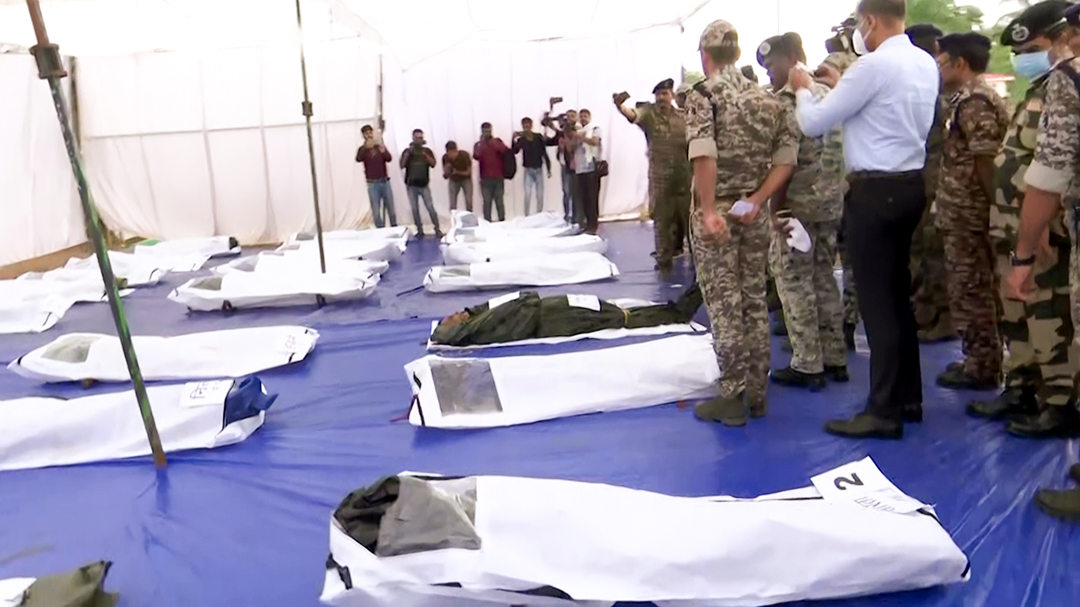 Police inspecting bodies of 27 Naxals killed by DRF in Abujmad forest
However, ideological divergences soon led to fragmentation. The split in 1964 gave rise to the CPI(M), reflecting disagreements over strategy and international alignment. While both parties participated in electoral democracy, a more radical strand emerged in the late 1960s with the Naxalbari uprising in West Bengal. This marked the birth of the Naxalite movement, which rejected parliamentary democracy and advocated armed revolution inspired by Maoist doctrine. The subsequent formation of CPI(ML) consolidated this revolutionary line, drawing support from marginalised groups, particularly landless peasants and tribal communities.
Despite facing severe state repression in its early years, the Naxalite movement re-emerged in more organised forms in later decades. By the early 2000s, the consolidation of various groups into the CPI (Maoist) created a formidable insurgent force operating across a vast “Red Corridor.” These regions, rich in minerals but marked by poverty and underdevelopment, became fertile ground for Maoist mobilisation. The movement capitalised on grievances over land alienation, displacement, and perceived state neglect, establishing parallel governance structures and engaging in sustained armed conflict with the state.
Parallel to this insurgent trajectory, Marxism also found success within democratic frameworks. States like Kerala, West Bengal, and Tripura witnessed long periods of communist rule, during which significant land reforms and welfare policies were implemented. These governments demonstrated that Marxist principles could be adapted to democratic governance, achieving notable gains in literacy, health, and social equity. However, over time, these parties faced challenges in adapting to changing socio-economic realities, leading to electoral decline and loss of traditional support bases.
In the Northeast, the influence of Marxism was more indirect but significant. Insurgent groups often adopted Marxist-Leninist rhetoric to frame their struggles against what they perceived as internal colonialism. In Assam, for instance, organisations articulated grievances through a class-based lens, even as their core demands were rooted in ethnic identity and autonomy. In Tripura, communist parties played a dual role—governing through democratic means while also addressing tribal discontent that had fuelled insurgency. The interplay between ideology and ethnicity created a unique dynamic, where Marxist ideas intersected with local aspirations.
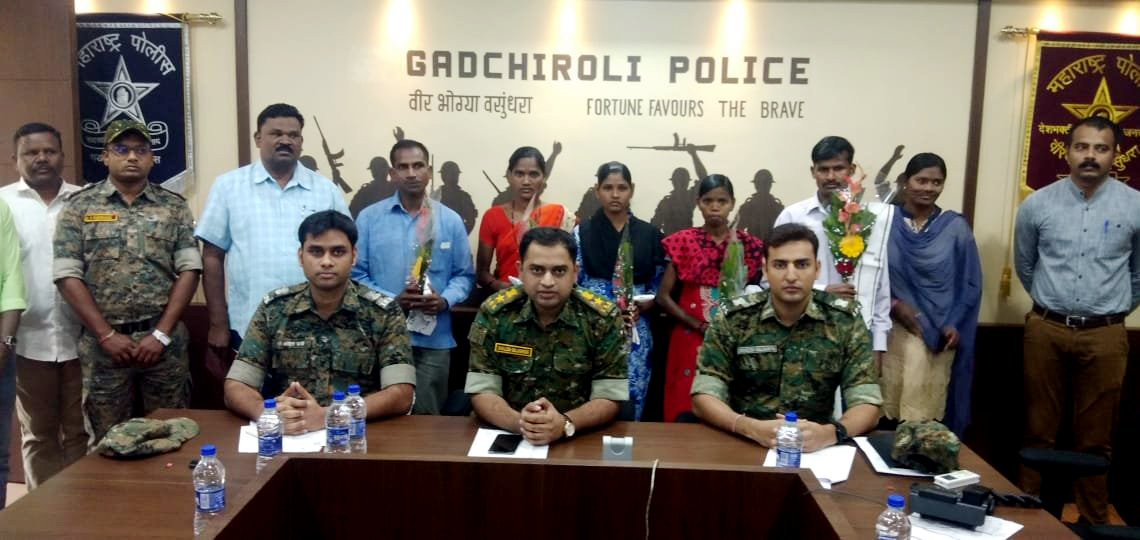 Five Naxals, including three women after surrendering before Gadchiroli Police
The peak of Maoist violence in India occurred around 2010, when incidents and casualties reached alarming levels. The insurgency was then considered one of the most serious internal security threats to the country. However, the subsequent decade witnessed a dramatic decline in both the intensity and geographical spread of violence. This reduction can be attributed to a combination of sustained security operations, improved intelligence, infrastructure development, and targeted welfare initiatives.
Government responses to left-wing extremism have evolved. In earlier decades, the approach was largely coercive, relying on bans and police action. By the 2000s, there was a shift towards a more integrated strategy that combined security measures with development interventions. Programmes aimed at improving infrastructure, education, and healthcare in affected areas were introduced, alongside schemes for the surrender and rehabilitation of insurgents.
The current phase, particularly under the BJP-led government since 2014, has seen the consolidation of this multi-pronged approach. The National Policy and Action Plan of 2015 emphasised a balanced strategy encompassing security, development, and governance. Enhanced coordination between central and state forces, expansion of road and telecom networks, and direct benefit transfers have contributed to improved state presence in remote areas. Simultaneously, efforts have been made to address tribal rights and ensure better implementation of existing laws.
In the Northeast, the government has pursued peace through dialogue and agreements. Accords with various insurgent groups, coupled with administrative reforms and partial withdrawal of special security laws, have led to a significant reduction in violence. The transformation of former insurgent groups into political actors, as seen in Mizoram, stands as a testament to the potential of negotiated settlements.
The waning of Marxist ideology in India is evident both in electoral politics and in the decline of insurgent movements. Communist parties have seen a sharp reduction in parliamentary representation, and their influence is now largely confined to limited regions. Among the youth, the appeal of revolutionary ideology has diminished, replaced by aspirations linked to economic mobility and integration into the mainstream. For Maoist groups, sustained losses, internal fragmentation, and erosion of local support have weakened their operational capacity.
Yet, the decline of violence does not automatically translate into lasting peace. The underlying issues that once fuelled insurgency—poverty, inequality, lack of access to resources, and governance deficits—persist in many tribal areas. Addressing these requires a long-term and nuanced approach that goes beyond immediate security concerns.
ALSO READ: Why Backstroke Queen of India Fariha Zaman fled Assam
Global experiences offer valuable insights. Successful disarmament, demobilisation, and reintegration (DDR) programmes in countries like Colombia highlight the importance of comprehensive strategies that combine economic support, political inclusion, and community reconciliation. Reintegration must be tailored to local contexts, recognising the cultural and social dynamics of affected communities. Equally important is the role of local institutions in sustaining peace and preventing relapse into conflict.










_(1).webp)