




New Delhi
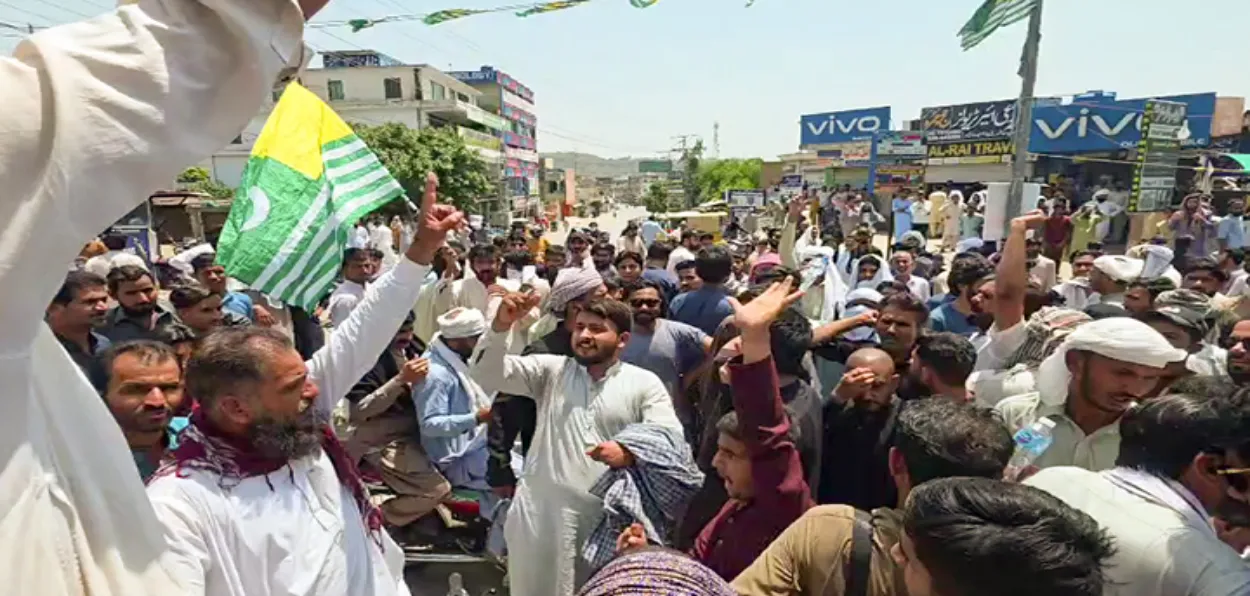
India on Tuesday sharply criticised Pakistan over what it described as the "brutal" suppression of protesters in Pakistan-Occupied Kashmir (PoK) and urged the international community to hold Islamabad accountable for alleged human rights abuses. The protests that started in Muzaffarabad and Rawalakot has since spread to other towns and cities of the POJK.
India's reaction came amid reports that more than 20 people were killed during police action against protesters in several parts of Pakistan-administered Kashmir.
The unrest began in Rawalakot in Pakistan-administered Kashmir, where protests led by the Joint Awami Action Committee (JAAC) over economic grievances, political rights and refugee-related policies turned violent on June 7 and 8. Official reports put the death toll between seven and eleven people, including civilians and four security personnel, with more than 70 others injured. However, JAAC leaders and protesters have alleged that the number of civilian casualties is significantly higher.
Responding to the developments, External Affairs Ministry spokesperson Randhir Jaiswal accused Pakistan of attempting to divert attention from its domestic challenges through misinformation campaigns.
"We continue to see, in this context, a pattern of fake news and videos emanating from Pakistan. It is a desperate attempt by Pakistan to cover up its own failings and deflect attention away from its human rights abuses," Jaiswal said.
AJK is in open revolt!
— Faizan Qureshi (@FaizQureshiUK) June 9, 2026
Decades of socially and economically repressive policies by Islamabad have pushed Kashmir to this breaking point. 1/@YousafSaeedPTI pic.twitter.com/39860WRHk0
"There are reports of severe police brutality in Pakistan-Occupied Kashmir in which several protesters have been killed and many injured. We hope the international community will hold Pakistan accountable for its misdeeds and abuses," he added.
Meanwhile, the protests, which originated in Rawalakot, have spread to several other parts of Pakistan-occupied Jammu and Kashmir (PoJK).
With internet services reportedly suspended across large parts of the region, only sporadic social media posts are providing glimpses of the situation on the ground.
Protesters from Mirpur and Rawalakot pushed through security blockades toward Muzaffarabad, where police opened fire killing two people. [News on Air](https://t.co/LUfDS98053)
— وطن جار WatnJar 🇦🇫 (@Afghan_solider) June 9, 2026
Streets across Pakistan-occupied Kashmir are echoing with slogans against Pakistan, its government, and… pic.twitter.com/XnGJLeR4qi
The current agitation is the fourth major uprising in PoJK within the past year. Residents have been protesting against chronic shortages of basic amenities, including electricity, inadequate road infrastructure and broader governance issues.
Political grievances have also fuelled the unrest. One of the key demands raised by protesters concerns the reservation of 12 seats in the Pakistan-administered Kashmir Legislative Assembly for refugees from Indian-administered Jammu and Kashmir who are now settled in other parts of Pakistan. Under existing rules, refugees residing within Pakistan-administered Kashmir are not eligible to contest these seats.
JAAC protests are against systemic injustice. #PoJKBleeds #JAAC #PakForGlobalStability #CDFPromotingDialogue Syed Asim Munir Zojila Tunnel Philippines General Rodolphe Haykal NBA Finals Iran Pakistan and Azad Kashmir #بھارتی_ایکشن_مارچ #کشمیر_کی_آواز_بند_نہ_کرو pic.twitter.com/KnzjtR3wSC
— Afsana (@Afsana1125309) June 9, 2026
The issue has gained prominence ahead of the July 27 elections in Pakistan-administered Kashmir, where voters will elect members to the 45-seat legislature, including the 12 reserved seats.
The protests have also reignited debate over political representation, governance, resource allocation and regional autonomy in Pakistan-administered Kashmir.
READ MORE: Prof Shabina Nishat Omar: A celebrity academician-administrator of West Bengal
Experts say the current crisis reflects deeper structural discontent that has been building for years. Tuesday's demonstrations marked the fourth major protest movement led by the JAAC, underscoring the growing frustration among residents over both economic conditions and political rights.
_(1)_(1).webp "Jagannath Rath Yatra")






.webp)
_(1).webp)
.webp)
