_(1).webp "Dr. Shaista Anjum")
Neelam Gupta
With a sparkle in her eyes and a deep sense of contentment on her face, Dr. Shaista Anjum narrates the story of her life in a calm, measured voice. "It was my mother's dream that I become a doctor. After completing my MBBS, it was my husband who insisted that I pursue an MS as well. My mother-in-law not only took care of my daughter while I studied but, even today, she makes every effort to ensure that I do not have to worry about household chores. If these three people had not been part of my life, I don't know where I would be today."
Shaista's journey to becoming a doctor is the story of a family that proves once again that the poor do not merely dream big—they make those dreams come true. But this is not just Shaista's story. It is equally the story of her mother and her mother-in-law, whose sacrifices and determination made her success possible.
Shaista grew up in Baran, a town (now a subdivision) about seven kilometres from Kota in southeastern Rajasthan. Her father ran a small grocery shop, while her mother rolled bidis to support the family.
"My mother, Hasrat Banu, made bidis. We were five siblings—three sisters and two brothers. I was the brightest among them in studies. My mother believed I had the potential to become a doctor. She enrolled me in Allen Coaching Institute in Kota to prepare for the medical entrance examination. I worked hard, cleared the exam, and joined the Government Medical College in Jhalawar, not far from Baran."
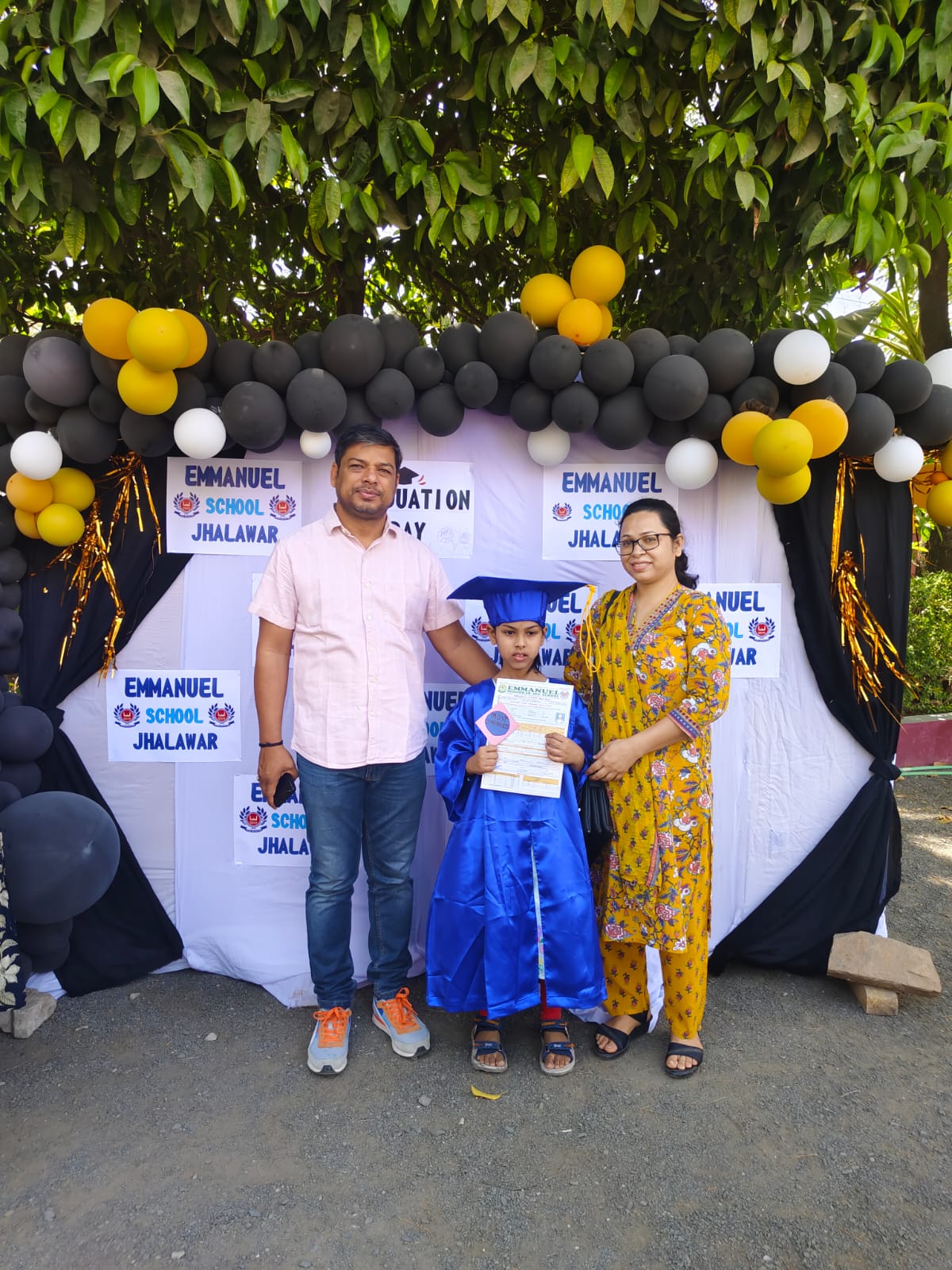 Dr. Shaista Anjum with her family
After completing her internship and MBBS, Shaista was posted at a primary health centre in Pindawar village, as medical graduates in Rajasthan are required to serve in rural areas for the first two years.
"Even before I completed those two years, my husband, Syed Imran Ali, who is a lawyer, began urging me to pursue an MS immediately. We had married during my internship in Jhalawar in 2015. He would joke, 'People will say I stopped you from studying further, and I don't want that accusation on my head.'"
After finishing her mandatory rural service, Shaista was transferred to the Government Hospital in Jhalawar. In 2020, she enrolled in an online coaching programme from Delhi to prepare for the MS entrance examination.
"I could only attend classes at night after completing my hospital duties. By then, I had become a mother. My daughter was looked after mostly by my mother-in-law. I cleared the entrance examination twice, but my rank wasn't good enough to get the speciality I wanted. Except for Anaesthesiology, no preferred branch was available, and I wasn't interested in that. In my third attempt, I secured an excellent rank and could choose any speciality. I chose Gynaecology because my mother always said, 'Women suffer immensely. Try to make their lives a little easier.'"
Smiling, she adds, "Listening to this, it may seem as though everything happened effortlessly. But behind this journey lies my mother's immense struggle."
"My father owned a tiny grocery shop that barely sustained the family. My mother rolled bidis. The income was meagre, but every rupee helped. We all studied in government schools, yet expenses on books, uniforms, and other necessities remained. Often, my maternal grandfather helped us financially."
.jpeg) Dr Shaista Anjum with her mother and daughter
Dr Shaista Anjum with her mother and daughter"When I was attending coaching classes in Kota, my mother would save five and ten rupee coins in a small piggy bank and send me whatever she managed to collect. She had never spent much on herself, but then she began cutting down household expenses as well. She had only one wish—that somehow her daughter should become a doctor."
"I thank Allah for giving me the ability to fulfil my mother's dream. It was not merely a dream seen with her eyes—it was something her soul longed for."
Shaista explains that her mother's determination had deep roots.
"My maternal grandfather had three daughters and two sons. He educated his daughters only till Class V, but ensured that both his sons received higher education. One of them became a doctor. My mother often told us how she and her sisters would wonder why they weren't allowed to study further. They pleaded with their father, but he would say, 'Girls don't need higher education.'"
"The sisters did all the household work and were also responsible for constantly making tea for their brother while he studied medicine. It was then that my mother resolved that if she ever had a daughter, she would make her a doctor. She endured hardship but never abandoned that dream. It wasn't just a dream—it was an old wound in her heart that finally found healing when I became a doctor."
Shaista says witnessing her mother's sacrifices prepared her for life, but after marriage she realised that her mother-in-law's struggles had been even greater.
"My mother-in-law, Hasrat Bano, came from a middle-class family. But her husband remarried and abandoned her. She returned to her parents' home with her six-year-old son. Her brother and sister-in-law did not treat her well. After her father passed away, her mother began living separately with her."
"She had a young child to raise and an entire life ahead of her. Her mother gave her shelter, but earning a livelihood was another challenge. She started rolling bidis, but that wasn't enough. Then she began selling clothes door to door. Later, she added bangles, nail polish, lipstick and other cosmetic items to her basket."
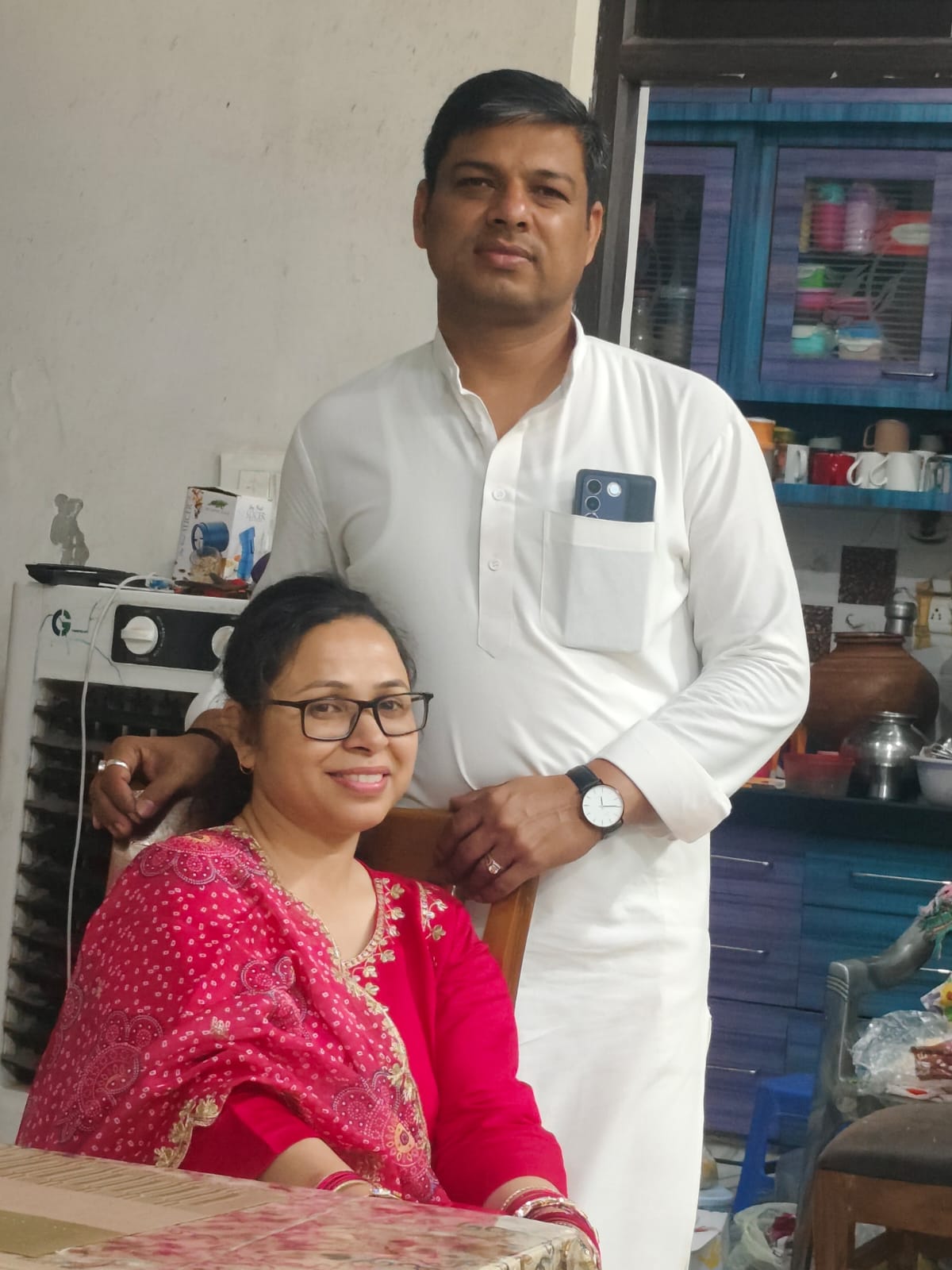 Dr Shaista Anjum with her husband
"She would travel to Kota to buy the goods and then go to Suket, a village about 15 kilometres from Jhalawar, to sell them door to door. She avoided selling in Jhalawar because she feared relatives would criticise her and it would bring embarrassment."
"She spent entire days travelling and working just to earn every single rupee so that her son could study. Today, that son is a successful lawyer."
Recalling the early days of her married life, Shaista says, "When I came into this family after marriage, there was neither a fridge nor a television. We owned just one steel plate and four bowls. The three of us ate from the same plate. But today, we have our own car, a permanent house, and my brothers in my parental home are also financially well settled. Most importantly, neither my mother nor my mother-in-law has to roll bidis anymore."
After completing her MS, Shaista was posted once again in a rural area—at the Community Health Centre in Dag Chaumela, nearly 125 kilometres from home.
"It became extremely difficult to manage such a long-distance posting with a young daughter. So I applied for a Senior Residency position. By Allah's grace, I was selected, and my posting shifted to the Government Medical College in Jhalawar."
She had taken three years of study leave to complete her MS and rejoined government service in January 2026.
"Today, my mother is no longer with us. But whatever I have achieved is because of her. I enjoy respect and recognition throughout my extended family because I was the first girl in our family to step out of home, pursue higher education, and build a successful career."
ALSO READ: Rajasthan: Ten extraordinary Muslim women challenging stereotypes
Dr. Shaista Anjum's journey is a tribute to three extraordinary individuals—her mother, who dared to dream beyond the limitations imposed on women; her husband, who stood firmly behind her ambitions; and her mother-in-law, who quietly sacrificed her own comfort to make another woman's dreams possible. Together, they transformed one woman's success into the triumph of an entire family across generations.

.webp "Union Home Minister Amit Shah")