Aasha Khosa
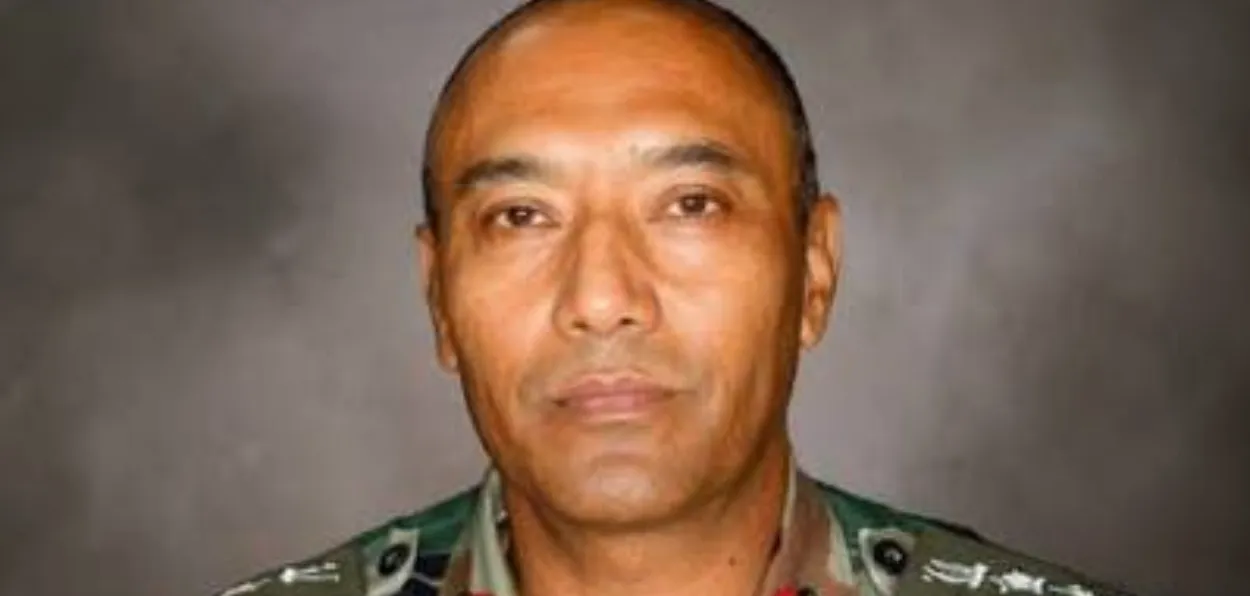
Kargil Vijay Diwas is an occasion to remember not only India's victory over Pakistani intruders in 1999 but also the extraordinary soldiers whose courage made that triumph possible. Among them stands Colonel Sonam Wangchuk, Maha Vir Chakra, a son of Ladakh whose daring leadership delivered one of the Indian Army's earliest and most crucial victories in the Batalik sector.
Then a Major in the Ladakh Scouts, Wangchuk led a handful of soldiers in a series of audacious operations that dismantled heavily fortified Pakistani positions on Indian territory, paving the way for the Army's eventual victory in the Kargil War.
Colonel Wangchuk passed away in Leh on April 10 this year at the age of 61. The decorated soldier was accorded a tearful farewell by the Indian Army and the people of Ladakh, who revered him as the "Lion of Ladakh." In recognition of his exceptional gallantry, the Army has named two posts in the Batalik sector—Sonam-1 and Sonam-2—after him.
A Tribute to the Legend
— ADG PI - INDIAN ARMY (@adgpi) April 14, 2026
Col Sonam Wangchuk, #MVC
Video Courtesy @Sparklework pic.twitter.com/CYVJwTtUky
A curious coincidence often led to confusion between Colonel Wangchuk and another well-known Ladakhi, education reformer and climate activist Sonam Wangchuk. While both hail from Leh district, their lives followed very different paths. Colonel Wangchuk belonged to the historic village of Sankar, whereas the activist traces his roots to Alchi, home to the famed Alchi Monastery.
According to official Army records, on the night of May 30-31, 1999, Major Wangchuk led a small detachment of the Ladakh Scouts to Chorbat La, more than 5,000 metres above sea level. Battling deep snow, freezing temperatures and without artillery support, his men carried out a daring flanking assault on entrenched Pakistani positions.
During the operation, Wangchuk spotted a group of enemy soldiers and personally led the attack that killed two of them while the others fled. After establishing the observation post, he was immediately tasked with reinforcing another vulnerable position along the Line of Control that was expected to come under heavy attack.
SONAM WANGCHUK - HERO OF LADHAK OR PERHAPS I SHOULD SAY COLONEL SONAM WANGCHUK.
— Prakaash (@Prakaash_KS) July 26, 2026
Yes you heard it right.
COLONEL SONAM WANGCHUK (Then MAJOR),
Maha Vir Chakra,
Battle - Kargil War/Op VIJAY#KargilVijayDiwas
1/3 pic.twitter.com/KEE4Me3MV8
After marching through the night, he reached the post before dawn. Even as Pakistani artillery pounded the area, Wangchuk deployed his platoon to hold the position. Hours later, he returned with reinforcements and launched a counter-assault, capturing a nearby enemy-held position after killing six Pakistani soldiers.
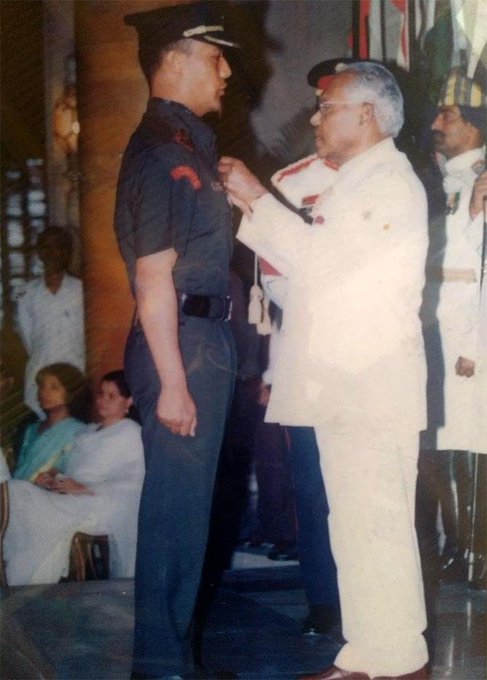
The success of these operations secured the Chorbat La axis and marked one of the earliest battlefield victories for the Indian Army during Operation Vijay. For his conspicuous bravery, exceptional leadership and unwavering determination under enemy fire, Major Wangchuk was awarded the Maha Vir Chakra, India's second-highest wartime gallantry award.
The Kargil conflict began after Pakistani troops secretly occupied Indian positions vacated during the harsh Himalayan winter, violating long-standing military understandings. The intrusions were first detected on May 3, 1999. The Indian Air Force launched air strikes on May 26, followed by Operation Vijay, the Army's campaign to evict the intruders. The war concluded with India's victory on July 26.
 The Batalik sub-sector was among the most strategically significant battlefields. Pakistani forces had entrenched themselves on dominating heights, making their eviction essential for the Indian advance. Wangchuk's successful operations in the sector proved decisive in breaking the enemy's hold.
Col Sonam Wangchuk receiving Maha Vir Chakra from President K R Narayanan
Born on May 11, 1964, in Sankar village near Leh, Sonam Wangchuk was known from an early age for his athletic abilities and regularly competed in cross-country races. While pursuing a History degree at Sri Venkateswara College, Delhi University, he chose to join the Army, inspired by a relative, Colonel Wangdus, despite his father's wish that he pursue the civil services.
Commissioned into the Assam Regiment on September 4, 1987, he later joined the Ladakh Scouts—the Army's elite mountain force raised from the hardy people of Ladakh. Popularly known as the "Snow Warriors," the regiment has distinguished itself in every major conflict in the region, including the 1965 and 1971 wars, Operation Meghdoot in Siachen, and the Kargil War. The Ladakh Scouts were converted into a full-fledged regiment in 2000.
Over a military career spanning more than three decades, Colonel Wangchuk earned widespread respect as an inspiring commander and a soldier of exceptional courage. He retired in 2018 but remained closely connected with the armed forces and frequently shared his experiences with young officers and students.
His death triggered an outpouring of tributes from across the country, especially from the defence fraternity and the people of Ladakh. To them, Colonel Sonam Wangchuk was more than a decorated soldier. He embodied courage, humility and selfless service.
His Maha Vir Chakra citation captures his legacy best: in the face of relentless enemy fire and extreme conditions on the glaciated heights of Batalik, Major Sonam Wangchuk displayed "exceptional bravery and gallantry of the highest order."
ALSO READ: Sonam Wangchuk: My hero, and my disappointment
Twenty-seven years after Kargil, the Lion of Ladakh continues to inspire generations of soldiers who defend India's frontiers in some of the world's harshest terrain.








.webp "Lok Sabha Speaker Om Birla exchanges the Joint Declaration with China's National People's Congress Vice-Chairperson Zheng Jianbang during the conclusion of the 12th BRICS Parliamentary Forum 2026")
.webp "Representational Image")
.webp)