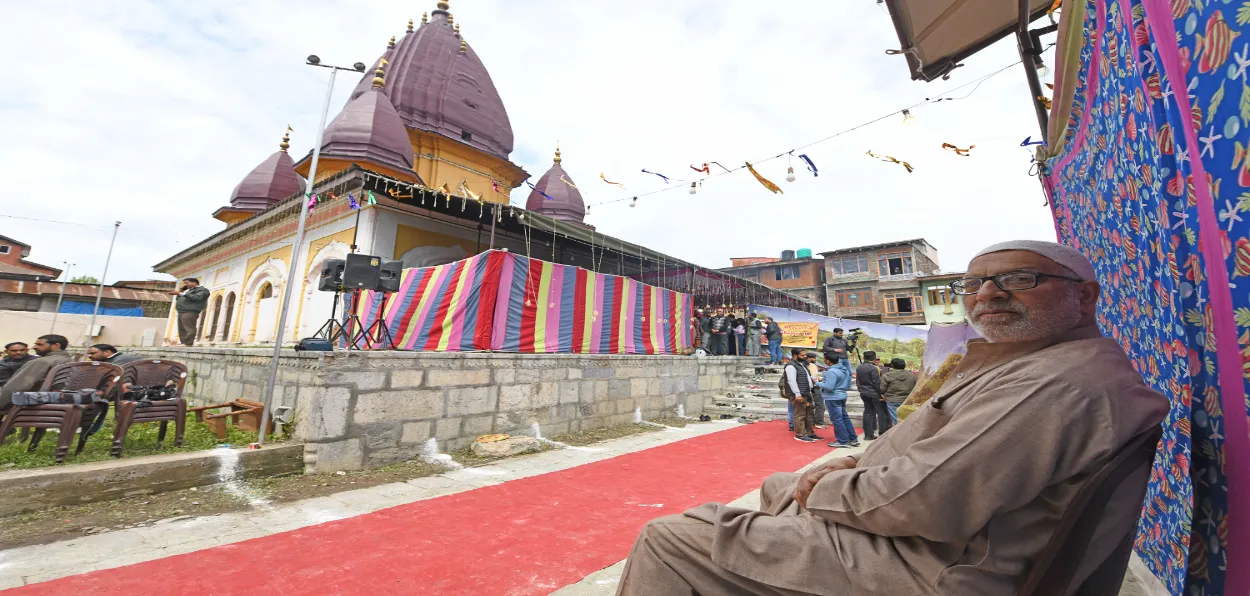
.webp "108 Naxals after surrendering weapons, cash, and gold in Jagdalpur, Wednesday")
Kanchan Lakshman
With March 31, 2026, marking the deadline set by Home Minister Amit Shah for ending the Maoist insurgency, India stands at a historic turning point — not just a security milestone, but a decisive moment in shaping stability and development across its heartland.
On April 6, 2010, in the deadliest attack on Indian security forces, Maoists killed 76 Central Reserve Police Force personnel in an ambush in Dantewada, Chhattisgarh. Following the attack, Prime Minister Dr Manmohan Singh referred to the Maoist movement as "the biggest internal security threat facing our country." Sixteen years later, on March 31, 2026, India is set to announce something that few countries handling a generational insurgency have ever accomplished: a structural end to armed hostilities.
This is neither a ceasefire nor a negotiated settlement. This is an operational dismantling of a movement that once gripped more than 200 districts across ten States, ran a parallel administration through forest belts from Bihar to Dandakaranya (Andhra Pradesh, Telangana, Chhattisgarh, and Odisha), and drew its ideological sustenance from Maoist China.
The declaration carries a weight that demands a candid assessment of how the victory was achieved, what challenges remain, and what sustaining peace will truly require.
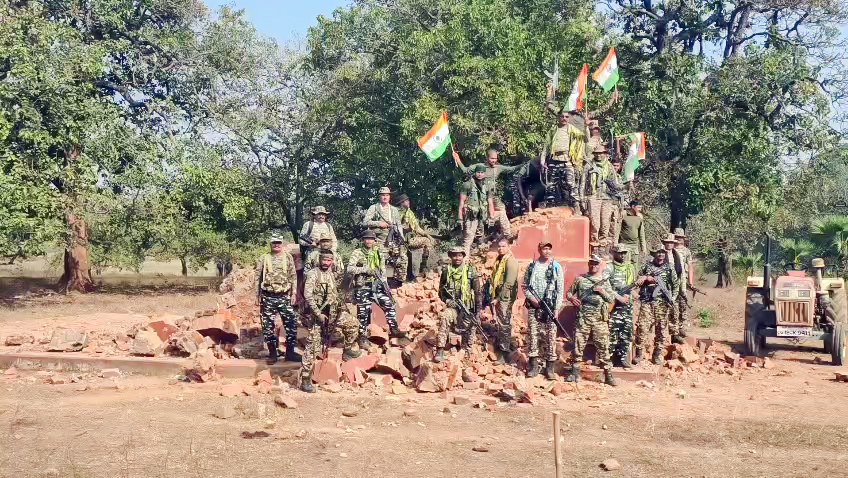 Security Forces after demolishing a monument built by Maoists in Sukma
The Communist Party of India (Maoist) is not a short-lived insurgency that fizzled away. It is the world’s longest-running armed Maoist movement — five decades of ideologically motivated violence, with roots in the Naxalbari peasant uprising of 1967. For context: Nepal’s Maoists were soft-landed into parliamentary politics, and Peru's Shining Path was neutralised within a decade of its peak.
India’s Maoist insurgency endured the Cold War, outlasted the fall of the Soviet Union, survived China’s own pivot away from exporting revolution, and weathered decades of India’s inconsistent and half-hearted counter-insurgency efforts. That it now stands reduced to only a few hundred cadres — confined to merely three States — marks a structural degradation of the insurgency, not a temporary setback.
Four decisive shifts after 2014 made a difference. First, political will: the shift from treating Naxalism as a chronic, manageable problem to a time-bound mission — driven by sustained leadership from the Prime Minister and Home Minister — fundamentally altered the state’s operating tempo. Home Minister Amit Shah's deadline was not rhetorical; it became a driving force that compelled coordination across States, intelligence agencies, and security forces.
Second, kinetic precision: the systematic targeting and neutralisation of senior Maoist leaders - central committee members, politburo members, and regional commanders – hollowed out the organisational depth that had once enabled the movement to recover after every setback.
Third, territorial contraction: the loss of forest sanctuaries severed the link of the People's Liberation Guerrilla Army from the geographic space it operated in. Deprived of “liberated zones,” the entire framework of Janatana Sarkar or the Maoist parallel administration disintegrated.
Fourth, and least acknowledged, the development wedge: spread of infrastructure - roads, mobile networks, banking access - into Maoist strongholds dismantled the Red Corridor as decisively as rifles and drained the grievance base which had sustained Maoist recruitment for decades.
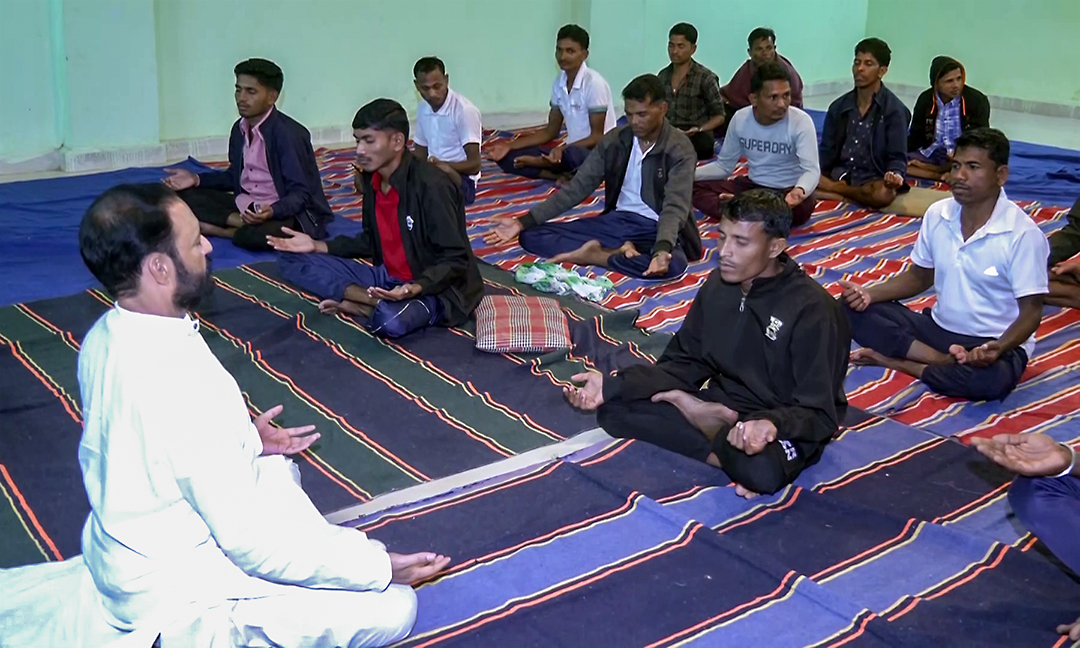
Surrendered Naxals practising Yoga in Jagdalpur
The declaration must be accompanied by a sober accounting of what remains unresolved and what sustaining peace will demand. Approximately 675 armed Maoists, including over 400 in Chhattisgarh, remain active - supplemented by a larger Jan Militia pool. Small-scale IED attacks on security force patrols, targeted killings of alleged Police informers, and sporadic ambushes in the rugged terrain of Bastar and Saranda have not ceased.
More significantly, the CPI (Maoist)’s centre of gravity is assessed to be shifting towards urban overground networks, front organisations, and digital platforms. This is a subtler, harder-to-detect threat profile, one that kinetic operations alone cannot neutralise. March 31 marks the operational dismantling of the Maoist insurgency, not ideological extinction.
The Government is expected to frame a post-insurgency transition policy built on the twin pillars of development initiatives in former conflict zones and closing governance deficits that once fuelled the insurgency. Both are essential, but insufficient on their own. The Maoist movement thrived not merely on ideology, but also on tribal displacement, denial of forest rights, absence of governance and exploitative local power structures. Any policy that builds roads without addressing land rights or accountability risks creating conditions for a future Maoist revival.
Comparative experience illustrates the strategic risk of a post-insurgency phase: once the headline threat recedes, political focus and resources that sustained the kinetic operations often dissipate. Afghanistan’s reconstruction, Sri Lanka’s post-LTTE north, and Colombia after the FARC all reveal that holding peace proved harder than winning the war. India’s challenge now is to sustain governance intensity to consolidate the security gains, even as the urgency that drove it fades.
In the immediate term, the residual armed Maoists in Bastar–Gadchiroli and Saranda belt are likely to either surrender, fragment, or be neutralised within 6–12 months. The medium-term challenge lies in the urban Maoist ecosystem — a network of overground fronts, legal platforms, and digital spaces — which demands a different configuration of legal, intelligence, and operational tools from the security apparatus.
ALSO READ: Alfiya Pathan: The rising boxing Star from Nagpur, aspiring to be the Next Mary Kom
India broke the Maoist insurgency with firepower and political will. Keeping it broken will demand something harder - sustained and fair governance in the lands once controlled by the red flag. That work begins on April 1.
Kanchan Lakshman is a Delhi-based national security analyst.

.webp "Justice Poonam A. Bamba with Captain Amarinder Singh")







.webp "Finance Minister Nirmala Sitharaman")

.webp)
.webp)