.webp "Tourists in Tulip garden")
Ehsan Fazili/Srinagar
Jammu and Kashmir’s tourism industry finds itself on uncertain ground once again. Just as the sector was hoping to recover from last year’s disruptions, the ongoing conflict in West Asia has raised fresh concerns over possible shortages of cooking gas and fuel—both critical for the hospitality sector.
The industry had already endured a difficult year following the terrorist attack in Pahalgam on April 21, in which 25 tourists and a local ponywallah were killed. The incident abruptly halted what had been a remarkable three-year surge in tourist arrivals, marking a rare period of stability after decades of militancy and the political changes following August 5, 2019.
The attack, which took place in south Kashmir just ahead of the peak summer season, led to an immediate decline in tourist inflow. In response, the government temporarily shut down 89 tourist spots across the Union Territory, reopening most of them gradually over time.
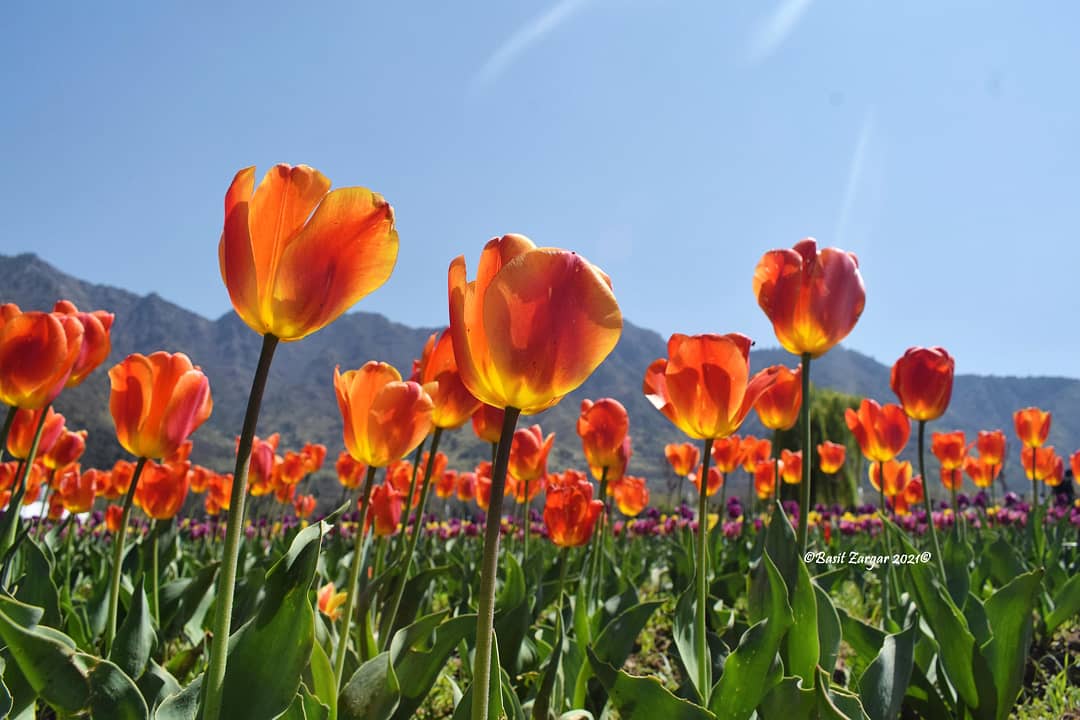 Tulip Garden, Srinagar
Through sustained security measures and promotional efforts, stakeholders had hoped to revive tourism this year. Hoteliers, houseboat owners, transport operators, and artisans were all looking forward to a strong season. However, fresh setbacks soon followed. Reports of rotten meat being supplied to hotels and restaurants last year further dented confidence among visitors.
“There were encouraging signs of recovery, but these incidents dealt a severe blow to tourist arrivals,” said a hotelier, reflecting the industry’s fragile state.
Now, with hopes once again high for a smooth season, the West Asia conflict has cast a shadow at the very start of summer. Tourist footfall has already begun to dip amid concerns over fuel and LPG availability, even as authorities maintain that supplies remain adequate.
Officials state that current reserves are sufficient—petrol for about 9–10 days, diesel for 16–17 days, and LPG for nearly two weeks, including transit stocks. They also assert that domestic LPG demand is being fully met without major disruptions.
However, industry insiders paint a more strained picture. Supplies of commercial LPG cylinders have reportedly been restricted, with priority given to hospitals and educational institutions. This has affected hotels, many of which have had to scale down their menus.
A delegation from the Kashmir LPG Distributors Association—representing Indane, HP, and BP—recently urged authorities to ease restrictions on cylinder refills. The association noted that distributors are operating under “extraordinary circumstances,” driven by panic booking and heightened demand amid the Middle East crisis and the recent Eid festival.
Kashmir’s Tulip Garden — a vibrant burst of spring beneath the Zabarwan hills. pic.twitter.com/WAXms9CTWa
— Basit Zargar (باسط) (@basiitzargar) April 10, 2025
They also highlighted logistical challenges, including large crowds gathering at distribution points and operational constraints affecting timely delivery. According to informed sources, demand has surged partly because households are stockpiling multiple cylinders.
Against this backdrop, tourism stakeholders remain cautious, watching developments closely as the season unfolds.
The current tourist season had begun on a hopeful note with the opening of Badamwari (Almond Alcove) on March 14, followed by the Tulip Garden on March 16—both key attractions that typically draw large crowds.
In recent years, Kashmir has witnessed a steady rise in tourist arrivals—from 6.66 lakh visitors in 2021 to 26.74 lakh in 2022, 31.56 lakh in 2023, and a peak of 34.55 lakh in 2024. Tourism, after horticulture and handicrafts, remains one of the Valley’s most vital economic sectors, supporting nearly five lakh livelihoods directly and indirectly.
For now, however, the industry stands at a delicate juncture—hopeful, yet wary of another lost season.
If you’d like, I can make it sharper for a newspaper op-ed, more narrative-driven, or tighten it further for publication word limits.









.webp "Representational image")