New Delhi
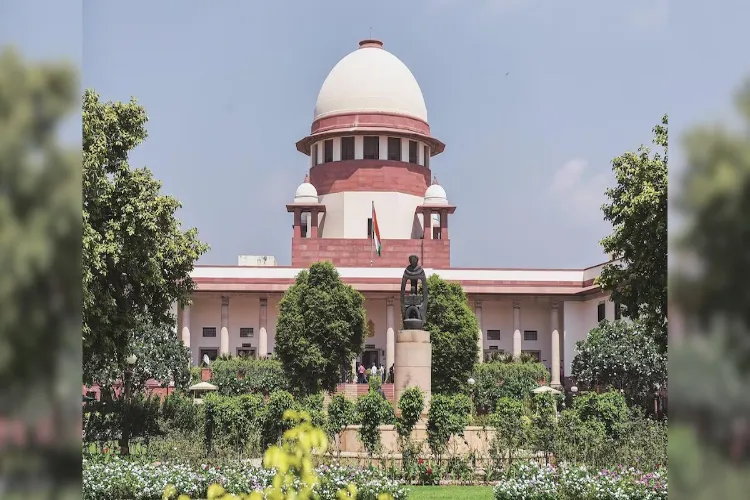
The Supreme Court, by a majority of 6:3, on Thursday held that the labour-friendly expansive definition of the term "industry" in its 1978 verdict shall not be considered for the interpretation of the Industrial Relations Code of 2020.
A nine-judge Constitution bench headed by Chief Justice Surya Kant also by a majority verdict held that the reference seeking reconsideration of a 1978 judgement by a seven-judge bench on the definition of "industry" was validly made.
On February 21, 1978, the seven-judge bench had delivered a verdict on the definition of the term "industry" while deciding the plea of Bangalore Water Supply and Sewerage Board and expanded its definition which brought millions of employees in hospitals, educational institutions, clubs and government welfare departments under the protection of the Industrial Disputes (ID) Act, 1947.
The CJI, who authored the majority verdict for himself and Justices Satish Chandra Sharma, Alok Aradhe and Vipul M Pancholi, made clear that the "triple test", evolved in the 1978 judgement, to ascertain as to what constitutes an "industry" will remain valid.
However, the "triple test" will be applied in labour-related pending cases lodged under the now-repealed 1947 ID Act.
Justices P S Narasimha and Joymalya Bagchi, penned separate verdicts, broadly agreeing with the majority judgement of the CJI. Both the judges held that the reference seeking reconsideration of the 1978 verdict on definition of term "industry" was valid.
Justices B V Nagarathna, Dipankar Datta and Ujjal Bhuyan dissented with the majority verdict particularly on the issue of maintainability of reference made to the nine-judge bench.
The triple test, evolved by Justice V.R. Krishna Iyer in the 1978 judgment, broadly holds that any systematic activity involving employer-employee cooperation for production or distribution of goods and services would qualify as an "industry", and hence, the statutory protection would be extended to the workers in a wide array of sectors.
The majority verdict also made clear that it will not apply on the 2020 Code and any fresh case under the new law will be adjudicated on the basis of their facts and the context.
Justice Nagarathna held that the 1978 verdict was correct and there was no need to refer it for reconsideration.
All the nine-judges were in agreement on the issue that since the 1947 Act has now been repealed and a new law has come into being, the matter has become an academic exercise.
"The majority has held that the reference is valid and we have made it abundantly clear that the majority will apply prospectively and the pending matters (under the ID Act of 1947) will be adjudicated as per the triple test definition under the Bangalore Water Supply (1978 judgement)," the CJI said.
He said the principles laid down in the 1978 verdict "shall not be considered as a sweeping anchor for the interpretation of the 2020 Act and its interpretation will be considered independently".
The detailed judgements are awaited.
The judgement was keenly awaited across labour and industrial sectors due to its consequences on the rights of workers and the applicability of labour protection under the 1947 Act.
On February 16, the top court had formulated the broad issues to be adjudicated by the nine-judge bench.
"Whether the test laid down in paragraphs 140 to 144 in the opinion rendered by Justice V R Krishna Iyer in Bangalore Water Supply and Sewerage Board's case (of 1978) to determine if an undertaking or enterprise falls within the definition of 'industry' lays down correct law?
"And whether the Industrial Disputes (Amendment) Act, 1982 (which seemingly did not come into force), and the Industrial Relations Code, 2020 (with effect from November 21, 2025), have any legal impact on the interpretation of the expression 'industry' as contained in the principal Act," the bench had asked.
READ MORE: Palestinian envoy asks Delhi to set up artificial limb center in Gaza
It had said one of the issues to be adjudicated by the nine-judge bench would be whether social welfare activities and schemes or other enterprises undertaken by government departments or their instrumentalities can be construed to be "industrial activities" for the purpose of Section 2(j) of the ID Act.

_(1)_(1).webp "Khanqah Emadia Qalandaria, Patna, Bihar")

.webp "Shrine of Hazrat Maulana Ziauddin Shah-e-Wilayat")
_(1).webp "tHE shrine of Hazrat Syed Shah Ehteram Al Qaderi")