Mumbai
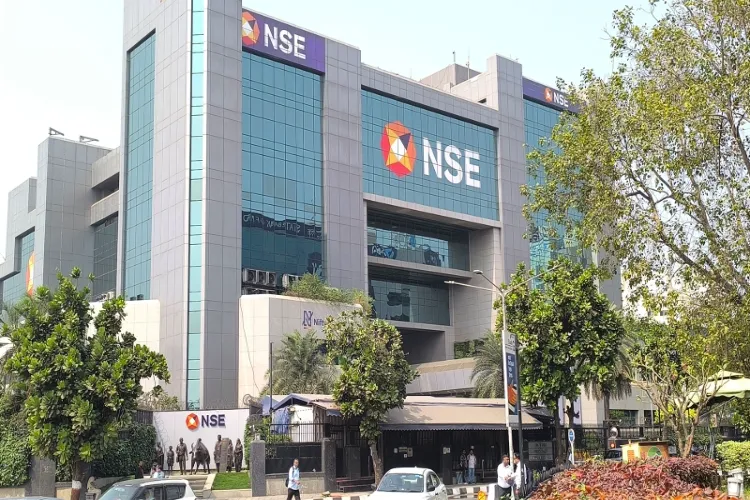
Indian equity benchmarks ended Thursday’s session sharply lower amid broad-based selling across sectors, weighed down by rising geopolitical tensions, a spike in crude oil prices and weak global cues.
At the close, the BSE Sensex plunged 1,236.11 points, or 1.48 per cent, to settle at 82,498.14, while the NSE Nifty declined 365 points, or 1.41 per cent, to 25,454.35.
Market breadth remained firmly negative, with 1,248 stocks advancing, 2,790 declining and 149 ending unchanged.
Almost all sectoral indices closed in the red. Realty, Auto, Power, Capital Goods and Consumer Durables were among the worst hit, each shedding close to 2 per cent, reflecting widespread risk aversion.
The markets had begun the day on a positive note, supported by foreign inflows and continued buying interest from domestic investors. The Nifty opened at 25,873.35, up 54 points or 0.21 per cent, while the Sensex started at 83,969.82, gaining 235.57 points or 0.28 per cent. However, the early optimism quickly faded as selling pressure intensified through the session.
Commenting on the market mood, Vinod Nair, Head of Research at Geojit Investments Limited, said global factors dominated sentiment.
“The bears took charge of the Indian market as rising geopolitical tensions between the US and Iran unsettled global sentiment, leading to a broad-based sell-off,” Nair said. He added that Brent crude hitting its year-to-date high aggravated inflation concerns and heightened volatility, amid fears of disruptions at the Strait of Hormuz.
Nair further noted that uncertainty surrounding the US Federal Reserve’s rate-cut trajectory, coupled with continued weakness in the rupee, added pressure on domestic equities. “The sell-off intensified due to low FII participation because of the Lunar New Year holiday across key Asian markets and a non-settlement day due to a regional banking holiday in India,” he said.
Echoing similar concerns, Ponmudi R, CEO of Enrich Money, said Indian markets mirrored weakness in global equities amid heightened geopolitical uncertainty.
“Uncertainty around US-Iran negotiations has amplified fears of a potential military escalation, raising the risk of a wider Middle East conflict and weighing heavily on investor sentiment,” he said.
Ponmudi added that elevated valuations at higher levels encouraged institutional investors to distribute rather than accumulate, further dragging markets lower. “The weakness across key large-cap segments reflects a clear shift in market tone—from momentum-driven buying to a more defensive, capital-preservation stance,” he said.
READ MORE: Ramzan and Lent begin the same day signaling unity of religions
Analysts said volatility may persist in the near term as markets track global developments, crude oil prices, currency movement and signals from central banks.












.webp "Surajkund International Crafts Mela")