




New Delhi
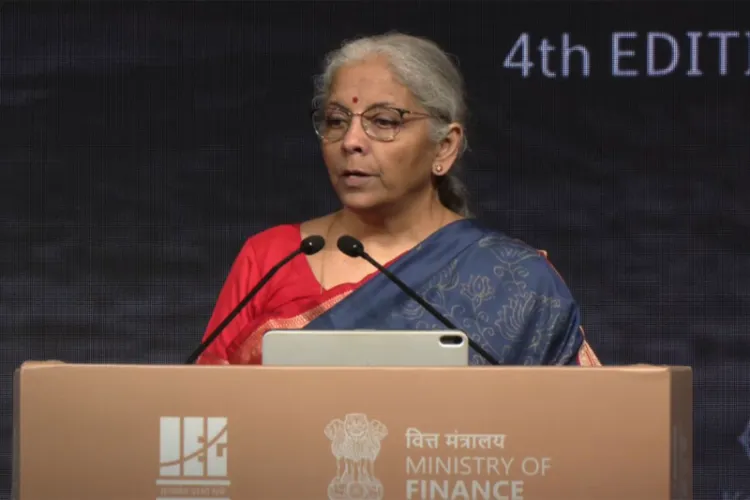
Finance Minister Nirmala Sitharaman is set to create history on February 1 when she presents her ninth consecutive Union Budget, a feat unmatched by any of her predecessors. The budget is expected to focus on reforms aimed at sustaining economic momentum amid global geopolitical uncertainty.
With this presentation, Sitharaman moves closer to the all-time record held by former Prime Minister Morarji Desai, who delivered 10 budgets over multiple tenures as finance minister. Desai presented six budgets between 1959 and 1964 and four more during the period from 1967 to 1969.
Among other finance ministers, P Chidambaram delivered nine budgets across different governments, while Pranab Mukherjee presented eight during his tenure. Sitharaman, however, stands alone in presenting the highest number of budgets consecutively under the same prime minister — nine in a row during Narendra Modi’s tenure.
She assumed charge as India’s first full-time woman finance minister in 2019 after the BJP secured a second term in office. Following the party’s return to power in 2024 for a third consecutive term, Sitharaman continued in the finance portfolio. So far, she has delivered eight budgets in succession, including the interim budget in February 2024.
Over the decades, the Union Budget has produced several notable milestones in independent India’s economic history.
The first-ever Union Budget after Independence was presented on November 26, 1947, by India’s inaugural finance minister, R K Shanmukham Chetty.
Morarji Desai holds the record for the highest number of budgets delivered by a finance minister. His first budget was presented on February 28, 1959, followed by full budgets in subsequent years. He also presented interim budgets in 1962 and 1967, along with three full budgets between 1967 and 1969, taking his total tally to 10.
P Chidambaram ranks second on the list, having presented the budget nine times. His first budget came in March 1996 during the United Front government led by H D Deve Gowda. He later presented multiple budgets during the Congress-led UPA governments, including five between 2004 and 2008 and two more in 2013 and 2014 after returning to the finance ministry.
Pranab Mukherjee presented eight budgets, delivering three in the early 1980s and five consecutively between 2009 and 2012 during the UPA regime.
Former Prime Minister Manmohan Singh presented five straight budgets between 1991 and 1995 while serving as finance minister in the P V Narasimha Rao government, a period remembered for landmark economic reforms.
Sitharaman also holds the record for the longest budget speech in independent India. Her address on February 1, 2020, lasted two hours and 40 minutes and was eventually curtailed with two pages left to read.
The shortest budget speech was delivered in 1977 by Hirubhai Mulljibhai Patel, whose interim budget address comprised just 800 words.
Traditionally, the Union Budget was presented on the last working day of February at 5 pm — a colonial-era practice aligned with British parliamentary timings. This convention was changed in 1999 when then finance minister Yashwant Sinha presented the budget at 11 am, a practice that has continued since.
ALSO READ: Padma Bhushan for Mammootty and Padma Shri for 4 more Muslims
In 2017, the budget presentation date was advanced to February 1 to enable Parliament to complete approval procedures before the end of March, ensuring that budgetary provisions could be implemented from the start of the financial year on April 1. Earlier, the late-February schedule often delayed implementation until May or June.


.webp "S. Irfan Habib with Saquib Salim in Deen Aur Duniya")








.webp)
.webp)


.webp)