New Delhi
The musical journey of Vande Mataram is a dignified and inspiring chapter of India’s national consciousness and cultural history. Written by Bankim Chandra Chattopadhyay, this composition gradually evolved from a poem into a powerful national sentiment.
Its words clearly reflect love, reverence, and sacrifice for the motherland. Over time, Vande Mataram has evolved to incorporate many musical forms. Rabindranath Tagore set it to music, turning it into a spiritual hymn. Later, great classical musicians rendered it in different ragas, with each interpretation adding new depth and meaning. At times it was presented with calm dignity, and at others with passion and fervour.
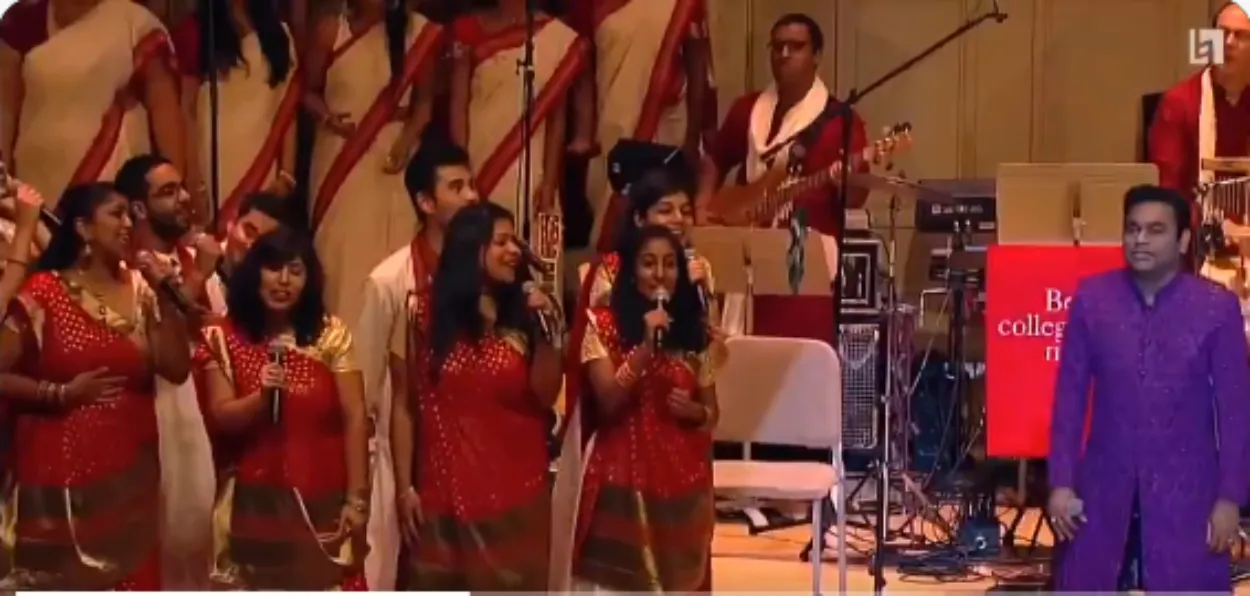
In the modern era, Vande Mataram found new life through contemporary instruments and voices, most notably through A.R. Rahman’s composition, which gave it global recognition. Younger generations of singers also embraced it in their own styles while preserving its soul. The musical journey of Vande Mataram stands as proof that a song can evolve with time yet retain its original identity. This journey continues even today, echoing love for the nation through every new voice.
With a magical harmony of voices and ragas, Vande Mataram became a vibrant musical voyage enriched by countless interpretations. Kesarbai Kerkar sang it in Raga Khambavati, highlighting the nuances of the Jaipur-Atrauli gharana.
Pannalal Ghosh presented a soulful flute rendition in Raga Mian Malhar that left listeners spellbound. Later, Pandit Bhimsen Joshi sang it in Raga Desh, adding a new elegance and charm. Marathi musician and actor Vishnu Pant Pagnis, an expert in khayal and thumri, rendered it in Raga Sarang during the 1930s, giving it a fresh flavour.
Pandit Prem Kumar Mallick presented Vande Mataram in the dhrupad style, remembered for its gravity and dignity. Many other musicians also performed it in their distinctive styles, including Desh Das, Satya Bhushan Gupta, Bhawani Charan Das, Keshav Rao Bhole, Hem Chandra Sen, Harendra Nath Dutta, G.M. Durrani, Vasant Desai, Mogubai Kurdikar, D. Vasantha, and D. Vimala.
Thus, Vande Mataram became not just a song but a living symbol of India’s music, emotion, and unity. Geeta Dutt’s rendition in pure Sanskrit, along with her contemporaries, also holds a special place in this musical legacy.
Dilip Kumar Roy was another pioneer who experimented with folk and classical tunes from Bengal and Assam. His most celebrated rendition was a duet with M.S. Subbulakshmi, the Nightingale of India, blending ragas like Bilawal and Bageshri into a captivating raga mala. Subbulakshmi’s Tamil versions of Vande Mataram are equally renowned.
The Man. The Myth. The Legend
— A.R.Rahman Loops (@ARRahmanLoops) January 25, 2026
Wait for it… Pure goosebumps !!!
No one has promoted India and Indian music #VandeMataram globally like @ARRahman 🐐🇮🇳👑pic.twitter.com/QeRcaYzODw
The Tamil translation was done by nationalist poet Subramania Bharati, who produced two versions: one literal and the other adapted to musical rhythm and Tamil cultural expression. This duality reflected Bharati’s linguistic integrity and musical sensitivity, and Subbulakshmi’s serene voice carried this tradition forward.
Bharati himself composed songs under the title Vande Mataram, the most famous being included in the 1961 Tamil film Kappalottiya Thamizhan, set to music by G. Ramanathan. Another song, Jai Vande Mataram, was composed by Bharati in Raga Bhairav (Carnatic) and immortalised by K.J. Yesudas. Yesudas later sang the original Vande Mataram in the 1979 Malayalam film Veedarunna Motukal, with music by Devarajan, which also featured a chorus version.
Interestingly, around 1980, Yesudas and Devarajan worked on another song beginning with the words Vande Mataram, though it was a devotional piece for the unreleased film Sree Devi Darshanam. In cinema, Vande Mataram has shone brightly, often serving as an emotional pillar in films about the freedom struggle. Its earliest cinematic reference appeared in the silent-era film Vande Mataram Ashram in 1926, while the full song was first included in the 1935 Bengali film Bande Mataram.
In South India, the first film titled Vande Mataram was a 1939 Telugu production by Bommireddy Narasimha Reddy under the Vaahini Films banner. Actor and composer Chittoor V. Nagaiah played a key role in shaping the film. In Marathi cinema, the 1948 film Vande Mataram featured P.L. Deshpande, with a patriotic song composed by Sudhir Phadke.
The most iconic cinematic version, however, came in the 1952 Hindi film Anand Math, directed by Hemant Gupta, with music by Hemant Kumar. Blending ragas Malkauns and Bhairavi, it created an enduring anthem of patriotism.
By 1966, in the Telugu film Rangula Ratnam, the legendary Ghantasala demonstrated how effortlessly Vande Mataram could resonate across languages and regions. Though some critics initially viewed it as a religious hymn, most Indians embraced it as a poetic symbol of the motherland. Over time, artists bridged ideological divides through music, and by the mid-20th century, Vande Mataram became ubiquitous—on All India Radio, in school assemblies, and in Indian cinema.
From Lata Mangeshkar to A.R. Rahman, many artists reimagined Vande Mataram in recent decades. Rahman’s 1997 album, released on the 50th anniversary of independence, became immensely popular and gave the song a modern, global appeal. His version, blending ragas Desh and Yaman with contemporary sounds, revived the anthem for a new generation and turned it into a symbol of pride at stadiums and public events.
One of the greatest strengths of Vande Mataram is its adaptability to every instrument, exemplified by Myilai Karthikeyan’s nadaswaram rendition. In cinema, even its opening words are enough to ignite patriotic fervour. From Kabhi Khushi Kabhie Gham to ABCD 2, Fighter, and Operation Valentine, filmmakers continue to draw upon its spirit.
In 2021, Vishal Mishra composed a special version sung by Tiger Shroff as a tribute to Indian soldiers.
ALSO READ: Padma Bhushan for Mammootty and Padma Shri for 4 more Muslims
Numerous regional and collaborative versions followed, featuring celebrated artists across India. Even after more than a century, Vande Mataram remains not just a song but a living musical tradition. If Jana Gana Mana is the formal face of the Republic of India, Vande Mataram is its soul—sung and felt by every Indian in their voice.






.webp "Lok Sabha")

_(1).webp)