




Ahmedabad
A year after the devastating crash of Air India flight AI-171 in Ahmedabad that claimed 260 lives, bereaved families continue to wait for the final investigation report, hoping it will reveal what led to one of India's deadliest aviation disasters.
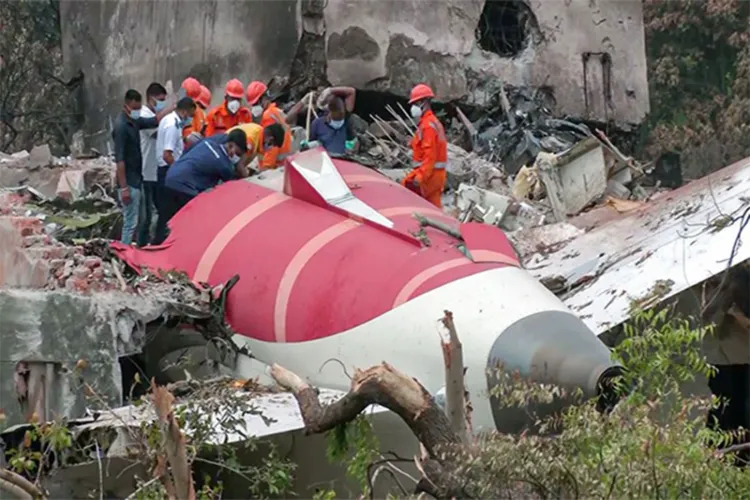
The London-bound flight crashed on June 12, 2025, just 32 seconds after take-off from Ahmedabad's Sardar Vallabhbhai Patel International Airport, slamming into the hostel complex of BJ Medical College. The tragedy killed 241 passengers and crew members on board and 19 people on the ground. Only one passenger survived.
Among those killed was former Gujarat Chief Minister Vijay Rupani.
While the Aircraft Accident Investigation Bureau (AAIB) released an interim report in July last year, it stopped short of identifying the cause of the crash. However, one section of the report indicated that the aircraft's engine fuel switches had moved to the cut-off position shortly after take-off.
For the families of the victims, the absence of a conclusive explanation has prolonged their grief.
Many say they cannot find closure without understanding how and why the tragedy occurred. The unanswered questions have left them struggling to come to terms with their loss.
Under international aviation norms, a final accident investigation report should ideally be released within a year. If that is not possible, investigators may issue an interim update.
In May this year, Civil Aviation Minister K. Rammohan Naidu said the probe had entered its final stages.
"The crash investigation is in the final stage and could even be completed in a month. However, the investigation is being done by the AAIB and we don't interfere in it. We are giving them all the resources they need," he had said.
Meanwhile, the Federation of Indian Pilots (FIP) has urged caution.
Its president, C.S. Randhawa, said the AAIB should release the final report only after conducting a comprehensive investigation.
He warned that issuing another interim report without definitive conclusions could trigger fresh speculation and confusion.
"If there is no conclusion from the investigation, releasing an interim report will only lead to more misunderstandings," Randhawa said.
Families have also intensified demands for transparency.
Mike Andrews, a lawyer from US-based law firm Beasley Allen, which represents more than 130 victim families from India and the United Kingdom, has appealed to the Indian government to release the aircraft's technical data, including information from the Flight Data Recorder (FDR).
"I appeal to the Indian government to release the FDR data so that our experts can conduct an independent evaluation. I think the most important thing these families can have is transparency," Andrews had told PTI during a visit to Ahmedabad in December last year.
He noted that the release of such data would also help families explore legal remedies, including potential product liability claims in the United States.
"Legal options, such as a product liability suit to be filed in the US, are based on the data we get and what investigations reveal," he said.
The victims' families have also sought access to the Cockpit Voice Recorder (CVR) recordings and black box data.
In April this year, nearly ten months after the crash, relatives of 30 victims from across Gujarat gathered in Ahmedabad and wrote to Prime Minister Narendra Modi, requesting that the CVR recordings and black box information be made public.
They also urged the authorities to complete the investigation at the earliest.
READ MORE: Srinagar: leaders, civil society members protest against PoJK killings
One year after the catastrophe, the pain of losing loved ones remains raw. For many families, the final report is not merely a technical document—it is the key to truth, accountability and, perhaps, the beginning of closure.










.webp "Supreme Court of India")



.webp)