New Delhi
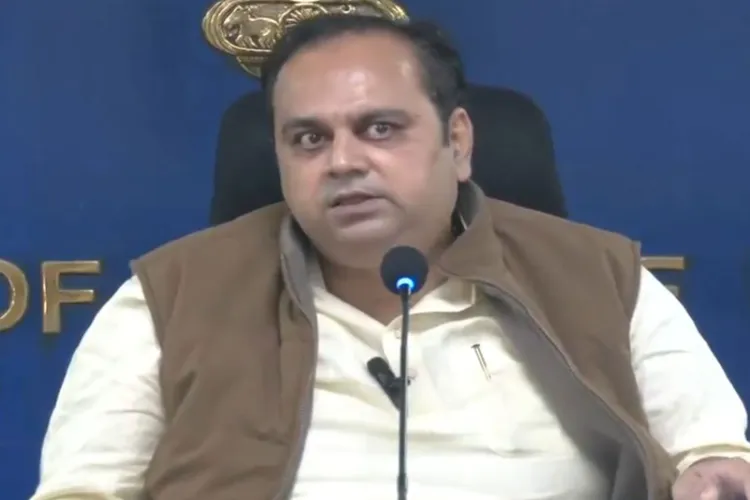
Delhi Health Minister Pankaj Kumar Singh on Saturday criticised the previous AAP government for the slow adoption of electric vehicles in the city, while highlighting that over one lakh Electric Vehicles (EVs) have been registered since the BJP government took charge and promising a new EV policy to boost clean mobility and curb pollution further.
Addressing a press conference in Delhi, Singh said the lack of subsidies under the previous government had slowed the growth of electric mobility in Delhi.
"After our government came to power, we registered more than 1 lakh EV vehicles. There are many reasons why EVs are not advancing further. The previous government did not provide subsidies for EVs. We are providing those subsidies, but if the previous government had given subsidies, perhaps the people of Delhi would have made more efforts to adopt EVs," he said.
The minister also announced that a new EV policy for Delhi would be introduced soon. "Soon we are going to introduce EV policy for Delhi," Singh said.
Highlighting the expansion of electric public transport, Singh said, "Since the BJP came into power, 3518 electric buses started, and we aim to expand above 5000 by March 2026 and by November 2026, we will take above 7000."
He added that BJP leaders in Delhi are working "24/7 to clean up the environment damaged by the incompetence of previous governments" and that the government believes in long-term planning rather than "shortcuts".
On measures to control pollution, the Delhi minister said that public response to compliance efforts has been significant. "Within three days, over one lakh people registered for PUC (Pollution Under Control certificates), and on December 19, more than 40,000 people registered for it," Singh said.
Singh said strict enforcement is being carried out at city borders. "Our transport enforcement department is stationed at 15 major borders. We have allowed vehicles of essential services, but we are not allowing vehicles other than BS6 vehicles," he said, adding that several vehicles have been fined for violations.
Providing data on enforcement, Singh said, "On December 17, 283 chalans were issued. On December 18, around 300 chalans were issued. On December 19, 775 chalans were issued."
Furthermore, the minister reiterated the government's commitment to pollution control and public convenience. "We are converting our vehicles to EVs. This year, more than 1 lakh registrations have already taken place, compared to last year, when only 80,000 registrations occurred. We are going to launch the EV scheme very soon. We will control pollution very soon," he said.
"We have issued our advisory. There will be no problems of any kind for people in our hospitals," Singh added.
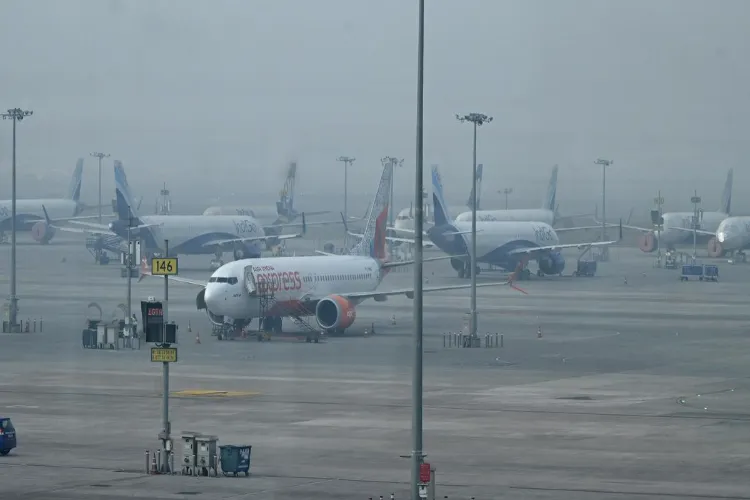
Meanwhile, the national capital woke up to a thick layer of toxic smog on Saturday morning, significantly impairing visibility and affecting residents. The overall Air Quality Index (AQI) reading stood at 380 at around 7 a.m., falling into the 'very poor' category, according to Central Pollution Control Board (CPCB). However, the air quality spiked to 'severe' levels at certain places. Several parts of the city continued to witness alarmingly high pollution levels.
READ MORE: Ashhar-Anil dosti: A bond that transcends religions
According to CPCB, the AQI figure at Sarai Kale Khan stood at 428, while Akshardham recorded an AQI of 420. Rao Tularam Marg recorded an AQI of 403, and the Barapullah flyover area recorded 380. Other pollution hotspots included Anand Vihar (428), Ashok Vihar (407), and the ITO area (429), also falling under the 'severe' category across large swathes of the national capital.

.png)